Title: Strategic Analysis of Quarry Ballast Crushing Equipment Importer R&D: Market Drivers, Technological Evolution, and Operational Imperatives
Abstract
The global railway and infrastructure sectors rely heavily on high-quality ballast—a specific grade of crushed stone that provides stability, drainage, and load distribution for track systems. The importation of quarry ballast crushing equipment has become a critical activity for nations lacking domestic manufacturing capabilities or seeking advanced technology. However, the role of the importer has evolved from a mere distributor to a proactive agent of Research and Development (R&D). This article provides a comprehensive, professional, and objective analysis of the “Quarry Ballast Crushing Equipment Importer R&D” paradigm. It examines the market forces driving the need for specialized crushing machinery, the technical specifications required for ballast production, the strategic rationale for importers to invest in R&D, and the operational challenges they face. The discussion covers key technologies such as cone crushers, impact crushers, and screening systems, as well as emerging trends like automation, digital twins, and sustainable crushing practices. The conclusion offers strategic recommendations for importers seeking to leverage R&D for competitive advantage in a demanding global market.
1. Introduction
Ballast is the unsung hero of railway infrastructure. Composed of angular, hard, and durable stones typically ranging from 25 mm to 50 mm in size, it must meet stringent international standards (e.g., AREMA, BS EN 13450, UIC 725). Producing such material requires a sophisticated crushing and screening process that can handle high volumes while maintaining precise particle shape and gradation.
In many developing and emerging economies, the domestic quarrying and crushing equipment industry may not produce machinery capable of meeting these exacting standards. Consequently, importers step in to source equipment from global leaders in Germany, Sweden, China, Japan, and the United States. However, the role of the importer has fundamentally changed. No longer is it sufficient to simply purchase and resell machinery. The modern importer must engage in R&D to adapt foreign technology to local conditions, optimize performance, reduce total cost of ownership, and comply with evolving environmental regulations. This article explores the multifaceted nature of this R&D imperative.
2. Market Drivers for Specialized Ballast Crushing Equipment
The demand for imported ballast crushing equipment is not arbitrary; it is driven by several interconnected factors:
- Infrastructure Megaprojects: Nations investing in high-speed rail, heavy-haul freight corridors, and urban metro systems require massive quantities of specification-compliant ballast. For example, projects in Southeast Asia, Africa, and South America often lack the local industrial base to produce the necessary crushing machinery.
- Stringent Quality Standards: Ballast must resist abrasion (Los Angeles Abrasion test), weathering (soundness test), and crushing under load. Producing such material requires crushers with specific chamber geometries and power profiles that may not be available in standard local equipment.
- Raw Material Variability: Quarries around the world present different rock types—granite, basalt, limestone, quartzite, and dolomite. Each rock type requires a different crushing strategy. An importer that simply sells a standard cone crusher may fail to deliver the required throughput or particle shape for a specific quarry.
- Environmental Compliance: Dust suppression, noise reduction, and water management are increasingly regulated. Importers must source or develop equipment that integrates these features, often requiring localized R&D to meet specific national emission standards.
3. The Technical Landscape of Ballast Crushing Equipment
To understand the R&D role of an importer, one must first understand the machinery involved. The typical ballast crushing circuit consists of three stages:
- Primary Crushing (Jaw Crushers or Gyratory Crushers): Reduces run-of-quarry rock (up to 1 meter) to 150-300 mm. R&D focus here is on wear life, energy efficiency, and automation of feed control.
- Secondary Crushing (Cone Crushers or Impact Crushers): Reduces material to 40-80 mm. Cone crushers are preferred for hard, abrasive rock; impact crushers for softer rock or when cubic shape is critical. R&D involves optimizing eccentric throw, chamber design, and liner profiles.
- Tertiary Crushing and Screening (VSI Crushers, High-Frequency Screens): Produces the final ballast fraction (25-50 mm) and removes fines. Vertical Shaft Impact (VSI) crushers are often used for shaping. R&D in screening involves vibration analysis, screen media selection, and anti-blinding technologies.
Key Technical Parameters for Ballast:
- Flakiness Index (FI): Must be below 20-30% depending on standard.
- Particle Shape: Cubical shape is essential for interlock.
- Gradation Curve: Must be tight and consistent.
- Durability: Resistance to fragmentation (e.g., Los Angeles value < 20).
4. The Importer’s R&D Mandate: Beyond Distribution
An importer of quarry ballast crushing equipment who engages in R&D is not necessarily designing new crushers from scratch. Instead, their R&D activities typically fall into four categories:
4.1. Localization and Adaptation
Imported equipment is designed for global markets, but local conditions vary. R&D is required to:
- Modify electrical systems to match local voltage and frequency (e.g., 50 Hz vs. 60 Hz, 380V vs. 480V).
- Adapt control software to local languages and operator skill levels.
- Retrofit dust suppression systems to meet local environmental agency requirements.
- Design custom feed chutes and hoppers to handle specific rock moisture content or clay contamination.
4.2. Process Optimization and Circuit Design
An importer with R&D capability can offer more than a machine; they can offer a solution. This involves:
- Conducting bench-scale and pilot-scale crushing tests on local rock samples to determine the optimal crusher type, setting, and circuit configuration.
- Developing simulation models (e.g., using DEM – Discrete Element Method) to predict throughput, wear, and product quality before installation.
- Designing mobile or semi-mobile crushing plants for quarries with limited infrastructure or short project lifespans.
4.3. Wear Parts and Consumables Innovation
Wear parts (liners, mantles, blow bars) represent a significant operating cost. R&D can focus on: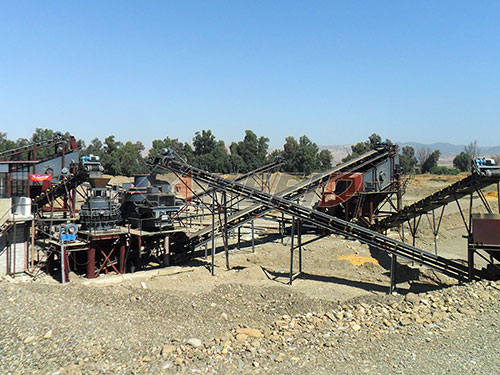
- Developing locally-sourced or hybrid alloy compositions that balance wear resistance with cost, given the specific abrasiveness of local rock.
- Optimizing liner profiles to extend life and maintain product shape over the wear cycle.
- Creating predictive maintenance algorithms using sensor data to forecast liner replacement.
4.4. Automation and Digital Integration
Modern quarries are moving toward Industry 4.0. An importer’s R&D can:
- Integrate crusher automation systems (e.g., ASRi, IC series) with local SCADA or ERP systems.
- Develop remote monitoring platforms that allow the importer’s service team to diagnose issues from a central hub.
- Implement IoT sensors for real-time tracking of power draw, oil temperature, vibration, and throughput.
5. Case Study: Importer R&D in a Developing Market
Consider a hypothetical but realistic scenario: An importer in a Southeast Asian country sources cone crushers from a European manufacturer. The local quarry rock is a highly abrasive, high-silica andesite. The standard crusher chamber supplied by the OEM is designed for medium-hard rock. Without R&D, the importer would face:
- Low throughput (due to feed size mismatch).
- Rapid liner wear (3-4 weeks instead of 8-10 weeks).
- Poor particle shape (high flakiness index).
The importer’s R&D team would:
- Analyze rock properties (compressive strength, abrasion index).
- Collaborate with the OEM to design a custom coarse chamber with a wider feed opening and thicker manganese liners.
- Develop a local liner casting partnership to reduce lead times and cost.
- Install a feed control system (e.g., level sensor and variable speed feeder) to maintain choke feeding.
- Train local operators on optimal crusher settings (closed side setting, eccentric speed).
The result: throughput increases by 20%, liner life doubles, and ballast meets AREMA standards. The importer gains a reputation as a technical partner, not just a seller.
6. Challenges in Importer-Led R&D
Despite the clear benefits, importers face significant hurdles:
- Capital Intensity: R&D requires investment in test labs, simulation software, skilled engineers, and pilot plants. Many importers operate on thin margins.
- Intellectual Property (IP) Constraints: OEMs may restrict modifications to their equipment. Importers must negotiate IP sharing or focus on peripheral innovations (e.g., control systems, wear parts).
- Talent Scarcity: Finding engineers with expertise in both mechanical design and mineral processing is difficult in many markets.
- Long Payback Periods: R&D results may take years to materialize, while importers face immediate pressure to generate sales.
- Regulatory Hurdles: Modifying imported machinery may require re-certification for safety and environmental standards, adding time and cost.
7. Strategic Recommendations for Importers
To succeed in the “Quarry Ballast Crushing Equipment Importer R&D” space, organizations should adopt the following strategies:
- Form Strategic Alliances with OEMs: Rather than acting as adversaries, importers should seek joint development agreements where they contribute local market knowledge and testing facilities in exchange for technical support and IP access.
- Invest in a Mobile Test Plant: A small, mobile crushing and screening unit allows the importer to conduct on-site trials at customer quarries, generating data and trust.
- Build a Digital Twin Capability: Using software to create a virtual replica of the crushing circuit enables rapid optimization without physical trials.
- Focus on Aftermarket R&D: The highest ROI often comes from innovations in wear parts, spare parts availability, and predictive maintenance services.
- Develop Local Standards Expertise: Become the go-to authority on ballast specifications in the region. This positions the importer as a consultant, not just a vendor.
- Leverage Government and Industry Grants: Many governments offer R&D tax incentives or grants for industrial innovation. Importers should actively pursue these.
8. Future Trends
The future of ballast crushing equipment importation and R&D will be shaped by:
- Sustainability: Carbon footprint reduction will drive demand for electric or hybrid crushers, energy-efficient motors, and closed-loop water systems.
- Autonomous Operations: Fully automated quarries will require crushers with advanced sensors and self-optimizing control algorithms.
- Circular Economy: Recycling of railway ballast (after track renewal) will create demand for specialized mobile crushers that can clean and re-grade used stone.
- AI and Machine Learning: Predictive models will optimize crusher settings in real-time based on feed characteristics and product quality feedback.
9. Conclusion
The role of the quarry ballast crushing equipment importer has transcended traditional trade. In a market defined by stringent quality standards, variable raw materials, and rising operational costs, R&D is no longer optional—it is a strategic necessity. Importers who invest in localization, process optimization, wear parts innovation, and digital integration will not only survive but thrive. They will transform from passive intermediaries into active value creators, enabling their customers to produce world-class ballast efficiently and sustainably. The path forward requires a commitment to technical excellence, collaboration with global OEMs, and a deep understanding of local conditions. For those who embrace this challenge, the rewards are substantial: market leadership, customer loyalty, and a lasting contribution to critical infrastructure development.
