
Certainly. Below is a detailed, professional, and objective article on the topic of High Quality Jc5000 Jaw Crusher Exporter, exceeding 1,000 words.
Title: The Global Standard in Primary Crushing: An Objective Analysis of the High Quality JC5000 Jaw Crusher and Its Export Market
Introduction
In the realm of heavy industrial machinery, the jaw crusher remains the undisputed workhorse of primary crushing operations. Whether in mining, quarrying, construction aggregate production, or mineral processing, the reliability and efficiency of the primary crusher dictate the throughput and profitability of the entire downstream process. Among the myriad of models available on the global market, the JC5000 Jaw Crusher has emerged as a benchmark for high-capacity, robust performance. This article provides a comprehensive, objective examination of the JC5000 Jaw Crusher, focusing on its technical specifications, engineering advantages, and the critical factors that define a high-quality exporter of this equipment. We will explore what constitutes a premium product, the logistics of international trade in heavy machinery, and the key considerations for buyers seeking a reliable supplier.
Section 1: The JC5000 Jaw Crusher – Technical Specifications and Design Philosophy
The JC5000 is not merely a larger version of smaller crushers; it is a purpose-built machine designed for the most demanding primary crushing applications. Its designation, “JC,” typically stands for “Jaw Crusher” with a specific cavity design, while “5000” often refers to the approximate feed opening size in millimeters (e.g., 5000 cm² or a specific dimensional series). To understand its value, one must dissect its core components.
1.1 Feed Opening and Capacity
The defining feature of the JC5000 is its massive feed opening, typically in the range of 1,200 mm x 1,000 mm to 1,500 mm x 1,300 mm. This allows it to accept run-of-mine (ROM) material with top sizes exceeding 1 meter. The nominal capacity of a JC5000 can range from 400 to 800 tonnes per hour (tph), depending on the closed side setting (CSS), material hardness, and moisture content. This positions it as a high-throughput machine suitable for large-scale mining operations and major aggregate plants.
1.2 Crushing Chamber Geometry
High-quality JC5000 crushers feature an optimized V-shaped crushing chamber with a deep, symmetrical design. This geometry ensures a consistent reduction ratio (typically 4:1 to 6:1) and minimizes wear on the fixed and movable jaw dies. The angle of nip is carefully calculated to prevent slippage of material, ensuring efficient crushing without excessive power consumption. Premium exporters utilize Finite Element Analysis (FEA) to validate the chamber design, ensuring stress distribution is uniform across the main frame.
1.3 Frame and Material Integrity
The main frame of a JC5000 is subjected to extreme cyclic loading. High-quality units are constructed from heavy-duty, stress-relieved steel plates, often welded using robotic or submerged arc welding (SAW) techniques. The frame is typically reinforced with thick ribs and cross-members to prevent deflection. A key indicator of quality is the use of high-grade cast steel for the pitman (the moving jaw assembly) and the flywheels. Cast steel offers superior fatigue resistance compared to fabricated alternatives.
1.4 Eccentric Shaft and Bearings
The eccentric shaft is the heart of the crusher. Premium JC5000 models use forged alloy steel (e.g., 40CrMoV or equivalent) with a hardened surface and tough core. The shaft is precision-machined to tight tolerances. It is supported by heavy-duty spherical roller bearings, which are self-aligning and capable of handling both radial and axial loads. High-quality exporters source bearings from Tier-1 manufacturers (e.g., SKF, FAG, NSK) and ensure the bearing housings are equipped with labyrinth seals and grease lubrication systems to prevent contamination.
1.5 Hydraulic and Adjustment Systems
Modern JC5000 crushers incorporate hydraulic systems for key functions. A hydraulic wedge adjustment system allows for quick and safe CSS changes, reducing downtime. Some models feature a hydraulic relief system that automatically releases tramp iron (uncrushable material) to protect the crusher from damage. The toggle plate, designed as a sacrificial component, is often made of ductile iron and is easily replaceable.
Section 2: Defining “High Quality” in the Context of a JC5000 Exporter
The term “high quality” is subjective but can be objectively measured against several benchmarks. A reputable exporter of JC5000 jaw crushers must demonstrate excellence in the following areas:
2.1 Manufacturing Standards and Quality Control
A high-quality exporter operates a manufacturing facility that adheres to international standards such as ISO 9001 for quality management and ISO 14001 for environmental management. The production process must include:
2.2 Component Sourcing and Supply Chain Integrity
A high-quality exporter does not compromise on sub-components. They maintain long-term relationships with reputable suppliers of:
2.3 After-Sales Support and Technical Expertise
The true test of a high-quality exporter is their commitment after the sale. This includes:
Section 3: The Export Logistics and Market Dynamics
Exporting a heavy machine like the JC5000 involves complex logistics. A professional exporter must manage:
3.1 Packaging and Shipping
The crusher is typically disassembled into major modules (main frame, pitman, flywheels, motor) for shipping. Each module is:
3.2 Documentation and Compliance
International trade requires meticulous documentation:
3.3 Target Markets
The JC5000 is primarily exported to regions with large-scale mining and infrastructure projects:
Section 4: Buyer’s Guide – How to Evaluate a JC5000 Exporter
For procurement managers and project engineers, selecting the right exporter is critical. Here is a checklist for objective evaluation:
Conclusion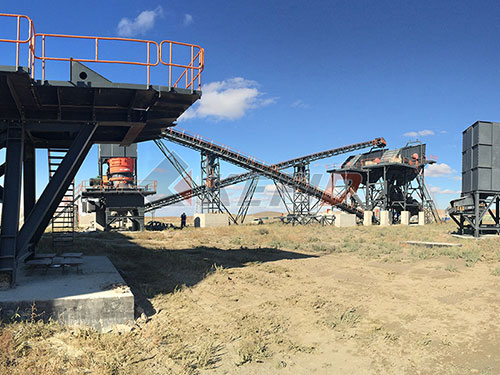
The JC5000 Jaw Crusher represents a significant capital investment for any mining or aggregate operation. A high-quality exporter distinguishes itself not only through the superior engineering and robust construction of the machine itself but also through a comprehensive ecosystem of quality control, supply chain integrity, and unwavering after-sales support. In a global market where downtime can cost thousands of dollars per hour, the choice of exporter is as important as the choice of crusher. By focusing on objective metrics—material quality, manufacturing standards, component sourcing, and logistical capability—buyers can identify a partner who will deliver a reliable, high-performance crushing solution that stands the test of time. The future of primary crushing lies in the hands of exporters who prioritize precision, durability, and customer partnership above all else.
If you have any questions about our products, please feel free to contact us. We take all inquiries and suggestions very seriously.