
Professional Gold Ore Crushing Equipment Producer: Engineering Excellence in Mineral Processing
In the global mining industry, the extraction of gold from its ores is a complex, multi-stage process that demands precision, durability, and efficiency. At the heart of this process lies the critical phase of crushing—the reduction of run-of-mine (ROM) ore into manageable particle sizes for subsequent grinding and recovery. The role of a Professional Gold Ore Crushing Equipment Producer is therefore not merely that of a manufacturer, but a strategic partner in optimizing throughput, minimizing operational costs, and maximizing gold recovery rates. This article provides a comprehensive, objective analysis of the industry, focusing on the technical specifications, engineering principles, market dynamics, and operational considerations that define a world-class producer of gold ore crushing equipment.
1. The Critical Role of Crushing in Gold Ore Processing
Gold ore, depending on its geological origin, can vary from free-milling ores (where gold is easily liberated) to refractory ores (where gold is encapsulated in sulfides or carbonaceous matter). Regardless of the type, the first mechanical step after mining is crushing. The objective is to reduce large boulders (often up to 1.5 meters in diameter) to a size suitable for the grinding mill—typically 80% passing 10-20 mm for SAG mills, or finer for ball mills.
A professional equipment producer understands that the crushing stage directly influences:
Thus, the producer must design equipment that balances reduction ratio, capacity, wear resistance, and operational flexibility.
2. Core Equipment Categories and Technical Specifications
A professional producer typically offers a comprehensive range of crushers tailored to gold ore characteristics. The three primary types are:
2.1 Jaw Crushers (Primary Crushing)
Jaw crushers are the workhorses of primary crushing. For gold ore, they must handle high compressive strengths (up to 350 MPa) and occasional tramp iron. Key specifications include:
Professional producers employ finite element analysis (FEA) to optimize the crushing chamber geometry, ensuring a nip angle of 18-22° to prevent slippage and maximize throughput. For gold ores with high clay content, a hydraulic wedge adjustment system is preferred to prevent clogging.
2.2 Cone Crushers (Secondary/Tertiary Crushing)
Cone crushers are essential for producing a well-graded, cubical product. In gold ore processing, they are used after primary crushing to achieve a finer product (typically 10-40 mm). Advanced features include:
A professional producer integrates automation systems that monitor power draw, oil temperature, and CSS in real-time. For gold ores with high silica content, the use of ceramic composite liners can extend wear life by 30-50% compared to traditional manganese.
2.3 Impact Crushers (Specialized Applications)
While less common for hard gold ores, impact crushers (horizontal shaft impactors, or HSIs) are used for softer, friable ores or for pre-crushing in heap leach operations. They offer high reduction ratios (up to 30:1) but suffer from higher wear rates. Professional producers design impact crushers with:
For gold ores with high moisture or clay, a grizzly feeder or scalping screen is integrated to bypass fines, reducing wear and energy consumption.
3. Engineering Excellence: Design and Manufacturing Standards
A professional gold ore crushing equipment producer adheres to rigorous engineering standards that go beyond basic functionality. Key differentiators include:
3.1 Material Science and Wear Management
Gold ore is abrasive, often containing quartz (Mohs hardness 7) and pyrite. A professional producer uses:
3.2 Structural Integrity and Fatigue Life
Crushing equipment experiences cyclic loading of 300-600 cycles per minute. Professional producers perform:
3.3 Automation and Digital Integration
Modern gold mines demand remote monitoring and predictive maintenance. Professional equipment integrates:
4. Operational Considerations for Gold Mines
Selecting the right crushing equipment is only half the battle. A professional producer provides comprehensive support for:
4.1 Circuit Design and Optimization
The producer should offer process engineering services to design the optimal crushing circuit. For example: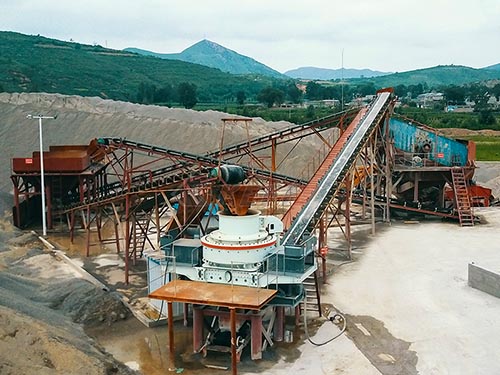
4.2 Maintenance and Spare Parts Availability
Gold mines often operate 24/7, so downtime is costly. A professional producer maintains:
4.3 Environmental and Safety Compliance
Crushing generates dust, noise, and vibration. Professional equipment includes:
5. Market Leaders and Global Supply Chain
The global market for gold ore crushing equipment is dominated by a few key players, but niche professional producers also thrive. Notable companies include:
A professional producer differentiates itself through:
6. Future Trends and Innovations
The gold ore crushing industry is evolving rapidly. Professional producers are investing in:
7. Conclusion
A Professional Gold Ore Crushing Equipment Producer is defined not only by the machines it builds but by its deep understanding of mineral processing, material science, and operational reliability. From primary jaw crushers that withstand the brutal impact of run-of-mine ore to precision cone crushers that deliver consistent product size, every component must be engineered for the specific challenges of gold extraction. As gold deposits become deeper and ores more complex, the demand for innovative, durable, and efficient crushing solutions will only grow. For mining companies, partnering with a professional producer is not a purchase—it is an investment in the profitability and sustainability of their operations. The best producers combine decades of field experience with cutting-edge technology, ensuring that the first step in gold recovery is also the most reliable.
If you have any questions about our products, please feel free to contact us. We take all inquiries and suggestions very seriously.