
In the vast and intricate ecosystem of global steel production, the journey of iron ore from a raw, mined material to a precisely graded feedstock for blast furnaces is a complex industrial ballet. At the heart of this transformation lies a specialized and often underappreciated player: the professional iron ore crushing plant trading company. These entities are far more than mere equipment vendors; they are integrated solution providers, technical consultants, and strategic partners whose expertise ensures the efficiency, reliability, and profitability of mining operations worldwide. This article delves into the multifaceted role, operational scope, value proposition, and evolving challenges of these pivotal companies.
A professional iron ore crushing plant trading company operates at the intersection of heavy engineering, mineral processing, and international commerce. Its primary function is to supply complete, semi-complete, or modular crushing and screening systems tailored specifically for iron ore applications. However, this supply is merely the culmination of a comprehensive service portfolio:
Consultation and Feasibility Studies: Before any equipment is discussed, these companies engage in detailed analysis. They assess the client’s ore characteristics (hematite vs. magnetite, abrasion index, moisture content, clay content), required production capacity (from 500 to over 10,000 tonnes per hour), product size specifications (lump ore vs. fines), and site-specific constraints (climate, topography, infrastructure). This phase determines the optimal process flow.
Engineering and Design: Leveraging deep process knowledge, engineers design the crushing circuit. For iron ore—notoriously hard and abrasive—the circuit typically involves multiple stages:
Equipment Sourcing and Supply: The trading company acts as a one-stop shop, sourcing equipment from a network of trusted manufacturers. This includes not just crushers and screens but also feeders, conveyors, dust suppression systems (critical for iron ore fines), metal detectors, tramp metal magnets (especially important for magnetite ores), control systems, and structural steel.
Logistics and Project Management: Transporting multi-tonne crushers components to remote mining sites is a logistical feat. These companies manage complex international shipping, customs clearance, and on-site delivery schedules.
Installation Supervision & Commissioning: Their technical teams supervise erection on-site, ensuring precise alignment and integration of all components before overseeing commissioning—the critical phase where the plant is tested with actual ore.
After-Sales Support & Lifecycle Management: The relationship extends long after startup through comprehensive service agreements: provision of wear parts (mantles concaves liners made from specialized manganese steel), predictive maintenance programs remote monitoring via SCADA systems training for client personnel
Why would a major mining house engage a trading company rather than dealing directly with original equipment manufacturers (OEMs)? The value proposition is compelling: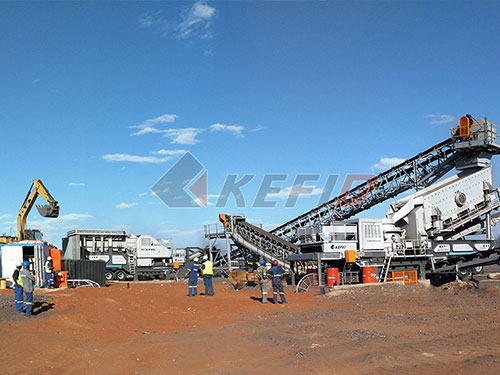
The market for these services is driven by several factors:
Leading companies in this space often develop niche specializations Some focus on turnkey “mega-plants” for tier-1 miners Others excel in modular portable plants ideal for smaller deposits or temporary satellite operations Some differentiate through digital offerings providing digital twins AI-driven optimization algorithms predictive analytics platforms that maximize throughput minimize downtime
The industry faces significant headwinds:
Looking ahead successful professional iron ore crushing plant trading companies will be those that evolve beyond hardware traders They are transforming into technology-enabled service partners Their future lies in offering “crushing as a service” underpinned by data analytics delivering guaranteed uptime throughput metrics per-tonne-processed cost models Furthermore integrating with downstream processes like bulk material handling port logistics will create additional value streams enabling seamless integration from mine face shipment Ultimately their success remains inextricably linked health global steel industry Yet by driving innovation efficiency resilience mineral supply chains they not only serve industry but actively contribute its sustainable transformation ensuring vital raw material flows world’s economies reliably sustainably
If you have any questions about our products, please feel free to contact us. We take all inquiries and suggestions very seriously.