
Impact Crushers Manufacturing Logistics: A Comprehensive Analysis of Supply Chain Dynamics, Production Workflows, and Distribution Strategies
Introduction
The global aggregates, mining, and construction recycling industries rely heavily on impact crushers—machines designed to reduce large rock, concrete, and asphalt into smaller, uniform particles through high-velocity impact forces. Unlike jaw or cone crushers, which operate via compression, impact crushers utilize rapid rotor-driven hammers or blow bars to fracture material, offering superior reduction ratios and cubical product shapes. However, the manufacturing and logistics of these heavy-duty machines present unique challenges that differ significantly from lighter industrial equipment. This article provides a detailed, professional examination of impact crusher manufacturing logistics, covering raw material sourcing, fabrication processes, assembly complexity, quality assurance, global distribution networks, spare parts management, and emerging trends in digital supply chain optimization.
1. Raw Material Sourcing and Inbound Logistics
The production of an impact crusher begins with the procurement of high-grade materials, each selected for specific mechanical properties. The primary components include:
Inbound logistics for these materials involve complex global sourcing. For instance, high-chromium blow bars are often produced in foundries in China, India, or South Africa, while forged shafts may come from Germany, Japan, or South Korea. Manufacturers must manage multi-modal transport—sea freight for bulk steel, air freight for critical or delayed components, and overland trucking for regional suppliers. Lead times for castings can range from 8 to 16 weeks, necessitating advanced demand forecasting and safety stock strategies. To mitigate supply chain risks, leading manufacturers often dual-source critical wear parts and maintain strategic inventory buffers at regional distribution centers.
2. Manufacturing Process and In-House Logistics
The fabrication of an impact crusher is a multi-stage process that requires precise coordination between different production cells. The typical workflow includes:
2.1 Plate Cutting and Forming
Large steel plates are cut using CNC plasma or laser cutting machines. For thick sections (>50 mm), oxy-fuel cutting is preferred. The cut pieces are then bent or rolled into curved shapes for the crusher housing. In-house logistics here involve automated material handling systems, such as overhead cranes with capacities up to 50 tons, and automated guided vehicles (AGVs) to transport plates between cutting, bending, and welding stations.
2.2 Welding and Fabrication
The housing, rotor cage, and base frame are assembled using submerged arc welding (SAW) or flux-cored arc welding (FCAW). Given the thick sections, preheating and post-weld heat treatment (PWHT) are often required to relieve residual stresses. This stage demands a dedicated welding bay with fume extraction, positioners, and robotic welding arms for repeatable seams. Logistics within the plant must sequence operations to avoid bottlenecks—for example, the rotor assembly must be balanced dynamically before being fitted into the housing, requiring a clean-room-like environment.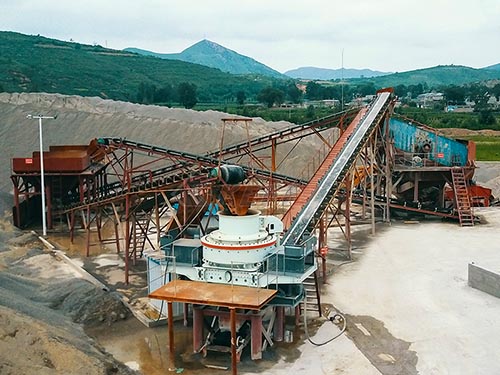
2.3 Machining
Critical surfaces—bearing housings, rotor shaft ends, and mounting flanges—undergo precision machining on horizontal boring mills, vertical turning lathes, and CNC machining centers. Tolerances are typically within ±0.05 mm. The machining department operates as a job-shop within the larger plant, with work orders prioritized based on final assembly schedules. In-process inventory (WIP) is tracked via barcode or RFID systems to ensure real-time visibility.
2.4 Heat Treatment and Surface Finishing
Wear components (blow bars, liners) are heat-treated to achieve optimal hardness (e.g., 450–600 HB). After heat treatment, they are shot-blasted and coated with anti-corrosion primers. The main frame is painted with high-build epoxy or polyurethane coatings, often in a dedicated paint booth with controlled humidity.
2.5 Sub-Assembly and Final Assembly
Sub-assemblies—such as the rotor with bearings, the hydraulic opening system, and the discharge conveyor mount—are built in parallel. Final assembly occurs on a dedicated assembly line, where the crusher is fully erected, aligned, and tested. This stage requires precise sequencing of components from both internal fabrication and external suppliers. A typical mid-sized impact crusher (e.g., 40–60 tons) may take 4–6 weeks from start of assembly to crate-ready status.
3. Quality Assurance and Testing Logistics
Quality control is not a single checkpoint but an integrated logistics function. Incoming materials undergo spectrometric analysis and ultrasonic testing. During fabrication, weld integrity is verified via radiography or phased-array ultrasonic testing. After assembly, each crusher undergoes a no-load test run for 4–8 hours, checking vibration levels, bearing temperatures, and rotor balance. For export units, a load test with actual aggregate may be performed if the customer requires it. The logistics of testing involve moving the assembled crusher to a test bay with a dedicated power supply, feed hopper, and conveyor system. Once testing is complete, the unit is disassembled into major modules (rotor, housing, base frame, drive system) for shipping—a critical logistical step that reduces transport volume and weight.
4. Packaging and Export Logistics
Impact crushers are heavy and oversized. A typical unit may weigh between 15 and 80 metric tons, with dimensions exceeding 3 meters in height and width. Export logistics therefore require specialized packaging and freight planning:
5. Distribution Network and Regional Warehousing
Given the high cost of shipping and the need for rapid after-sales support, impact crusher manufacturers typically establish a multi-tier distribution network: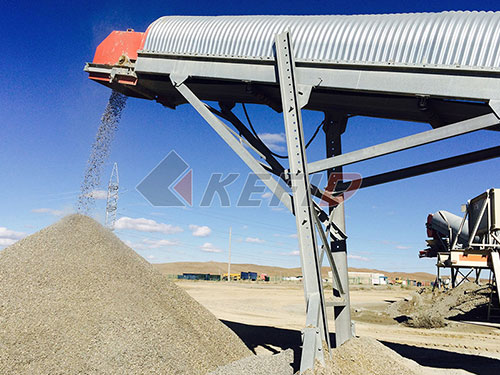
Inventory management across these tiers is a delicate balance. Wear parts have a predictable consumption rate based on abrasiveness and tonnage processed, allowing for statistical forecasting. However, emergency breakdowns require a responsive logistics system—often using air freight for critical components, despite the high cost. Advanced manufacturers implement vendor-managed inventory (VMI) programs with key dealers, where the manufacturer retains ownership until parts are consumed.
6. Reverse Logistics and Remanufacturing
Impact crushers are subject to severe wear, and their service life can be extended through remanufacturing. Reverse logistics involves the return of worn or damaged components (e.g., rotors, shafts, housings) from customer sites to manufacturing facilities. This process includes:
7. Digitalization and Supply Chain Visibility
Modern impact crusher manufacturing logistics increasingly relies on digital tools:
8. Challenges and Risk Mitigation
The logistics of impact crusher manufacturing face several persistent challenges:
9. Future Outlook
The next decade will see impact crusher logistics evolve toward greater localization and sustainability. Electric and hybrid mobile impact crushers are gaining market share, requiring different logistics—these units are self-propelled on tracks, reducing the need for heavy transport trailers. Additionally, the circular economy will push manufacturers to design for easier disassembly and component reuse. Logistics networks will become more agile, with micro-factories near urban recycling centers producing wear parts on-demand via additive manufacturing (3D printing of blow bars is already being tested). Finally, autonomous trucks and drones may handle intra-plant and short-haul logistics, further reducing lead times.
Conclusion
Impact crusher manufacturing logistics is a sophisticated discipline that integrates metallurgy, heavy fabrication, precision machining, global freight, and digital supply chain management. Unlike consumer goods, these machines require bespoke handling at every stage—from sourcing high-alloy wear materials to coordinating breakbulk ocean shipments. Successful manufacturers treat logistics not as a cost center but as a competitive advantage, enabling faster delivery, lower total cost of ownership, and superior after-sales support. As the industry moves toward automation and data-driven decision-making, the logistics function will remain the backbone of reliable, high-performance impact crusher delivery worldwide.
If you have any questions about our products, please feel free to contact us. We take all inquiries and suggestions very seriously.