
Professional Slag Crusher Plant Contract Manufacturer: Engineering, Capabilities, and Strategic Value
Introduction
In the modern metallurgical and steel-making industries, slag is no longer viewed as mere waste. It is a secondary raw material with significant economic and environmental value. However, the transformation of molten slag into usable aggregates, cementitious materials, or road base requires heavy-duty, precision-engineered crushing and screening systems. This is where the role of a professional slag crusher plant contract manufacturer becomes indispensable. Unlike standard crushing equipment suppliers, a contract manufacturer specializing in slag processing plants offers turnkey solutions—from design and fabrication to installation and after-sales support—under a single contractual umbrella. This article provides a detailed, objective examination of what constitutes a professional slag crusher plant contract manufacturer, the technical architecture of such plants, the critical design considerations, the manufacturing process, quality assurance protocols, and the strategic advantages of engaging a contract manufacturer over piecemeal procurement.
1. Definition and Scope of a Contract Manufacturer in Slag Processing
A contract manufacturer in this context is an entity that assumes full responsibility for the engineering, production, assembly, and commissioning of a complete slag crushing and screening plant. The scope typically includes:
The key differentiator between a “manufacturer” and a “contract manufacturer” is the latter’s contractual accountability for the entire system’s performance, often including guaranteed throughput and product quality metrics.
2. Technical Architecture of a Professional Slag Crusher Plant
A professional-grade slag plant is not a simple assembly of off-the-shelf crushers. It is a purpose-built system designed to handle the unique physical and chemical properties of slag, which include high abrasiveness, variable moisture content, and the presence of metallic iron.
2.1 Primary Crushing Stage
The run-of-mill slag, often in lumps of 300–500 mm, enters a heavy-duty jaw crusher or an impact crusher with wear-resistant liners. For slag with high compressive strength (e.g., blast furnace slag), a hydraulic jaw crusher with a deep crushing chamber is preferred. The primary crusher reduces material to 100–150 mm. A professional contract manufacturer will integrate a vibrating grizzly feeder with a by-pass chute to remove fines and metallic scrap before the crusher, thereby extending crusher life.
2.2 Magnetic Separation and Metal Recovery
Slag contains 5–15% metallic iron, which is both a contaminant for downstream aggregate use and a valuable by-product. A professional plant incorporates multiple overband magnetic separators and drum magnets at strategic transfer points. The recovered metal is routed to a separate stockpile, while the non-metallic slag proceeds to secondary crushing. This step is non-negotiable in a professional design, as unremoved metal can damage cone crushers and screens.
2.3 Secondary and Tertiary Crushing
The secondary stage typically employs a cone crusher or a high-performance impact crusher with a closed-circuit configuration. For granulated blast furnace slag (GBFS), a vertical shaft impact (VSI) crusher is often used to achieve cubical particle shape, which is critical for asphalt and concrete aggregates. Tertiary crushing, if required, uses a short-head cone crusher to produce fine aggregates (0–5 mm). The entire circuit is designed with surge hoppers and variable-speed feeders to ensure a consistent feed rate, preventing choke-ups and maximizing utilization.
2.4 Screening and Washing
Vibrating screens with polyurethane or rubber mesh (to reduce clogging) classify the crushed slag into multiple fractions: 0–5 mm, 5–10 mm, 10–20 mm, and 20–40 mm. In cases where the slag has high chloride content (e.g., steel slag), a washing system with a log washer or hydrocyclone is integrated to reduce soluble salts, ensuring the final product meets environmental and construction standards.
2.5 Dust Suppression and Environmental Controls
Professional manufacturers design plants with closed-loop water spray systems, baghouse dust collectors, and covered conveyor galleries. This is not merely regulatory compliance; it protects equipment bearings, improves operator visibility, and reduces the risk of fugitive dust explosions in confined spaces.
3. Engineering Design Considerations for Slag-Specific Challenges
3.1 Abrasion and Wear
Slag has an abrasiveness index significantly higher than natural stone. Therefore, a professional manufacturer uses:
3.2 Thermal Shock and Moisture
Fresh slag can be hot (up to 300°C) if not fully cooled. The plant design must include a cooling yard and a moisture control system. A professional contract manufacturer will specify crushers with heat-resistant bearings and seals, and will design the conveyor system with sufficient slope to handle sticky, wet slag without material build-up.
3.3 Variable Feed Composition
Slag from different furnaces (blast furnace, basic oxygen furnace, electric arc furnace) varies in density, porosity, and metal content. The plant must be flexible. This is achieved through:
4. Manufacturing Capabilities and Quality Assurance
A professional contract manufacturer operates a dedicated fabrication facility with CNC machining centers, heavy-duty welding bays, and dynamic balancing equipment for rotors. The manufacturing process follows a documented quality management system, typically ISO 9001:2015.
4.1 Material Traceability
Every critical component—crusher shafts, bearings, wear liners—must have a material test certificate (MTC) confirming chemical composition and mechanical properties. This is essential for long-term reliability and for warranty claims.
4.2 Assembly and Pre-Delivery Testing
Before dispatch, the manufacturer conducts a no-load test run of the entire plant in a modular format. This includes:
4.3 Third-Party Inspection
Professional manufacturers welcome third-party inspections by SGS, Bureau Veritas, or TÜV. This is a hallmark of transparency and technical credibility.
5. Turnkey Project Execution: From Contract to Commissioning
The contract manufacturing model is structured around a phased execution plan:
Phase 1: Feasibility and Process Design
The manufacturer conducts a site survey, analyzes slag samples (particle size distribution, moisture, metal content), and provides a process flow diagram (PFD) and a general arrangement (GA) drawing. A performance guarantee is defined—e.g., “throughput of 200 tph at 90% availability, with output gradation within ±5% of specification.”
Phase 2: Detailed Engineering and Fabrication
This phase involves 3D modeling (SolidWorks or Autodesk Inventor), finite element analysis (FEA) on critical load-bearing structures, and procurement of long-lead items (motors, gearboxes, bearings). The client receives a weekly fabrication progress report with photographic evidence.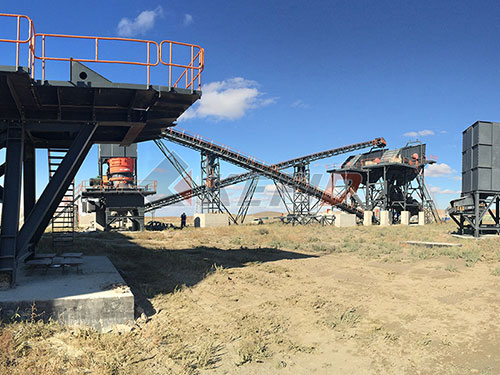
Phase 3: Civil and Foundation Works
The manufacturer provides foundation drawings and anchor bolt plans. While civil construction is often subcontracted to local firms, the contract manufacturer supervises the alignment and leveling to ensure equipment tolerances are met.
Phase 4: Mechanical and Electrical Installation
A professional crew of erectors, riggers, and electricians executes the installation. The manufacturer’s project manager coordinates with the client’s site team. All bolted connections are torqued to specification, and all welding is performed by certified welders (e.g., AWS D1.1).
Phase 5: Commissioning and Performance Trials
After installation, the plant undergoes a 72-hour continuous run under load. The manufacturer measures actual throughput, power consumption, and product gradation. A performance acceptance test (PAT) is signed only when all guaranteed parameters are met.
6. Strategic Advantages of Engaging a Professional Contract Manufacturer
6.1 Single-Point Accountability
When a client procures crushers from one vendor, screens from another, and conveyors from a third, any performance shortfall leads to finger-pointing. A contract manufacturer eliminates this by owning the entire system’s performance. This reduces project risk and legal complexity.
6.2 Optimized Capital Expenditure (CAPEX)
A professional manufacturer uses standardized modular designs, which reduce engineering costs and fabrication lead times. They also have established supply chain relationships for bulk procurement of steel and wear parts, passing on cost savings to the client.
6.3 Reduced Operational Expenditure (OPEX)
Through proper crusher selection and circuit design, the manufacturer ensures minimal energy consumption per ton of product. Additionally, the use of high-quality wear parts with longer service life reduces downtime and replacement costs.
6.4 Compliance with Environmental Regulations
Professional manufacturers are well-versed in local environmental norms (e.g., CPCB guidelines in India, EPA standards in the US, EU Industrial Emissions Directive). Their designs incorporate noise enclosures, dust extraction, and water recycling systems, ensuring the plant obtains its environmental clearance without costly retrofits.
6.5 Technology Transfer and Training
A contract manufacturer provides comprehensive operator training, including standard operating procedures (SOPs), safety protocols, and basic maintenance routines. This empowers the client’s local workforce and reduces dependency on foreign experts.
7. Case Study: A Typical 150 TPH Steel Slag Plant
To illustrate the professional approach, consider a 150 TPH steel slag plant for a mid-sized steel mill. The contract manufacturer delivered:
The plant achieved a 96% availability in the first year, with wear part life exceeding 6,000 hours for jaw plates and 3,500 hours for VSI rotor tips.
8. Selection Criteria for a Professional Contract Manufacturer
When evaluating potential manufacturers, clients should objectively assess:
9. Conclusion
A professional slag crusher plant contract manufacturer is not a mere equipment supplier; it is a strategic engineering partner. The complexity of slag processing—abrasive feed, metallic contamination, thermal stress, and environmental constraints—demands a holistic, performance-guaranteed approach. By engaging a contract manufacturer, steel mills and construction material producers gain a turnkey solution that optimizes capital investment, ensures operational reliability, and maximizes the recovery of valuable metal and aggregates. In an era where circular economy principles are becoming regulatory mandates, the role of such specialized manufacturers will only grow in importance. Choosing the right partner requires rigorous technical due diligence, but the payoff—a robust, efficient, and compliant slag processing plant—is well worth the effort.
If you have any questions about our products, please feel free to contact us. We take all inquiries and suggestions very seriously.