Industrial Impact Crushers: The Architects of Modern Material Processing
Industrial impact crushers represent a cornerstone technology in the global aggregates, mining, and recycling sectors. As the primary “makers” or manufacturers of these machines, a specialized industry has evolved to engineer robust, efficient, and intelligent systems that fracture raw materials through the principle of high-speed impact. These are not mere pulverizers; they are sophisticated pieces of heavy engineering designed to transform blasted rock, demolition concrete, and industrial by-products into precisely graded, cubical aggregates essential for modern infrastructure. This article delves into the technology, design evolution, key manufacturers (makers), applications, and future trends defining this critical field.
Core Technology and Operating Principles
At their heart, industrial impact crushers operate on a fundamental kinetic principle: accelerate the feed material or an impeller to high velocity and force a collision that transfers energy sufficient to induce fracture. This is distinct from compression crushing (like jaw or cone crushers) which applies gradual pressure. The primary mechanisms are:
- Horizontal Shaft Impactors (HSI): The most common design for primary and secondary crushing. A high-speed rotor equipped with fixed or interchangeable hammers (blow bars) spins within a crushing chamber. Feed material is struck by the hammers and hurled against adjustable impact aprons (breaker plates), where it shatters. Repeated impacts between particles (rock-on-rock) further refine the product size. HSI crushers excel at producing a consistent, cubical product ideal for asphalt and concrete aggregates.
- Vertical Shaft Impactors (VSI): Often used for tertiary and quaternary crushing to produce premium-shaped aggregates, manufactured sand, and for fine grinding. Material is fed into the center of a high-speed rotor that discharges it outward into a stationary anvil ring (rock shelf) or into a cascade of falling material within the crushing chamber (rock-on-rock). VSI crushers are unparalleled for particle shape optimization and sand production.
The advantages of impact crushing include high reduction ratios (the ability to take large feed and produce small product in one stage), superior particle shape (cubicity), selective liberation in recycling applications, and relative operational flexibility.
The Evolution of Design: From Simple Breakers to System Intelligence
The makers of industrial impact crushers have driven significant evolution over decades:
- Materials Science: The wear parts—blow bars, impact aprons, anvils—are the consumable heart of the machine. Development has moved from standard manganese steel to complex composite alloys like chrome-ceramic hybrids and patented martensitic steels with embedded carbides. These innovations dramatically extend service life in abrasive applications.
- Rotor Dynamics: Modern rotors are monolithic or solidly welded designs with optimized mass for maximum kinetic energy transfer. They are precisely balanced at high speeds to minimize vibration and bearing load.
- Hydraulics & Automation: Contemporary crushers feature fully hydraulic adjustment of aprons/curtains for quick product size changes without manual intervention. Advanced automation systems integrate variable frequency drives (VFDs) on the rotor motor to optimize speed for different feed materials and monitor power draw as an indicator of load.
- Modularity & Accessibility: Leading makers design for maintenance ease with hydraulically opened frames, service cranes integrated into the housing, and quick-change systems for wear parts to minimize downtime.
Key Industrial Makers and Their Philosophies
The market is led by global OEMs (Original Equipment Manufacturers) with extensive R&D capabilities:
- Metso Outotec / Nordberg®: A Finnish-Swedish powerhouse known for its comprehensive Lokotrack® mobile plants featuring NP Series HSI crushers. Their focus is on system integration, reliability in extreme conditions, and digital services.
- Sandvik Group / Sandvik Mining & Rock Technology: Offers Prisec™ HSI crushers renowned for their versatility—capable of operating in primary or secondary roles with configuration changes—and CV200 series VSI crushers focused on sand production quality.
- Terex MPS / Cedarapids: An American legacy brand famous for its rugged durability in aggregate applications. Their horizontal shaft impactors are staples in North American quarries.
- HAZEMAG & EPR GmbH: A German specialist with deep roots in impactor technology since 1947. They are pioneers in semi- and fully-mobile primary impact crushing stations for cement limestone and mining applications.
- Stedman Machine Company: A prominent US maker known for its “Grand Slam” HSI series often used in industrial minerals processing (ag-lime), glass recycling, etc., emphasizing customizable solutions.
Beyond these giants exists a vibrant ecosystem of regional specialists like Eagle Crusher (USA), Striker Australia (mobile track plants), Zhengzhou Yifan Machinery (China), among others.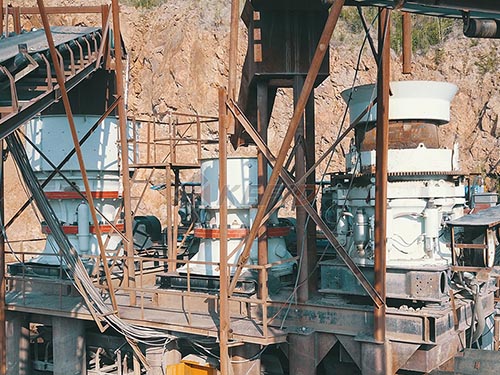
Dominant Applications Driving Demand
- Aggregate Production: The primary market involves processing limestone, granite, basalt into construction aggregates where particle shape is paramount.
- Cement & Limestone: Primary impact crushers handle massive run-of-mine limestone at high capacities with minimal fines generation before raw milling.
- Recycling: This is a rapidly growing segment impacting design philosophy specifically:
- Construction & Demolition Waste: Reinforced concrete is crushed; tramp metal like rebar must pass through without catastrophic damage—leading to designs with hydraulic opening mechanisms.
- Asphalt Recycling: Impactors efficiently break up RAP while preserving gradation.
- Industrial Waste: Slags from steel mills can be processed into valuable construction materials here too!
4 .Mining: Certain softer ores can be processed via primary HSI units offering lower capital cost compared traditional gyratories when conditions allow!
Future Trends Shaping Next-Generation Impact Crusher Makers
The industry trajectory points towards:
- Digitalization & Smart Crushing: Integration IoT sensors monitoring wear part thickness real-time predicting maintenance schedules; automated control systems adjusting parameters based feed quality optimizing throughput/product quality autonomously!
- Sustainability Focus: Energy efficiency becomes critical driver development – VFDs already contribute significantly reducing idle consumption! Noise dust suppression integral design considerations urban quarry sites recycling yards alike!
- Circular Economy Enablers: Designers now consider entire lifecycle machine itself – easier refurbishment remanufacturing components end life! Moreover they’re creating tools enabling circularity other industries through effective material liberation sorting processes!
- Hybrid Mobile Plants: Combining electric drive options renewable power sources diesel genset backup allowing operators meet emission regulations remote locations grid availability limited!
Conclusion
Industrial impact crusher makers stand as vital enablers of global development infrastructure sustainability efforts alike! Their journey from simple mechanical breakers today’s highly engineered intelligent systems reflects relentless pursuit efficiency durability adaptability! As demands shift towards specialized recycled materials need precise particle shaping continues grow so too will innovation this dynamic sector ensuring these machines remain indispensable architects our built environment’s raw materials!
