Premium Gold Ore Crushing Equipment Sourcing: A Comprehensive Guide to Selection, Procurement, and Operational Excellence
The extraction of gold from its ore is a capital-intensive and technically demanding process, where the efficiency of the comminution circuit—particularly the crushing stage—directly impacts downstream recovery rates, operational costs, and overall project viability. For mining operations targeting high-grade deposits or complex refractory ores, the sourcing of “premium” gold ore crushing equipment is not merely a procurement exercise but a strategic decision that influences the entire value chain. This article provides a detailed, objective analysis of the key considerations, equipment types, sourcing strategies, and evaluation criteria for acquiring top-tier crushing machinery tailored for gold ore processing.
1. Understanding the Role of Crushing in Gold Ore Processing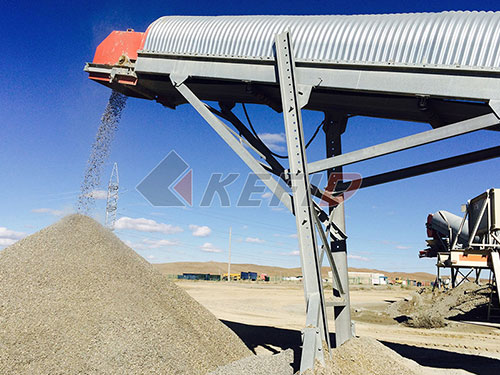
Gold ore, depending on its mineralogical composition, may be free-milling (where gold is easily liberated by grinding) or refractory (where gold is encapsulated in sulfides or carbonaceous matter). The primary objective of crushing is to reduce run-of-mine (ROM) ore, which can range from 200 mm to 1,500 mm in size, to a product typically below 20–50 mm, suitable for feeding into grinding mills (SAG, ball, or rod mills). Premium crushing equipment must achieve this size reduction with minimal energy consumption, high mechanical reliability, and the ability to handle varying ore hardness (e.g., Bond Work Index from 10 to 25 kWh/t) and abrasiveness (e.g., high quartz content).
2. Key Equipment Categories for Gold Ore Crushing
The selection of crushing equipment depends on throughput capacity, ore characteristics, and the desired final product size. The following are the primary categories of premium-grade machinery:
2.1. Primary Crushers: Jaw Crushers and Gyratory Crushers
- Jaw Crushers: For small to medium-scale operations (up to 1,500 tph), premium jaw crushers (e.g., Sandvik CJ series, Metso C series) offer robust construction, high reduction ratios (4:1 to 6:1), and ease of maintenance. Key features to source include: heavy-duty eccentric shafts, spherical roller bearings, and hydraulic wedge adjustment systems for closed-side setting (CSS) control. Premium models often incorporate finite element analysis (FEA)-optimized frames to withstand high impact loads from gold-bearing quartz veins.
- Gyratory Crushers: For large-scale operations (above 2,000 tph), gyratory crushers (e.g., FLSmidth Fuller-Traylor, ThyssenKrupp) are preferred for their continuous crushing action and ability to handle sticky, high-moisture ores. Premium sourcing should prioritize models with hydroset systems for automatic tramp iron relief and real-time CSS monitoring.
2.2. Secondary and Tertiary Crushers: Cone Crushers
Cone crushers dominate secondary and tertiary crushing stages due to their ability to produce well-shaped, fine products. For gold ore, premium cone crushers (e.g., Metso HP series, Sandvik CH series, Terex Cedarapids MVP) must feature:
- High eccentric throw and stroke to maximize inter-particle crushing and liberation of gold particles.
- Automated setting regulation (ASRi) to maintain consistent product size despite liner wear.
- Dust and moisture sealing to prevent contamination of downstream processes (e.g., cyanidation).
- Chamber design optimized for “cubical” product shape, reducing over-grinding and slime generation.
2.3. Impact Crushers: For Specific Applications
Horizontal shaft impactors (HSI) and vertical shaft impactors (VSI) are less common in gold ore crushing due to higher wear rates, but they are used for soft, friable ores or for shaping. Premium sourcing should focus on models with high-chrome alloy blow bars, adjustable rotor speeds, and open-rotor designs for reduced clogging.
2.4. High-Pressure Grinding Rolls (HPGR)
Increasingly adopted in gold circuits, HPGRs (e.g., Weir Minerals Enduron, Metso HRC) offer energy-efficient micro-cracking of ore particles, enhancing gold recovery in heap leaching or grinding circuits. Premium HPGRs must feature:
- Advanced wear protection (e.g., tungsten carbide studs or ceramic inserts).
- Variable frequency drives (VFDs) for precise pressure control.
- Skewing and floating roll systems to compensate for feed segregation.
3. Sourcing Criteria for Premium Equipment
When sourcing premium gold ore crushing equipment, buyers must evaluate suppliers and machinery against the following objective parameters:
3.1. Metallurgical Performance
- Reduction ratio and product size distribution: Equipment must consistently achieve the target P80 (80% passing size) with minimal fines generation.
- Liberation efficiency: For refractory ores, the crushing stage should expose gold surfaces without excessive over-grinding, which can lead to gold loss in slimes.
3.2. Mechanical Reliability and Durability
- Material quality: Premium equipment uses high-grade steel (e.g., AR400, Hardox 500) for wear parts and ductile iron for frames.
- Bearing and seal life: Expect L10 bearing life exceeding 50,000 hours under full load.
- Liner wear rates: Suppliers should provide documented wear curves for specific ore types (e.g., 0.5–1.5 g/t of ore for manganese steel liners).
3.3. Energy Efficiency
- Specific energy consumption (kWh/t): Premium crushers should achieve 0.5–1.2 kWh/t for primary crushing and 1.5–3.0 kWh/t for secondary/tertiary stages, depending on ore hardness.
- Motor and drive system: High-efficiency motors (IE4 or IE5) and VFDs reduce power costs.
3.4. Automation and Digital Integration
- Remote monitoring: Equipment should support IoT-enabled sensors for vibration, temperature, and power draw analysis.
- Predictive maintenance: AI-based algorithms that forecast liner replacement and bearing failure.
- Integration with plant control systems (e.g., SCADA, DCS).
3.5. After-Sales Support and Spare Parts Availability
- Global service network: Suppliers with regional hubs in gold mining regions (e.g., Western Australia, Nevada, South Africa).
- Lead times for critical spares: Premium suppliers maintain stock of wear parts (mantles, concaves, jaw dies) with 48-hour emergency dispatch.
- Training and commissioning: On-site training for operators and maintenance teams.
4. Sourcing Strategies: Direct vs. Distributor vs. OEM
4.1. Direct from OEM (Original Equipment Manufacturer)
- Advantages: Full warranty, access to latest technology, customized engineering, and direct technical support.
- Disadvantages: Higher upfront cost, longer lead times for non-standard configurations.
- Best for: Large-scale mines with dedicated engineering teams.
4.2. Authorized Distributors
- Advantages: Local inventory, faster delivery, bundled services (e.g., installation, commissioning).
- Disadvantages: Limited customization, potential markup.
- Best for: Mid-tier operations requiring rapid deployment.
4.3. Used or Refurbished Equipment
- Advantages: Lower capital expenditure (30–50% of new).
- Disadvantages: Unknown wear history, potential obsolescence, higher maintenance costs.
- Best for: Small-scale or greenfield projects with tight budgets. Premium sourcing here requires third-party inspection (e.g., by Bureau Veritas or SGS) and OEM refurbishment certification.
5. Evaluation of Leading Global Suppliers
The following OEMs are widely recognized for premium gold ore crushing equipment:
- Metso Outotec (Finland): Known for HP series cone crushers and C series jaw crushers. Their “Planet Positive” portfolio emphasizes energy efficiency and circular economy principles.
- Sandvik Mining and Rock Solutions (Sweden): CH series cone crushers with patented “ASRi” and “Hydroset” systems. Their “Stationary Crushing and Screening” solutions are modular and scalable.
- FLSmidth (Denmark): Fuller-Traylor gyratory crushers and EV hammer impact crushers. Strong in large-capacity primary crushing.
- Weir Minerals (UK): Enduron HPGRs and Trio cone crushers. Focus on wear-resistant materials and slurry handling integration.
- ThyssenKrupp (Germany): KB series gyratory crushers with “Crusher Control System” (CCS). Suitable for extreme duty applications.
6. Risk Mitigation in Sourcing
6.1. Technical Risks
- Ore variability: Ensure equipment can handle fluctuations in feed size, moisture (up to 8%), and clay content. Premium crushers should have “anti-clogging” designs (e.g., curved jaw plates, non-choking chambers).
- Wear life: Request certified wear test results from pilot plants or similar operations.
6.2. Supply Chain Risks
- Geopolitical factors: Source from suppliers with manufacturing facilities in stable regions (e.g., Europe, North America, Australia).
- Tariffs and logistics: Account for import duties (e.g., 5–15% in some jurisdictions) and freight costs (especially for heavy items like crusher frames).
6.3. Financial Risks
- Payment terms: Negotiate milestone-based payments (e.g., 30% upon order, 30% upon shipment, 30% upon commissioning, 10% retention).
- Performance guarantees: Include liquidated damages for failure to meet throughput or power consumption targets.
7. Case Study: Sourcing for a High-Grade Underground Gold Mine
Consider a hypothetical underground gold mine in Western Australia with a throughput of 500,000 tpa, ore grade 8 g/t, and Bond Work Index of 18 kWh/t. The optimal crushing circuit would include:
- Primary: A Metso C160 jaw crusher (1,200 x 1,600 mm) with hydraulic CSS adjustment.
- Secondary: Two Sandvik CH660 cone crushers in closed circuit with a double-deck screen.
- Tertiary: A Weir Minerals Enduron HPGR (2.0 m x 1.5 m) for micro-cracking prior to ball milling.
Sourcing would involve:
- Requesting proposals from Metso, Sandvik, and Weir.
- Evaluating total cost of ownership (TCO) over 10 years, including energy, wear parts, and maintenance.
- Conducting a site visit to a reference installation (e.g., a similar gold mine in Nevada).
- Negotiating a 5-year spare parts agreement with guaranteed pricing.
8. Conclusion
Sourcing premium gold ore crushing equipment is a multifaceted process that demands a deep understanding of metallurgy, mechanical engineering, and supply chain management. The decision should be driven by objective performance metrics—reduction ratio, energy efficiency, wear life, and automation capability—rather than brand loyalty alone. By prioritizing equipment that offers robust construction, advanced digital features, and strong after-sales support, mining operators can optimize their comminution circuits, reduce downtime, and ultimately enhance gold recovery rates. As the industry moves toward sustainability, premium equipment that minimizes energy consumption and maximizes ore liberation will become increasingly critical for both economic and environmental performance.
