
High Quality Iron Ore Crushing Plant Factory: Engineering Excellence in Mineral Processing
The global demand for steel, driven by infrastructure development, automotive manufacturing, and industrial machinery, places immense pressure on the iron ore supply chain. At the heart of this chain lies the crushing plant—a critical facility where raw, extracted ore is reduced to a manageable size for subsequent beneficiation and pelletizing. A high-quality iron ore crushing plant factory is not merely a collection of machines; it is a meticulously engineered system that integrates advanced technology, robust design, and operational efficiency to maximize yield, minimize downtime, and ensure product consistency. This article provides a comprehensive, professional examination of what constitutes a high-quality iron ore crushing plant factory, covering its design principles, core equipment, operational considerations, quality control, and the latest technological advancements.
1. Foundational Design Principles of a High-Quality Crushing Plant
A factory specializing in the production of iron ore crushing plants must adhere to several fundamental design principles to ensure the final product meets the rigorous demands of the mining and steel industries.
1.1. Process Flow Optimization
The design begins with a thorough analysis of the raw ore characteristics—hardness (typically measured by the Bond Work Index), abrasiveness, moisture content, and feed size distribution. For iron ore, which is often hard and abrasive (e.g., hematite, magnetite, taconite), the crushing circuit must be designed to handle high wear rates. A typical high-quality plant employs a multi-stage crushing process: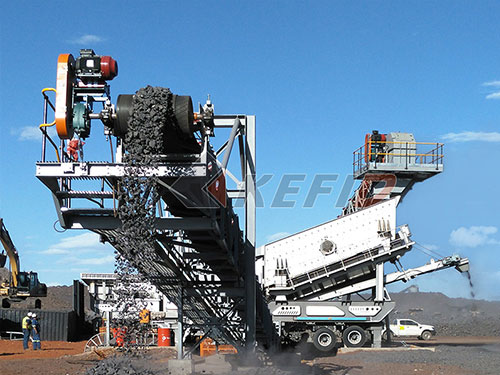
1.2. Modularity and Scalability
High-quality factories design plants with modular components that allow for easy expansion, relocation, or reconfiguration. This is crucial for mining operations that may change ore bodies or require increased throughput over time. Modular design also simplifies maintenance and reduces installation time.
1.3. Energy Efficiency
Crushing is an energy-intensive process. A well-designed plant incorporates energy-efficient motors, variable frequency drives (VFDs), and optimized crusher settings to reduce power consumption per ton of ore processed. For example, using HPGRs in tertiary crushing can reduce energy consumption by 20–30% compared to traditional cone crushers, while also improving product shape and liberation.
1.4. Safety and Environmental Compliance
Modern factories prioritize operator safety through automated controls, remote monitoring, dust suppression systems, and noise reduction enclosures. Environmental compliance includes closed-loop water systems for dust control, proper waste management, and adherence to local emissions standards.
2. Core Equipment in a High-Quality Iron Ore Crushing Plant
The selection and integration of crushing equipment are paramount to the plant’s performance. A factory producing high-quality plants typically sources or manufactures the following key components:
2.1. Primary Crushers
2.2. Secondary and Tertiary Cone Crushers
High-quality plants use advanced cone crushers with features such as:
2.3. High-Pressure Grinding Rolls (HPGRs)
Increasingly common in modern iron ore plants, HPGRs offer:
2.4. Screening Equipment
Vibrating screens are essential for closed-circuit crushing. High-quality plants use:
2.5. Conveying and Material Handling
Robust belt conveyors with impact idlers, skirt boards, and dust covers are critical. High-quality factories design conveyor systems with:
3. Quality Control and Assurance in Factory Production
A high-quality iron ore crushing plant factory implements rigorous quality control (QC) measures at every stage of manufacturing and assembly.
3.1. Material Selection
All structural steel, wear parts, and electrical components are sourced from certified suppliers. For example, crusher liners must meet specific hardness and impact resistance standards (e.g., ASTM A128 Grade B for manganese steel). Welding procedures are qualified to standards such as AWS D1.1.
3.2. Precision Manufacturing
Critical components like crusher shafts, eccentric bushings, and bearing housings are machined to tight tolerances (e.g., ±0.01 mm). Factories use CNC machining centers, coordinate measuring machines (CMMs), and laser alignment tools to ensure geometric accuracy.
3.3. Assembly and Testing
Before shipment, each plant module undergoes:
3.4. Documentation and Traceability
High-quality factories provide comprehensive documentation, including:
4. Operational Considerations for End-Users
Even the best-designed plant requires proper operation and maintenance to achieve high quality. A factory that provides ongoing support is a hallmark of excellence.
4.1. Wear Management
Iron ore is highly abrasive. A high-quality plant includes:
4.2. Automation and Digitalization
Modern plants are increasingly automated. Features include:
4.3. Training and Support
A high-quality factory offers:
5. Technological Advancements Shaping the Future
The iron ore crushing industry is evolving rapidly. Leading factories are incorporating:
5.1. Artificial Intelligence (AI) and Machine Learning
AI algorithms can analyze historical data to predict optimal crusher settings, reduce energy consumption, and minimize downtime. For example, AI can adjust the closed side setting (CSS) of a cone crusher in real time based on ore hardness.
5.2. Hybrid and Electric Drives
To reduce carbon footprint, some factories are designing plants with hybrid power systems (diesel-electric) or fully electric drives with regenerative braking on conveyors.
5.3. Mobile and Semi-Mobile Plants
For remote or short-life mines, high-quality factories offer mobile crushing plants that can be relocated quickly. These plants feature crawler or wheeled chassis, integrated screens, and dust suppression systems.
5.4. Advanced Wear Materials
Research into ceramic composites, nano-coated liners, and bi-metallic wear plates is extending component life by 30–50%, reducing maintenance costs and downtime.
6. Conclusion
A high-quality iron ore crushing plant factory is defined by its commitment to engineering excellence, precision manufacturing, and customer support. From the initial process design to the final commissioning, every component must be optimized for the unique challenges of iron ore—hardness, abrasiveness, and high throughput demands. The best factories not only deliver robust, efficient, and safe plants but also embrace digitalization and sustainability to meet the evolving needs of the mining industry. For mining companies seeking to maximize return on investment, reduce operational risks, and ensure consistent product quality, partnering with a factory that embodies these principles is not a luxury—it is a strategic necessity. As the global steel industry continues to grow, the role of these specialized factories will remain indispensable in transforming raw earth into the foundation of modern civilization.
If you have any questions about our products, please feel free to contact us. We take all inquiries and suggestions very seriously.