Premium Gold Ore Crushing Equipment Design Service: Engineering Excellence for Optimal Mineral Liberation

Introduction

In the realm of mineral processing, the crushing stage is arguably the most critical step in the value chain. For gold ore, which often occurs in refractory forms or as fine particles disseminated within host rocks, the efficiency of the crushing circuit directly dictates the success of subsequent grinding, leaching, and recovery processes. “Premium Gold Ore Crushing Equipment Design Service” is not merely a product offering; it is a specialized engineering discipline that integrates material science, mechanical design, process optimization, and operational safety. This article provides a comprehensive, professional, and objective analysis of what constitutes a premium design service for gold ore crushing equipment, the technical parameters that define its quality, and the value it delivers to mining operations.

1. The Foundation: Understanding Gold Ore Characteristics

A premium design service begins not with a drawing board, but with a thorough characterization of the ore. Gold ores are notoriously heterogeneous. Their physical and chemical properties—hardness (measured by the Bond Work Index), abrasiveness (measured by the Abrasion Index), moisture content, clay content, and the presence of deleterious elements—dictate the crushing strategy.

  • Competent vs. Soft Ores: Competent, high-silica ores require robust, high-energy crushers like gyratory or jaw crushers for primary reduction, followed by heavy-duty cone crushers. Conversely, soft, friable ores may benefit from impact crushers or sizers to minimize over-grinding and fines generation.
  • Clay-Bearing Ores: High clay content poses a significant challenge, leading to plugging, bridging, and reduced throughput. A premium design service incorporates specialized chute designs, anti-clogging crusher chambers, and hydraulic relief systems to maintain operational continuity.
  • Refractory Ores: For ores where gold is encapsulated in sulfides (e.g., pyrite, arsenopyrite), the crushing circuit must be designed to achieve a specific particle size distribution (PSD) that maximizes surface area for subsequent oxidation or fine grinding, without generating excessive slimes that hinder cyanidation.

A premium service does not assume a “one-size-fits-all” approach. Instead, it mandates a detailed metallurgical test work program, including JK Drop Weight tests, SMC tests, and Bond Work Index determinations, to calibrate the design parameters.

2. Core Design Principles of Premium Crushing Equipment

Premium design is defined by a set of non-negotiable engineering principles that go beyond standard industrial practice.

2.1. Mechanical Robustness and Reliability
Gold mining operations are often located in remote, harsh environments where downtime is measured in lost revenue of hundreds of thousands of dollars per hour. Premium equipment is engineered with:

  • High-Grade Alloy Steels: Main frames, shafts, and eccentric assemblies are constructed from heat-treated, high-tensile steel to withstand cyclic fatigue and impact loads.
  • Advanced Bearing Systems: Spherical roller bearings with labyrinth seals and centralized lubrication systems ensure longevity under heavy loads and dusty conditions.
  • Hydraulic Overload Protection: Modern premium crushers feature automatic hydraulic tramp release systems that instantly clear uncrushable material (e.g., drill bits, bucket teeth) without damaging the machine.

2.2. Energy Efficiency and Throughput Optimization
Crushing is energy-intensive, often consuming 1-2% of the total mine site energy. Premium design focuses on:Premium Gold Ore Crushing Equipment Design Service
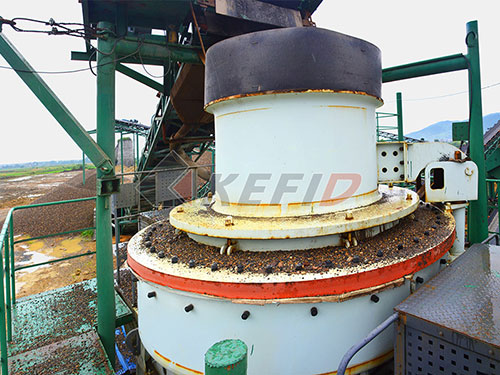
  • Chamber Geometry Optimization: Using computational fluid dynamics (CFD) and discrete element modeling (DEM), engineers design crushing chambers that maximize inter-particle crushing, reducing energy consumption per ton while achieving a tighter product gradation.
  • Variable Speed Drives (VSDs): Premium crushers incorporate VSDs on feeders and sometimes on the crusher itself, allowing real-time adjustment of speed to match ore feed variability, optimizing power draw and wear life.
  • Closed-Circuit Configurations: Design services specify the integration of high-frequency vibrating screens to recirculate oversize material, ensuring that only material meeting the target size enters the downstream mill.

2.3. Wear Life and Maintainability
The cost of wear parts (mantles, concaves, jaw plates, blow bars) is a major operational expense. Premium design services prioritize:

  • Wear Profile Analysis: Using finite element analysis (FEA) and field data, engineers design wear parts with optimized profiles that distribute wear evenly, extending liner life by 15-30% compared to standard designs.
  • Quick-Change Systems: Hydraulic adjustment and clamping systems reduce liner change-out time from days to hours, significantly increasing equipment availability.
  • Modular Design: Sub-assemblies (e.g., main shaft, bowl assembly) are designed for independent removal, facilitating easier maintenance in confined spaces.

3. The Design Service Process: From Concept to Commissioning

A premium design service follows a structured, multi-phase methodology.

Phase 1: Process Flow Sheet Development
The service begins with the creation of a detailed process flow diagram (PFD) and mass balance. This defines the number of crushing stages (primary, secondary, tertiary, quaternary), the target reduction ratios, and the required throughput (tph). For gold ores, a typical circuit might involve:

  • Primary Jaw Crusher (ROM feed to 150-200 mm)
  • Secondary Cone Crusher (to 40-50 mm)
  • Tertiary High-Pressure Grinding Rolls (HPGR) or Short-Head Cone Crusher (to 6-12 mm)

Phase 2: Equipment Selection and Sizing
Using the test work data, engineers select specific crusher models. This is not a simple catalog lookup. It involves:

  • Sizing Calculations: Using empirical formulas (e.g., Taggart’s rule, Bond’s third theory) to determine the required power draw and crusher setting.
  • Throughput Verification: Simulating the circuit using software like JKSimMet or Bruno to ensure the selected equipment can handle peak loads and ore variability.
  • Component Matching: Ensuring that feeders, conveyors, and screens are correctly sized to match the crusher’s capacity.

Phase 3: 3D Modeling and Layout Design
Premium services utilize advanced 3D CAD software (e.g., SolidWorks, Inventor, or Plant 3D) to create a complete digital twin of the crushing plant. This includes:

  • Structural Steel Design: Ensuring the support structure can withstand dynamic loads from the crusher.
  • Chute and Transfer Point Design: Using DEM to design chutes that minimize wear, dust generation, and material segregation.
  • Access and Safety: Designing platforms, ladders, and guards that comply with international safety standards (e.g., OSHA, MSHA, ISO 14122).

Phase 4: Control System Integration
Modern premium crushers are intelligent. The design service includes specifying a PLC-based control system that monitors:

  • Crusher Power Draw: Automatically adjusting feed rate to maintain optimal power.
  • Hydraulic Pressure: Detecting liner wear and adjusting the closed side setting (CSS) to maintain product size.
  • Vibration Monitoring: Using accelerometers to detect impending bearing failure or imbalance.

Phase 5: Documentation and Support
A premium service delivers a comprehensive package:Premium Gold Ore Crushing Equipment Design Service

  • General Arrangement Drawings
  • Piping and Instrumentation Diagrams (P&IDs)
  • Electrical Schematics
  • Operation and Maintenance Manuals
  • Spare Parts Lists with Criticality Ratings

4. Comparative Analysis: Premium vs. Standard Design

Parameter Standard Design Service Premium Design Service
Ore Characterization Basic hardness test (e.g., Mohs) Full JK Drop Weight, Bond Work Index, Abrasion Index, and mineralogical analysis
Simulation Manual calculations or simple spreadsheet Advanced DEM, CFD, and circuit simulation (e.g., JKSimMet)
Wear Life Standard OEM liners Custom-engineered wear profiles with extended life guarantees
Automation Basic on/off control Advanced PLC with predictive maintenance algorithms
Safety Meets minimum regulatory requirements Exceeds standards with integrated lockout/tagout, dust suppression, and noise control
Support Standard warranty On-site commissioning, operator training, and 24/7 remote monitoring

5. Economic Justification for Premium Design

The upfront cost of a premium design service is higher than a standard off-the-shelf solution. However, the total cost of ownership (TCO) analysis reveals significant long-term savings:

  • Increased Throughput: Optimized chamber design and automation can increase throughput by 10-20% without increasing installed power.
  • Reduced Downtime: Robust design and quick-change systems reduce unplanned downtime by up to 50%.
  • Lower Energy Costs: Efficient crushing reduces specific energy consumption (kWh/t) by 5-15%.
  • Extended Liner Life: Custom wear profiles reduce annual wear part costs by 15-30%.
  • Improved Recovery: Consistent product size distribution enhances downstream grinding and leaching efficiency, potentially increasing gold recovery by 1-3%.

For a mid-sized gold mine processing 5,000 tpd, a 1% increase in recovery can translate to millions of dollars in additional revenue annually. The premium design service, therefore, is not a cost but an investment with a compelling return.

6. Challenges and Mitigation Strategies

Even premium designs face challenges. Common issues include:

  • Ore Variability: Unexpected changes in ore hardness or clay content. Mitigation: Design for a range of ore types, include bypass systems, and specify crushers with wide operating windows.
  • Dust and Noise: Stringent environmental regulations. Mitigation: Incorporate water spray systems, enclosed transfer points, and sound-attenuating enclosures.
  • Logistical Constraints: Remote sites with limited crane capacity. Mitigation: Design modular, skid-mounted units that can be transported and assembled with minimal heavy lifting.

7. Future Trends in Premium Gold Ore Crushing Design

The industry is moving toward:

  • Digital Twins: Real-time simulation of the crushing circuit to predict performance and optimize settings.
  • AI-Driven Optimization: Machine learning algorithms that learn from operational data to automatically adjust crusher parameters for maximum efficiency.
  • Sustainable Design: Use of recycled materials in wear parts, energy recovery systems, and low-carbon manufacturing processes.
  • Mobile and Semi-Mobile Plants: For smaller or short-life mines, premium design services are offering fully mobile crushing units that can be relocated with minimal civil works.

Conclusion

“Premium Gold Ore Crushing Equipment Design Service” is a holistic engineering solution that transcends the mere provision of machinery. It is a data-driven, process-oriented, and safety-focused discipline that ensures a gold mine’s crushing circuit operates at peak efficiency, reliability, and profitability. By investing in a premium design service, mining companies are not just buying equipment; they are securing a competitive advantage through optimized mineral liberation, reduced operational costs, and enhanced recovery. In an industry where margins are tight and ore grades are declining, the value of such a service cannot be overstated. It is the foundation upon which a successful gold processing operation is built.

Leave Message

*

If you have any questions about our products, please feel free to contact us. We take all inquiries and suggestions very seriously.