
Ball Mill Producers Price: A Comprehensive Analysis of Market Dynamics, Cost Drivers, and Strategic Procurement
Introduction
In the realm of industrial comminution—the process of reducing solid materials into smaller pieces—the ball mill stands as an indispensable workhorse. From mineral processing and cement manufacturing to pharmaceutical production and advanced ceramics, these cylindrical devices, filled with grinding media (typically steel or ceramic balls), dictate the efficiency and throughput of entire production lines. For plant managers, project engineers, and procurement specialists, the question of “ball mill producers price” is not merely a matter of obtaining a quotation; it is a complex equation involving technology, scale, geography, and lifecycle costs. This article provides a detailed, objective examination of the global ball mill manufacturing landscape, the factors that influence pricing, and the strategic considerations for buyers seeking to balance capital expenditure (CAPEX) with operational expenditure (OPEX).
The Global Landscape of Ball Mill Producers
The market for ball mills is characterized by a tiered structure of manufacturers, each with distinct pricing strategies and value propositions.
Tier 1: Global Heavyweights
Companies such as Metso Outotec (Finland), FLSmidth (Denmark), and ThyssenKrupp (Germany) dominate the high-end, large-scale segment. Their ball mills are engineered for continuous, 24/7 operation in mega-mining and cement projects. The price tags for these units—often exceeding $5 million for a single 8-meter diameter mill—reflect not only the raw materials but also decades of R&D, advanced simulation software, proprietary wear-resistant liners, and global service networks. These producers rarely compete on price alone; they compete on reliability, energy efficiency, and total cost of ownership.
Tier 2: Chinese and Indian Challengers
Over the past two decades, manufacturers like CITIC Heavy Industries, Shanghai Zenith, and Henan Hongxing (China), along with L&T and McNally Bharat (India), have aggressively captured market share. Their pricing is typically 30% to 50% lower than Tier 1 equivalents for comparable specifications. This cost advantage stems from lower labor costs, domestic steel supply chains, and economies of scale in manufacturing hubs like Luoyang and Zhengzhou. However, buyers must scrutinize material certifications (e.g., whether the shell is rolled from Q345B or equivalent high-strength steel) and after-sales support responsiveness.
Tier 3: Regional and Custom Fabricators
In regions like South America, Africa, and Southeast Asia, local fabrication shops produce smaller ball mills (typically under 2 meters in diameter) for artisanal mining, small cement plants, or laboratory use. Prices here can range from $10,000 to $150,000. While attractive for low-volume operations, these mills often lack advanced features like hydraulic jacking systems, automatic grease lubrication, or variable frequency drives (VFDs).
Key Cost Drivers Behind Ball Mill Prices
Understanding why a ball mill costs what it does requires dissecting its components and the market forces acting upon them.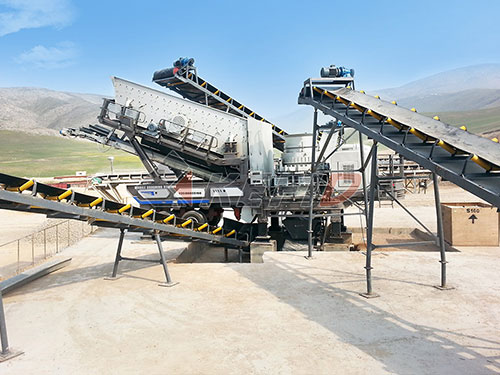
1. Size and Capacity
The single most significant price determinant is the mill’s diameter and length. A 1.5m x 3m mill might cost $50,000, while a 5m x 8m mill can exceed $2 million. This non-linear relationship exists because larger mills require thicker shells, larger trunnions, more powerful motors (often exceeding 5,000 kW), and heavier gearboxes. Furthermore, transportation logistics for oversized shells (which may require multi-axle trailers and permits) add substantial costs.
2. Materials of Construction
The shell is typically made of rolled steel plate, but the internal liners are where material science drives cost. High-chrome alloy liners (e.g., Cr-Mo steel) last 2–3 times longer than manganese steel but cost 40–60% more. Rubber liners, popular in secondary grinding, offer lower noise and weight but have temperature limitations. A single set of liners for a large mill can cost $200,000–$500,000. Producers often quote mills with “standard” liners; upgrading to premium liners increases the upfront price but reduces downtime.
3. Drive System Complexity
The drive system can account for 25–35% of the total mill price. Options include:
4. Grinding Media and Charge
While often quoted separately, the initial charge of grinding balls (steel or ceramic) can add $50,000–$300,000 depending on the mill size and ball size distribution. Producers may offer bundled pricing, but buyers should compare the cost per ton of media and its wear rate.
5. Automation and Control Systems
Modern ball mills increasingly incorporate advanced process control (APC), acoustic sensors, and mill load monitoring. A basic PLC panel might add $20,000; a full APC system with predictive maintenance algorithms can add $150,000 or more. These costs are justified by 5–15% energy savings and reduced liner breakage.
6. Geopolitical and Economic Factors
7. Producer Brand and After-Sales Support
A Tier 1 producer’s price includes a global network of field service engineers, guaranteed spare parts availability for 10+ years, and performance guarantees (e.g., throughput within ±5%). Tier 3 producers may offer none of these, shifting risk to the buyer. For a critical production line, this risk premium is often worth 20–30% of the mill price.
Price Ranges: A Factual Snapshot (2025 Estimates)
It is impossible to provide a single price for a ball mill, but the following ranges illustrate the market:
These figures exclude installation, foundations, and grinding media, which can add 20–40% to the project cost.
Strategic Procurement: Beyond the Sticker Price
Sophisticated buyers evaluate ball mill producers on a total cost of ownership (TCO) basis over 10–20 years. Key metrics include:
Negotiation Levers
Future Trends Impacting Ball Mill Prices
Several forces will shape producer pricing over the next decade:
Conclusion
The price of a ball mill from any producer is a reflection of a complex web of engineering, materials, scale, and service. There is no “fair market price” in isolation—only a price that is appropriate for a given application, risk tolerance, and operational philosophy. A $200,000 mill from a Chinese producer may be the correct choice for a small cement grinding station in Southeast Asia, while a $4 million mill from Metso Outotec is the only rational choice for a 50,000 tpd copper mine in Chile. The prudent buyer does not ask “What is the price?” but rather “What is the total cost of ownership over the mill’s 20-year life, and which producer can guarantee that performance?” By understanding the cost drivers, the tiered producer landscape, and the strategic levers of negotiation, procurement teams can secure ball mills that deliver not just low initial cost, but sustainable, profitable comminution for decades.
If you have any questions about our products, please feel free to contact us. We take all inquiries and suggestions very seriously.