Stone Crusher Plant Sourcing Agent Design Service: A Comprehensive Technical and Commercial Guide
Introduction
In the global aggregate, mining, and construction materials industry, the stone crusher plant is the backbone of infrastructure development. From highway sub-bases to high-rise concrete, every ton of crushed rock, sand, and gravel originates from a crushing and screening system. However, the procurement of a complete stone crusher plant—comprising feeders, jaw crushers, cone crushers, impact crushers, vibrating screens, conveyors, and dust control systems—is a highly complex, capital-intensive, and technically demanding process. This is where the role of a Stone Crusher Plant Sourcing Agent with integrated Design Service becomes indispensable. This article provides a professional, objective, and detailed examination of this specialized service, covering its scope, methodology, technical parameters, commercial benefits, risk mitigation, and future trends.
1. Definition and Core Scope of a Sourcing Agent with Design Service
A stone crusher plant sourcing agent is not a mere intermediary or a purchasing broker. Rather, it is a technical consultancy and procurement management entity that acts on behalf of the project owner (the client) to plan, design, specify, source, negotiate, and supervise the delivery of a complete crushing system. When combined with a design service, the agent’s role extends upstream into process engineering. The core scope includes:
- Site and Material Analysis: Conducting geological and petrographic analysis of the raw material (e.g., limestone, granite, basalt, river gravel, or recycled concrete) to determine its abrasiveness, compressive strength, moisture content, and flakiness index.
- Process Flow Design: Developing a customized crushing circuit—primary, secondary, tertiary, and quaternary stages—with appropriate equipment selection (jaw vs. gyratory vs. impact vs. cone) based on the required product gradation and throughput (tons per hour, TPH).
- Equipment Specification and Sourcing: Identifying and vetting original equipment manufacturers (OEMs) and aftermarket suppliers across China, Europe, India, and other manufacturing hubs. This includes comparing technical specifications, wear part life, power consumption, and automation levels.
- Plant Layout and Civil Engineering Interface: Designing the physical layout, including hopper sizing, conveyor angles, transfer towers, and stockpile management, while ensuring compliance with local environmental and safety regulations.
- Commercial Negotiation and Contract Management: Handling RFQs (Request for Quotations), technical bid evaluation, price benchmarking, payment terms, warranty conditions, and logistics (sea freight, inland transport, customs clearance).
- Factory Inspection and Quality Assurance: Performing pre-shipment inspections, witnessing load tests, and verifying compliance with ISO, CE, or GOST standards.
- Erection and Commissioning Support: Providing detailed erection drawings, foundation loads, and on-site supervision guidelines to ensure the plant is installed and commissioned within the planned timeline.
2. The Critical Importance of Design Before Sourcing
Many buyers make the fatal mistake of sourcing equipment first and designing the process later. A professional sourcing agent with design capability reverses this sequence. The design phase is the single most critical determinant of the plant’s long-term profitability. Key design considerations include: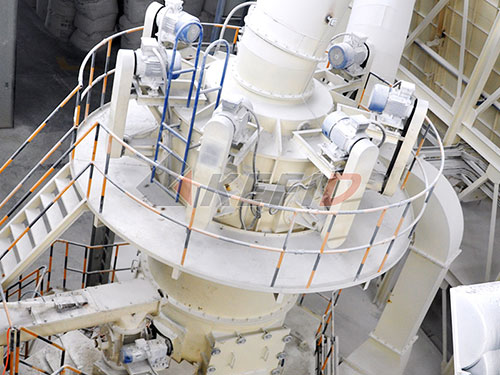
- Reduction Ratio and Stage Selection: For a hard rock like granite with a compressive strength above 200 MPa, a jaw crusher (primary) followed by a cone crusher (secondary) and a vertical shaft impact (VSI) crusher (tertiary) is standard. For softer, less abrasive limestone, a single impact crusher may suffice. The agent calculates the exact reduction ratio at each stage to avoid over-crushing, which wastes energy and produces excessive fines.
- Closed-Side Setting (CSS) and Product Curve: The agent uses manufacturer-specific product curves to predict the output particle size distribution. This is essential for meeting strict specifications for concrete aggregates (e.g., ASTM C33) or asphalt aggregates (e.g., Superpave).
- Surge Capacity and Buffer Stock: The design must include surge bins and stockpiles to decouple the primary crusher from the secondary crusher. This prevents downtime propagation and allows for maintenance windows.
- Wear Life and Operating Cost (OPEX) Projection: The agent calculates the expected wear parts consumption (e.g., jaw plates, mantle, concave, blow bars) in grams per ton of crushed material. This directly impacts the cost per ton, which is the ultimate KPI of any quarry operation.
- Power and Electrical Load: A 500 TPH plant may require 1,500–2,500 kW of installed power. The agent designs the motor control center (MCC), soft starters, and variable frequency drives (VFDs) to optimize energy consumption, which often constitutes 30–40% of operating costs.
3. Technical Sourcing Criteria: What the Agent Evaluates
A sourcing agent does not simply pick the cheapest quote. The evaluation matrix is multi-dimensional and objective. The following technical criteria are non-negotiable:
- Crusher Chamber Geometry: For cone crushers, the agent verifies the eccentric throw, stroke length, and chamber profile (e.g., coarse, medium, fine). A wrong chamber design leads to poor particle shape and high recirculation loads.
- Main Frame and Shaft Material: High-quality crushers use cast steel or forged shafts with high fatigue resistance. The agent checks the metallurgical certificates and heat treatment processes.
- Bearing Selection and Lubrication: Spherical roller bearings from reputable brands (SKF, FAG, NSK) are preferred. The agent verifies the lubrication system—whether it is oil bath, grease, or forced circulation—and its ability to handle high ambient temperatures.
- Hydraulic Adjustment System: Modern crushers feature hydraulic CSS adjustment and tramp iron relief. The agent ensures that the hydraulic system has accumulators and relief valves to protect against uncrushable materials (e.g., steel rebar in recycled concrete).
- Screen Efficiency: Vibrating screens must have the correct stroke amplitude, frequency, and deck angle. The agent calculates the screening area required to achieve a specific separation efficiency (typically 85–95%) without blinding or pegging.
- Conveyor Belt Specifications: Belt width, ply rating, and cover rubber grade must match the lump size and abrasiveness. The agent specifies impact idlers at loading points and ensures proper skirtboard sealing to minimize spillage.
- Automation and PLC Control: A modern plant should have a centralized control system with SCADA (Supervisory Control and Data Acquisition). The agent specifies the level of automation—from manual start/stop to fully automatic load-based control—to reduce human error and optimize throughput.
4. The Sourcing Process: A Step-by-Step Methodology
A professional sourcing agent follows a disciplined, transparent, and auditable process:
- Step 1: Needs Assessment and Feasibility Study. The agent collects data on the client’s target market (e.g., local road projects, ready-mix concrete plants), required annual production, and available power supply. A preliminary mass balance is created.
- Step 2: Request for Information (RFI) and Pre-Qualification. The agent shortlists 5–8 manufacturers based on their production capacity, export history, and after-sales service network. This is followed by a technical audit of the factory—checking welding quality, machining tolerances, and inventory of spare parts.
- Step 3: Detailed Engineering and Layout Drawing. The agent produces a 2D/3D layout with exact dimensions, foundation loads, and service clearances. This drawing is shared with the client’s civil engineer for foundation design.
- Step 4: Tender and Technical Bid Evaluation. The agent issues a detailed RFQ with a technical specification sheet. Bids are evaluated using a weighted scoring system: 40% technical compliance, 30% price, 20% delivery time, and 10% after-sales support. The agent performs a “should-cost” analysis to identify unrealistic low bids that may indicate inferior materials.
- Step 5: Negotiation and Contract Finalization. The agent negotiates not only the base price but also the wear parts package, commissioning spare parts, and free training hours. Payment terms are structured as 30% advance, 40% before shipment, 20% after installation, and 10% after performance guarantee test.
- Step 6: Manufacturing Supervision and Quality Control. The agent assigns a third-party inspector to monitor critical stages: raw material casting, machining of the main shaft, assembly of the eccentric bushing, and final painting. Photographic and video evidence is provided to the client.
- Step 7: Logistics and Customs Compliance. The agent plans the cargo consolidation, chooses the appropriate shipping method (breakbulk vs. containerized), and prepares all export documentation (commercial invoice, packing list, certificate of origin, and bill of lading).
- Step 8: Site Installation and Performance Test. The agent provides a detailed erection manual and sends a commissioning engineer to supervise the first start-up. A 72-hour continuous load test is conducted to verify the guaranteed throughput and product size.
5. Commercial Benefits of Engaging a Sourcing Agent with Design Service
- Cost Reduction of 10–20%: Due to bulk purchasing power, knowledge of regional price variations, and the ability to negotiate directly with factories (bypassing local distributors), the agent typically saves the client a significant percentage of the total capital expenditure (CAPEX).
- Risk Mitigation: The agent assumes responsibility for technical compatibility. For example, if a client buys a jaw crusher from one supplier and a cone crusher from another, the agent ensures that the discharge opening of the jaw matches the feed opening of the cone, preventing choke feeding.
- Time Savings: A typical plant sourcing process can take 6–12 months if done internally. An experienced agent reduces this to 3–5 months by parallelizing design, sourcing, and manufacturing supervision.
- Access to After-Sales Support: The agent maintains long-term relationships with manufacturers, ensuring that the client receives priority for spare parts and technical support even years after the warranty period.
- Lifecycle Cost Optimization: The agent focuses on Total Cost of Ownership (TCO), not just the purchase price. A slightly more expensive crusher with a longer wear life and lower energy consumption will have a lower TCO over 10 years.
6. Common Pitfalls and How the Agent Avoids Them
- Pitfall 1: Oversizing the Plant. Clients often request a 500 TPH plant when their actual requirement is 300 TPH, leading to wasted capital and higher idle power consumption. The agent performs a realistic market demand analysis and recommends a modular design that can be expanded later.
- Pitfall 2: Ignoring the Fines Content. If the raw material has a high clay content, the agent specifies a grizzly feeder and a scrubber or a washing system before the primary crusher. Failure to do so results in clogged chutes and reduced crusher capacity.
- Pitfall 3: Selecting the Wrong Crusher Type. For a highly abrasive river pebble, using an impact crusher instead of a cone crusher will result in blow bar replacement every 20 hours. The agent uses the Bond Work Index and Abrasion Index (e.g., CWi, Ai) to make the correct selection.
- Pitfall 4: Neglecting Environmental Compliance. Many jurisdictions require dust suppression systems (water spray or baghouse filters) and noise barriers. The agent integrates these into the design from the outset, avoiding costly retrofits and regulatory fines.
- Pitfall 5: Poor Spare Parts Planning. The agent calculates the annual consumption of manganese steel and screen media and recommends a minimum stock level. This prevents unplanned downtime, which can cost $5,000–$20,000 per hour in lost production.
7. The Role of Digital Tools and Simulation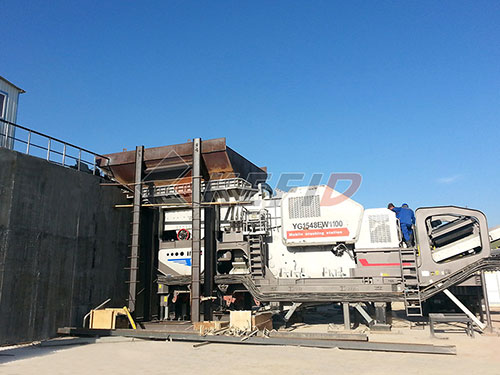
Modern sourcing agents leverage advanced software to enhance design accuracy:
- Discrete Element Method (DEM) Simulation: Software like EDEM or Rocky simulates the flow of rocks through the crusher chamber and screen decks. This predicts wear patterns, blockage risks, and throughput bottlenecks.
- Finite Element Analysis (FEA): Used to validate the structural integrity of the main frame, support structures, and conveyor trusses under dynamic loading.
- 3D Plant Modeling (BIM): Building Information Modeling allows the agent to create a digital twin of the plant, enabling clash detection between mechanical, electrical, and civil components before any steel is cut.
- ERP and Procurement Dashboards: The agent uses cloud-based procurement tools to track order status, inspection reports, and shipping milestones in real-time, providing the client with full transparency.
8. Case Study: A Typical 250 TPH Granite Crushing Plant
To illustrate the value of the service, consider a hypothetical project in West Africa. The client requires 250 TPH of 0–5mm, 5–10mm, and 10–20mm aggregates for a highway project. The raw material is granite with a compressive strength of 180 MPa and an abrasion index of 0.45.
- Design Phase: The agent specifies a 900x1200mm jaw crusher (primary) with a CSS of 100mm, followed by a 2200mm cone crusher (secondary) with a CSS of 25mm, and a VSI crusher (tertiary) for sand shaping. A triple-deck vibrating screen (6m x 2.4m) is selected for final classification.
- Sourcing Phase: The agent issues RFQs to three Chinese OEMs and one European OEM. The Chinese quotes are 30% lower but have a 20% shorter wear life. The agent calculates that the European crusher’s lower operating cost justifies the higher CAPEX over a 5-year period. However, due to the client’s budget constraints, the agent negotiates a hybrid solution: Chinese primary crusher (lower risk) and European cone crusher (higher reliability).
- Outcome: The plant is delivered in 4 months, installed in 6 weeks, and achieves a throughput of 260 TPH with a flakiness index of 12% (below the 15% limit). The total project cost is 15% below the client’s initial budget.
9. Future Trends in Sourcing and Design Services
- Electrification and Hybrid Power: As diesel prices fluctuate and carbon taxes emerge, agents are designing plants with electric motors powered by solar or grid energy, reducing OPEX and emissions.
- Remote Monitoring and Predictive Maintenance: IoT sensors on crushers transmit vibration, temperature, and power draw data to a cloud platform. The agent’s design service now includes specifying these sensors and the associated analytics software.
- Modular and Mobile Plants: For temporary projects or urban sites, agents are increasingly sourcing mobile jaw and cone crushers mounted on tracked or wheeled chassis. The design service focuses on quick setup and relocation.
- Circular Economy: With the rise of construction and demolition waste recycling, agents are designing plants that integrate magnetic separators, air classifiers, and washing systems to produce high-quality recycled aggregates.
- Local Content Requirements: Many governments mandate that a certain percentage of equipment be manufactured locally. The agent’s role expands to identifying local fabrication partners for conveyor frames, chutes, and support structures, while importing only the core crushing components.
10. Conclusion
The role of a Stone Crusher Plant Sourcing Agent with Design Service is far more than transactional procurement. It is a strategic partnership that combines process engineering, metallurgy, logistics, and commercial acumen. For any investor or contractor looking to establish a greenfield quarry or upgrade an existing plant, engaging such an agent is not an optional luxury—it is a risk management necessity. The agent’s ability to translate geological data into a profitable, reliable, and compliant crushing system directly determines the project’s return on investment. In an industry where a single design error can lead to millions of dollars in lost production, the value of professional, objective, and technically rigorous sourcing and design services cannot be overstated. As the global demand for aggregates continues to rise—driven by urbanization, renewable energy infrastructure, and transportation networks—the demand for such specialized expertise will only grow. Therefore, selecting the right sourcing agent is as critical as selecting the right crusher itself.
