Title: The Strategic Role of Luxury Quarry Ballast Crushing Equipment Distributors in Modern Infrastructure Development

Introduction

In the global construction and railway infrastructure sectors, the term “ballast” refers to the granular material—typically crushed stone—placed beneath railway tracks to distribute load, facilitate drainage, and maintain track alignment. While ballast may appear to be a mundane commodity, the production of high-quality ballast is a sophisticated process that demands precision engineering, stringent material specifications, and robust crushing equipment. Within this niche, the concept of a “Luxury Quarry Ballast Crushing Equipment Distributor” emerges not as a frivolous designation, but as a descriptor for suppliers who offer premium, high-performance machinery tailored for the most demanding quarry operations. This article provides a professional and objective examination of the role, market dynamics, technological considerations, and strategic importance of such distributors in the global supply chain.

1. Defining “Luxury” in the Context of Quarry Equipment

The term “luxury” in industrial machinery does not imply opulence or excess. Instead, it denotes a tier of equipment characterized by superior engineering, exceptional durability, advanced automation, and compliance with the highest environmental and safety standards. Luxury quarry ballast crushing equipment typically includes:

  • High-capacity jaw crushers with reinforced frames and hydraulic adjustment systems.
  • Cone crushers featuring automated setting regulation and real-time wear monitoring.
  • Vertical shaft impactors (VSI) designed for producing cubical, high-strength aggregates.
  • Mobile crushing plants with integrated screening and dust suppression systems.

These machines are often manufactured by globally recognized brands such as Metso Outotec, Sandvik, Terex, and Kleemann. A “luxury” distributor, therefore, is one that exclusively or preferentially represents these top-tier brands, offering not just equipment but also comprehensive lifecycle support, including installation, training, spare parts, and predictive maintenance services.

2. The Critical Specifications for Railway Ballast

To understand why luxury equipment is necessary, one must first appreciate the technical requirements for ballast. According to international standards such as AREMA (American Railway Engineering and Maintenance-of-Way Association) and UIC (International Union of Railways), ballast must meet strict criteria:

  • Particle size distribution: Typically between 20 mm and 60 mm, with minimal fines.
  • Shape: Angular, cubical particles to ensure interlocking and stability.
  • Hardness and abrasion resistance: Measured by tests like the Los Angeles Abrasion Test (LAA), where ballast must achieve a wear loss of less than 20-25%.
  • Durability: Resistance to weathering, freeze-thaw cycles, and chemical degradation.

Producing ballast that meets these specifications requires crushing equipment capable of precise reduction ratios, consistent gradation, and minimal over-crushing. Standard equipment often fails to deliver the required consistency, leading to rejected batches and increased operational costs. Luxury equipment, with its advanced control systems and robust construction, ensures that each ton of ballast meets the exacting standards demanded by modern high-speed rail networks.

3. The Role of the Distributor: Beyond SalesLuxury Quarry Ballast Crushing Equipment Distributor
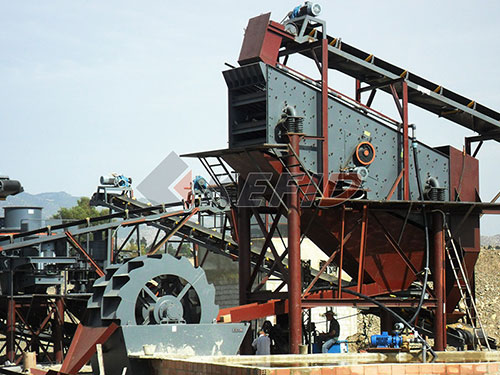
A luxury quarry ballast crushing equipment distributor is not merely a reseller. They function as a strategic partner to quarry operators, offering:Luxury Quarry Ballast Crushing Equipment Distributor

  • Technical Consultation: Assessing the quarry’s raw material characteristics (e.g., granite, basalt, limestone) and recommending the optimal crushing circuit. For example, a two-stage or three-stage crushing process may be required to achieve the desired ballast shape and size.
  • Customized Solutions: Integrating equipment from multiple manufacturers to create a seamless production line. This may involve designing conveyor systems, screening stations, and stockpiling solutions.
  • Financing and Leasing Options: High-end equipment carries a significant capital cost. Distributors often provide flexible financing models, including equipment leasing, to help quarries manage cash flow.
  • After-Sales Support: This is where the “luxury” aspect truly shines. Distributors offer 24/7 technical support, on-site service engineers, and rapid spare parts delivery. Some even provide remote monitoring and diagnostics via IoT-enabled systems, minimizing downtime.
  • Training Programs: Ensuring that quarry personnel are proficient in operating and maintaining sophisticated machinery, thereby maximizing equipment lifespan and productivity.

4. Market Drivers and Global Demand

The demand for luxury ballast crushing equipment is closely tied to infrastructure investment, particularly in railway development. Key market drivers include:

  • High-Speed Rail Expansion: Countries such as China, India, Germany, and Saudi Arabia are investing heavily in high-speed rail networks. These projects require ballast of exceptional quality, often sourced from dedicated quarries equipped with premium machinery.
  • Urbanization and Metro Systems: Underground and suburban rail systems in megacities demand consistent, high-quality ballast for safety and longevity.
  • Replacement and Upgradation: Aging railway infrastructure in Europe and North America is being upgraded, leading to increased demand for modern ballast production equipment.
  • Environmental Regulations: Stricter emissions and noise regulations are pushing quarries to adopt newer, cleaner technologies. Luxury distributors offer equipment that meets Tier 4 or Stage V emission standards, with advanced dust control and noise reduction features.

5. Technological Innovations in Luxury Crushing Equipment

Distributors of luxury equipment are at the forefront of technological adoption. Key innovations include:

  • Automation and Remote Control: Modern crushers feature PLC-based control systems that automatically adjust settings based on feed material characteristics. Operators can monitor and control the entire crushing plant from a centralized control room or even a mobile device.
  • Wear Monitoring Systems: Sensors embedded in liners and mantles provide real-time data on wear rates, allowing for predictive maintenance and reducing unplanned downtime.
  • Energy Efficiency: High-efficiency motors, variable frequency drives (VFDs), and optimized crushing chambers reduce energy consumption by up to 20% compared to older models.
  • Mobile and Modular Designs: Luxury distributors offer fully mobile crushing plants that can be relocated within the quarry or to different sites, reducing the need for fixed infrastructure and enabling rapid deployment.

6. Challenges Faced by Luxury Distributors

Despite the premium positioning, luxury distributors face several challenges:

  • High Initial Cost: The price of luxury equipment can be 30-50% higher than standard alternatives. This requires distributors to justify the investment through total cost of ownership (TCO) analyses, highlighting lower maintenance costs, higher uptime, and superior product quality.
  • Market Education: Many quarry operators, particularly in developing regions, may be unfamiliar with advanced automation and may resist adopting new technologies. Distributors must invest in demonstration events, site visits, and pilot projects.
  • Supply Chain Complexity: Sourcing components from multiple global suppliers and managing inventory for rare spare parts can be logistically challenging. Distributors must maintain robust supply chain relationships and local warehousing.
  • Competition from Low-Cost Manufacturers: Chinese and Indian manufacturers offer ballast crushing equipment at significantly lower prices. Luxury distributors must differentiate through quality, reliability, and service rather than price.

7. Case Study: A Luxury Distributor in Action

Consider a hypothetical but representative scenario: A quarry in Norway, tasked with supplying ballast for a new high-speed rail line connecting Oslo to Bergen. The raw material is hard, abrasive granite. The quarry operator partners with a luxury distributor representing Sandvik and Metso Outotec. The distributor conducts a thorough site assessment and recommends a three-stage crushing circuit: a primary jaw crusher (Sandvik CJ815), a secondary cone crusher (Metso Nordberg HP400), and a tertiary VSI (Sandvik CV229). The system is equipped with automated setting adjustment, dust suppression, and a real-time monitoring platform. The distributor also provides a five-year service contract with guaranteed uptime of 95%. As a result, the quarry produces ballast with an LAA wear loss of 18%, well within specifications, and achieves a production rate of 500 tons per hour. The total cost per ton is lower than that of a competitor using older, less efficient equipment.

8. The Future of Luxury Ballast Crushing Distribution

Looking ahead, the role of luxury distributors will evolve in several ways:

  • Digitalization: Distributors will increasingly offer digital twins of crushing plants, enabling operators to simulate production scenarios and optimize performance before making capital investments.
  • Sustainability Focus: As the construction industry moves toward net-zero emissions, luxury distributors will promote electric-powered crushers, solar-assisted operations, and circular economy models where recycled ballast is reprocessed.
  • Vertical Integration: Some distributors may expand into quarry operations themselves, offering turnkey solutions from extraction to final product delivery.
  • Global Standardization: With the rise of international railway projects (e.g., China’s Belt and Road Initiative), distributors will need to ensure their equipment meets multiple national standards simultaneously.

Conclusion

The term “Luxury Quarry Ballast Crushing Equipment Distributor” encapsulates a specialized segment of the heavy machinery industry that prioritizes quality, reliability, and advanced technology over low cost. These distributors play a critical role in enabling the production of high-grade railway ballast, which in turn supports the safety, efficiency, and longevity of modern rail infrastructure. While the initial investment in luxury equipment is substantial, the long-term benefits—reduced downtime, consistent product quality, lower operational costs, and compliance with environmental standards—make it a strategic choice for forward-thinking quarry operators. As global infrastructure demands continue to grow, the expertise and offerings of luxury distributors will become increasingly indispensable. For any quarry aiming to compete in the premium ballast market, partnering with a reputable luxury distributor is not an expense, but an investment in excellence.

Leave Message

*

If you have any questions about our products, please feel free to contact us. We take all inquiries and suggestions very seriously.