
Title: The Apex of Aggregate Reduction: A Comprehensive Analysis of Luxury Impact Crushers
Introduction
In the world of heavy industrial machinery, the term “luxury” is rarely applied. Typically, this sector is defined by raw power, durability, and cost-efficiency. However, a niche segment has emerged within the mining, quarrying, and construction aggregates industries that warrants this distinction: the luxury impact crusher. These are not merely machines that break rocks; they are precision-engineered systems that combine high-throughput capacity with exceptional particle shape control, automation, and reduced environmental footprint. A luxury impact crusher represents the upper echelon of comminution technology—where capital cost is secondary to operational reliability, product quality, and total cost of ownership over decades. This article provides a detailed, objective examination of luxury impact crushers, covering their technical foundations, design philosophies, operational advantages, and the specific applications where they justify their premium positioning.
Defining the Luxury Impact Crusher
To understand what makes an impact crusher “luxury,” one must first understand the baseline. Standard impact crushers—whether horizontal shaft impactors (HSI) or vertical shaft impactors (VSI)—are workhorses. They reduce material by striking it with rapidly rotating hammers or by accelerating it against anvils or rock shelves. They are robust, but often compromise on wear part life, product consistency, or ease of maintenance.
A luxury impact crusher elevates every one of these parameters. It is typically manufactured by a handful of elite global brands—such as Metso Outotec, Sandvik, Weir Minerals, and Hazemag—and is characterized by:
These features do not come cheap. A luxury impact crusher can cost two to four times more than a comparable standard model. The justification lies in the operational lifetime—often exceeding 20,000 hours before major overhaul—and the ability to produce high-value aggregates with minimal downtime.
Technical Architecture and Engineering Excellence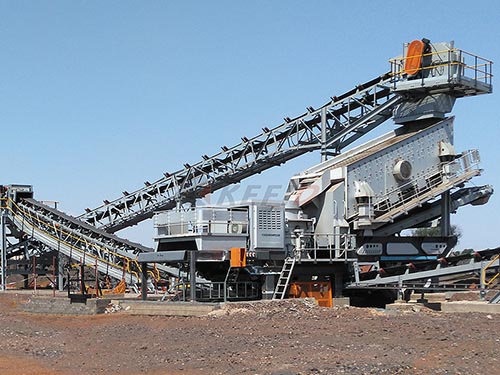
The heart of any impact crusher is the rotor. In a luxury model, the rotor is a masterpiece of mechanical engineering. It is dynamically balanced to ISO 1940-1 Grade 2.5 or better, meaning vibration at operating speed is negligible. This reduces stress on bearings and structural welds, extending the machine’s life. The rotor is typically forged from a single piece of chromoly steel, then machined to tolerances measured in microns. Blow bars are held in place by wedges or hydraulic clamping systems that eliminate the need for hammering or torch cutting during replacement.
The impact chamber is equally sophisticated. Instead of fixed anvils, luxury crushers often feature adjustable curtains that can be hydraulically positioned to control the product curve. Some models incorporate a “rock-on-rock” configuration where material impacts other material rather than steel, reducing iron contamination—critical for producing high-purity aggregates for concrete or asphalt. The chamber liners are often made of modular ceramic tiles or high-chrome white iron, which can be rotated or replaced individually without removing the entire assembly.
Drive systems vary. Direct-coupled electric motors with fluid couplings provide smooth starts and overload protection. Some luxury VSIs use twin-drive configurations for higher power and redundancy. Variable frequency drives (VFDs) allow the operator to fine-tune rotor speed from 800 to 2,500 RPM, directly affecting product gradation and throughput. This level of control is absent in standard crushers, which typically run at fixed speeds.
Operational Advantages: Beyond Raw Throughput
The most obvious benefit of a luxury impact crusher is consistent product shape. Impact crushers are prized for producing cubical particles with minimal flakiness, which is essential for high-strength concrete and premium asphalt. Luxury models take this further by maintaining that shape even as blow bars wear. In a standard crusher, as the blow bar wears, the gap between the bar and the impact plate increases, leading to coarser, less uniform product. Luxury crushers use automatic wear compensation—either by adjusting the curtain position or by rotating the blow bar—to keep the gap constant. This means the product quality does not drift over the life of the wear parts.
Second, downtime is drastically reduced. A luxury impact crusher might achieve 95% mechanical availability, compared to 80–85% for a standard unit. Over a year of two-shift operation, that difference translates to hundreds of additional production hours. The hydraulic opening system, quick-release blow bars, and condition-monitoring sensors allow maintenance to be planned rather than reactive. For example, vibration sensors on the bearings can alert operators to early-stage spalling, allowing bearing replacement during a scheduled weekend shutdown rather than a catastrophic mid-week failure.
Third, energy efficiency is improved. Although impact crushers are generally less energy-efficient than compression crushers (like jaw or cone crushers) for hard rock, luxury models optimize the energy transfer from rotor to material. Computational fluid dynamics (CFD) and discrete element modeling (DEM) are used to design the chamber geometry, ensuring that material receives multiple impacts in a single pass. This reduces the recirculating load and the need for secondary crushing stages. In some cases, a single luxury VSI can replace a cone crusher plus a shaping crusher, saving 30–40% in total connected power.
Applications Where Luxury Impact Crushers Excel
Luxury impact crushers are not for every application. They are overkill for recycling demolition waste or for producing low-grade base course. However, they are indispensable in the following sectors:
High-quality manufactured sand: For concrete and asphalt, sand must have a specific fineness modulus and a cubical shape. Luxury VSIs with rock-on-rock chambers produce sand that meets ASTM C33 and EN 12620 standards without the need for washing or blending.
Premium aggregates for railway ballast: Ballast requires angular, durable particles with a narrow gradation. Luxury HSIs can produce this with minimal fines generation, reducing waste.
Industrial minerals processing: For crushing limestone, gypsum, or potash to precise specifications, luxury impact crushers offer the control needed to avoid over-crushing, which can degrade mineral value.
Glass and ceramic recycling: Here, contamination control is critical. Luxury impact crushers with ceramic liners and dust extraction systems prevent iron and dust from entering the product stream.
Mining of precious and base metals: In heap leaching operations, particle size distribution affects recovery rates. Luxury impact crushers provide the narrow PSD that maximizes permeability and leach kinetics.
Economic Justification and Total Cost of Ownership
The purchase price of a luxury impact crusher is only the beginning. A rigorous total cost of ownership (TCO) analysis reveals that the premium is often recovered within three to five years. Consider the following cost drivers: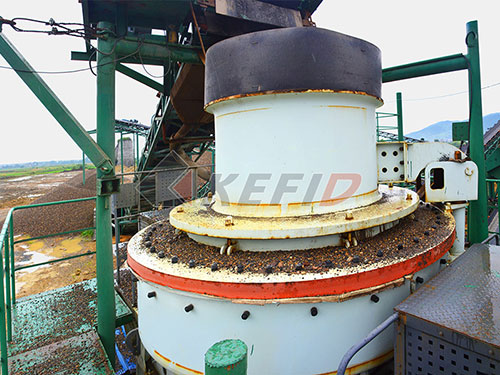
When these factors are discounted over a 10-year life, the net present cost of a luxury crusher is often 15–25% lower than that of a standard crusher, despite the higher initial outlay.
Environmental and Safety Considerations
Luxury impact crushers also lead in environmental performance. Noise levels are typically below 85 dB(A) at one meter, thanks to sound-attenuated housings and rubber-lined chutes. Dust generation is controlled by integrated water sprays or dry fog systems, and some models can be fully enclosed for indoor operation. The use of VFDs reduces starting current and allows the crusher to run at partial load during low-demand periods, saving energy. Safety features include interlocked access doors, zero-speed switches, and emergency stop pull cords. These are not optional extras; they are standard on luxury models, reflecting a design philosophy that prioritizes human and environmental health alongside productivity.
Conclusion
The luxury impact crusher is a testament to what happens when engineering excellence is applied to a brutal industrial process. It is not a machine for every budget or every job. But for operations that demand consistent, high-value product, minimal downtime, and long-term cost efficiency, it is an investment that pays dividends. As the aggregates and mining industries face increasing pressure to reduce waste, lower emissions, and improve product quality, the luxury impact crusher will likely transition from a niche product to a standard expectation. For now, it remains the apex of comminution technology—a rare example of luxury defined not by ornamentation, but by performance, reliability, and precision.
If you have any questions about our products, please feel free to contact us. We take all inquiries and suggestions very seriously.