
Title: The Strategic Role of Custom Impact Crusher OEM Factories in Modern Aggregate Processing
Introduction
In the highly competitive and capital-intensive world of aggregate production, mining, and construction demolition recycling, operational efficiency is not merely a goal—it is a survival imperative. At the heart of this efficiency lies the crushing circuit, and within that circuit, the impact crusher serves as a pivotal component for producing high-quality cubical aggregates and handling diverse materials. While off-the-shelf crushing equipment serves a broad market, the complexities of modern operations increasingly demand tailored solutions. This is where Custom Impact Crusher OEM (Original Equipment Manufacturer) Factories emerge as critical strategic partners. These specialized facilities bridge the gap between standard manufacturing and specific operational requirements, offering a blend of engineering flexibility, material science expertise, and production scalability that is essential for optimizing total cost of ownership and maximizing productivity.
Defining the Custom Impact Crusher OEM Factory
A Custom Impact Crusher OEM Factory is a manufacturing entity that designs, engineers, and produces impact crushing equipment according to the specific specifications, operational constraints, and branding requirements of a client. Unlike a standard equipment dealer that sells from a catalog, an OEM factory engages in a consultative engineering process. This process begins with a detailed analysis of the client’s material characteristics—such as hardness, abrasiveness, moisture content, and feed size—and extends to the desired end-product gradation, throughput capacity, and site-specific logistical constraints.
The “custom” aspect can manifest in various forms. It may involve modifications to the crusher’s chamber geometry, the selection of specialized metallurgy for blow bars and impact plates, adjustments to the rotor design for specific inertia requirements, or the integration of advanced automation and telematics systems. Furthermore, the “OEM” designation implies that the factory possesses the capability to manufacture these bespoke units at scale, maintaining rigorous quality control standards while allowing the client to market the equipment under their own brand identity, thereby building brand equity and customer loyalty.
The Engineering Imperative: Why Customization Matters
The rationale for engaging a custom OEM factory is rooted in the fundamental variability of crushing applications. A crusher designed for recycling concrete demolition waste faces vastly different stresses than one processing abrasive granite or limestone in a quarry.
Material Science and Wear Parts Optimization: The most significant operational cost in impact crushing is wear parts consumption. A custom OEM factory can engineer the blow bars and impact aprons using specific alloys—such as high-chrome, martensitic steel, or ceramic-matrix composites—tailored to the abrasiveness of the client’s feed material. By optimizing the metallurgy, the factory can extend the service life of wear components, reducing downtime and maintenance costs. Standard off-the-shelf crushers often compromise on metallurgy to balance cost and broad applicability, whereas a custom solution targets the specific wear profile of the operation.
Chamber Geometry and Product Shape: The geometry of the crushing chamber—the distance between the rotor and the impact aprons, the curvature of the aprons, and the rotor speed—dictates the reduction ratio and the shape of the final product. For producers of high-specification aggregates for asphalt or concrete, the percentage of cubical particles is a critical quality metric. A custom OEM factory can utilize discrete element modeling (DEM) software to simulate material flow and optimize the chamber design to maximize cubical shape while minimizing excess fines generation.
Throughput and Power Matching: Operational bottlenecks often arise from mismatched equipment. A custom OEM factory can design an impact crusher with a rotor diameter and width, and a drive system (electric or hydraulic), that perfectly matches the output of the primary crushing stage and the capacity of the screening plant. This ensures the entire circuit operates at its sweet spot, avoiding energy waste and maximizing return on investment.
Integration and Mobility: For mobile and portable applications, customization is paramount. OEM factories can design crushers that integrate seamlessly with specific chassis, track systems, or motor configurations. They can also engineer compact designs for urban demolition sites where transport dimensions and weight are strictly regulated.
The OEM Factory Workflow: From Concept to Commissioning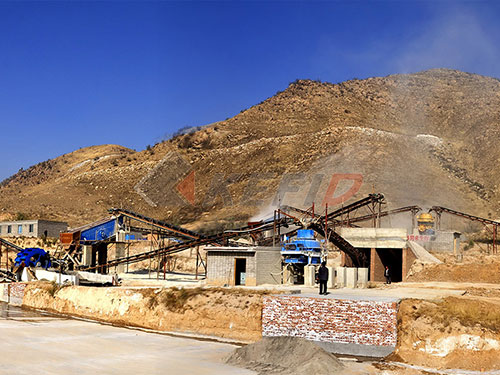
Engaging with a custom impact crusher OEM factory involves a structured, multi-phase workflow that ensures the final product meets the client’s expectations.
Phase 1: Application Analysis and Consultation: The process begins with the client providing detailed data on the feed material (petrographic analysis, bulk density, moisture), desired output (tonnage per hour, gradation curve), and site conditions (power availability, ambient temperature, altitude). The OEM’s engineering team analyzes this data to determine the feasibility and the required design parameters.
Phase 2: Engineering and Design: Using advanced CAD and simulation software, the OEM engineers create a 3D model of the crusher. This phase includes stress analysis on the rotor and frame, wear simulation on the blow bars, and kinematic analysis of the apron adjustment mechanisms. The client is often involved in design reviews to approve critical features.
Phase 3: Prototyping and Testing: For highly novel designs, the OEM may produce a prototype unit for testing. This allows for the validation of the design under real-world conditions. Material testing is conducted to confirm the throughput and product shape. This phase is critical for mitigating risks before full-scale production.
Phase 4: Manufacturing and Quality Assurance: The OEM factory leverages its supply chain and fabrication capabilities to manufacture the crusher. This includes precision machining of the rotor shaft, heavy-duty welding of the frame, and dynamic balancing of the rotor. Quality control is paramount, with non-destructive testing (NDT) such as ultrasonic and magnetic particle inspection performed on critical welds.
Phase 5: Assembly, Testing, and Delivery: The crusher is assembled and subjected to a no-load and load test run at the factory. This ensures that all systems—lubrication, hydraulics, and electrical—function correctly. The unit is then prepared for shipping, with consideration given to export packaging and logistics.
Strategic Advantages of Partnering with a Custom OEM Factory
The decision to source from a custom OEM factory offers several distinct strategic advantages over purchasing standard equipment.
Total Cost of Ownership (TCO) Reduction: While the initial capital expenditure for a custom crusher may be higher, the long-term savings are substantial. Optimized wear parts, reduced downtime, and lower energy consumption per ton produced contribute to a significantly lower TCO over the life of the machine.
Competitive Differentiation: For equipment dealers or brands, offering a custom-engineered product allows them to differentiate themselves in a crowded market. They can offer solutions that competitors cannot, thereby capturing niche markets and building stronger customer relationships.
Supply Chain Agility: A dedicated OEM partner can provide priority access to spare parts and technical support. Since the factory has the engineering drawings and specifications for the specific unit, sourcing replacement components is streamlined, reducing the risk of extended downtime due to part unavailability.
Intellectual Property and Brand Building: For clients looking to build their own brand, an OEM factory acts as a silent manufacturing partner. The client can invest in marketing and distribution while relying on the OEM for manufacturing excellence, thereby building brand equity without the massive capital investment required to build a factory from scratch.
Challenges and Considerations
Despite the advantages, engaging a custom OEM factory is not without challenges. The lead times for custom engineering and manufacturing are typically longer than for off-the-shelf equipment. Clients must be prepared for a longer project timeline. Furthermore, the initial engineering costs and the potential for design iterations can increase the upfront investment. Clear communication and a strong contractual framework are essential to ensure that the final product meets all specifications and that intellectual property rights are protected. It is crucial to select an OEM partner with a proven track record, robust quality management systems (such as ISO 9001), and a deep understanding of the crushing application.
Conclusion
In an industry where margins are tight and material specifications are increasingly stringent, the custom impact crusher OEM factory represents a sophisticated solution. It moves beyond the paradigm of buying a machine off the shelf and embraces a philosophy of engineering a solution for a specific problem. By leveraging the expertise of specialized manufacturers, aggregate producers, recyclers, and equipment brands can achieve higher efficiency, lower operating costs, and a stronger competitive position. As the demand for high-quality aggregates and sustainable demolition practices continues to grow, the role of the custom OEM factory will only become more integral to the success of the global crushing industry. The partnership between the client and the factory is not merely a transaction; it is a collaborative engineering endeavor aimed at operational excellence.
If you have any questions about our products, please feel free to contact us. We take all inquiries and suggestions very seriously.