The Industrial JC5000 Jaw Crusher: A Comprehensive Analysis of Affordable Primary Crushing
In the demanding world of aggregate production, mining, and heavy-duty recycling, the primary crushing stage is a critical bottleneck. Efficiency, reliability, and cost-effectiveness at this initial phase dictate the productivity and profitability of the entire downstream process. For operations seeking robust performance without the premium price tag of top-tier luxury brands, the Industrial JC5000 Jaw Crusher emerges as a compelling solution. This detailed analysis explores its design, applications, affordability proposition, and key considerations for potential users.
Introduction to the JC5000: Design Philosophy and Core Specifications
The JC5000 is a heavy-duty, single-toggle jaw crusher engineered for high-capacity primary crushing. Its designation typically indicates a feed opening in the vicinity of 500mm x 300mm (20″ x 12″), positioning it as a medium-to-large jaw crusher suitable for stationary installations or large mobile tracked plants. The core philosophy behind such industrial-grade machinery is not necessarily to boast the absolute highest technological frills but to deliver dependable, high-output crushing through proven, robust design and intelligent material selection.
Key Mechanical Design Features:
- Robust Frame Construction: The foundation is a heavily ribbed, welded steel frame designed to withstand immense cyclical stresses from crushing hard rock (e.g., granite, basalt) or abrasive materials. This durability is paramount for long-term structural integrity.
- Deep Symmetrical Crushing Chamber: A deep chamber allows for a large feed size (often accepting lumps up to ~400mm) and promotes a powerful “straight-line” crushing action. This geometry enhances throughput and reduces the risk of bridging (blockage at the feed opening).
- Heavy-Duty Eccentric Shaft and Bearings: The heart of any jaw crusher is its eccentric shaft assembly. The JC5000 utilizes a forged alloy steel shaft supported by large-diameter spherical roller bearings. These bearings are chosen for their high radial load capacity and ability to accommodate slight misalignments, ensuring smooth operation under shock loads.
- Optimized Toggle Plate and Tension Rod System: The toggle plate acts as a safety mechanism. In the event of an uncrushable object (e.g., tramp metal), it is designed to fracture, protecting more expensive components like the shaft and frame. Adjustable tension rods allow operators to set the desired closed-side setting (CSS), which controls product size.
- Wear Parts: Jaw Dies: The affordable nature of this crusher class is often most evident in its wear parts strategy. While high-quality manganese steel jaws are standard, they are typically designed for straightforward replacement and may be available from multiple aftermarket suppliers, fostering competitive pricing.
Defining “Affordability” in an Industrial Context
When discussing an “affordable” industrial jaw crusher like the JC5000, it is crucial to move beyond mere initial purchase price. True affordability encompasses Total Cost of Ownership (TCO), which includes:
- Capital Expenditure (CAPEX): The JC5000’s primary advantage lies here. By focusing on essential functionality rather than extensive automation or proprietary digital systems (common in premium brands), manufacturers can offer a significantly lower entry price.
- Operational Costs (OPEX):
- Wear Parts Consumption: The design often emphasizes easily replaceable wear parts with good availability.
- Energy Efficiency: While not always matching the latest variable-speed drives of flagship models, its simple direct-drive or V-belt system with standard motors keeps electrical complexity and costs manageable.
- Maintenance Simplicity: Straightforward access to lubrication points, jaw dies, and toggle systems reduces downtime for servicing—a major contributor to operational cost savings.
- Durability & Reliability: An affordable machine that breaks down frequently is no bargain. The JC5000’s value stems from its proven mechanical design that minimizes unexpected failures when maintained properly.
Therefore, its affordability is best described as providing an optimal balance between acceptable performance metrics (capacity, product shape) and minimized lifetime costs.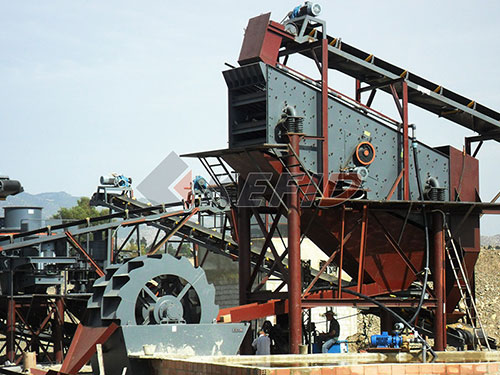
Primary Applications: Where the JC5000 Excels
The JC5000 finds its niche in several key industrial sectors:
- Aggregate Quarries: As a primary crusher for producing base material (e.g., Type 1 sub-base), railway ballast, or feed for secondary cone crushers.
- Mining: Suitable for pilot plants or small-to-medium scale mining operations processing gold ore, copper ore, or other metallic ores where primary size reduction is needed before further milling.
- Construction & Demolition (C&D) Recycling: Its robust construction allows it to handle reinforced concrete debris effectively.
- Slag Processing: Crushing blast furnace or steel slag into usable aggregate.
It may be less suited for applications requiring exceptionally precise product shape (where an impact crusher might be better) or extremely high capacities exceeding ~400-500 tonnes per hour under hard rock conditions.
Comparative Analysis: Strengths vs Limitations
To objectively assess the JC5000’s position in the market requires comparison against alternatives.
Strengths:
- High Value-to-Cost Ratio: Delivers substantial tonnage per dollar invested upfront.
- Simplicity & Serviceability: Easier for in-house maintenance teams to understand and repair.
- Proven Technology: Utilizes decades-old jaw crusher principles with modern materials engineering refinements.
- Parts Availability & Interchangeability: Often benefits from generic parts ecosystems that reduce cost and lead time compared to OEM-only parts from premium brands.
Limitations / Considerations:
- Performance Nuances: May have slightly lower throughput or less optimal product gradation compared to a same-sized top-tier model with advanced chamber designs and kinematics.
- Standardization Over Customization: May offer fewer options for specialized liners or automation integration out-of-the-box.
- Resale Value & Brand Perception: Typically retains less residual value than elite brands like Sandvik Metso Outotec’s Nordberg® C Series jaws etc., which can be important considerations depending on financial planning models used by larger corporations.
Critical Considerations Before Purchase
A prospective buyer must conduct thorough due diligence:
- Material Analysis Test Report (“Crushability Test”): Always test your specific material sample in advance if possible; actual capacity can vary dramatically based on hardness/abrasiveness/moisture content etc..
- Required Production Capacity vs Machine Capabilities – ensure there exists sufficient margin so that pushing beyond limits does not become routine practice leading towards premature failures etc..
3 .Power Supply Requirements – confirm local electrical infrastructure supports motor demands without requiring expensive upgrades beforehand!
4 .After-Sales Support Network – investigate manufacturer/distributor reputation regarding technical assistance availability along spare part stocks proximity relative location(s).
5 .Long-Term Operational Goals – consider whether future expansion plans might necessitate different equipment entirely making current investment less strategic longer term perspective wise…
Conclusion: A Strategic Choice for Value-Conscious Operations
The Industrial JC5000 Jaw Crusher represents a pragmatic engineering solution tailored towards businesses prioritizing operational fundamentals over prestige branding alone—it embodies what many industry veterans term “honest iron.” Its affordability stems not from cutting corners on critical components but rather through intelligent simplification where possible while maintaining core integrity required under severe working environments day after day year upon year…
For independent quarry owners expanding their fleet; contractors establishing new recycling yards; junior miners setting up processing facilities—the decision ultimately hinges upon balancing budget constraints against production needs within context specific circumstances unique each case individually considered accordingly… In scenarios where maximum uptime combined lowest possible total cost ownership matters most above all else? Then indeed machines like these continue proving themselves worthy contenders within global marketplace today tomorrow alike!
