
Title: Comprehensive Analysis of Impact Crushers: Company Design Services, Engineering Principles, and Industry Applications
Introduction
In the modern aggregate, mining, and recycling industries, the reduction of large materials into smaller, more manageable sizes is a fundamental process. Among the various crushing technologies available, the impact crusher stands out for its high reduction ratio, cubicle shape of the final product, and versatility in handling a wide range of materials. However, the performance and longevity of an impact crusher are not solely dependent on the machine itself; they are critically influenced by the quality of the company design service that engineers and configures the system. This article provides a professional, objective, and detailed examination of impact crusher company design services, covering the engineering principles, design methodologies, customization processes, and the value proposition offered by specialized firms.
Section 1: The Engineering Foundation of Impact Crushers
Before delving into design services, it is essential to understand the core mechanics of impact crushers. Unlike compression-based crushers (e.g., jaw or cone crushers), impact crushers utilize high-speed impact forces to break rock. Material is fed into a rotor assembly that spins at high velocity (typically 30–80 m/s). The rotor hammers or blow bars strike the material, propelling it against stationary aprons or breaker plates. The fragmentation occurs through three primary mechanisms: impact with the rotor, impact with the breaker plates, and inter-particle collision.
The key design parameters that a company must master include:
A company offering design services must possess deep expertise in these areas to ensure that the crusher operates at peak efficiency while minimizing wear and energy consumption.
Section 2: The Scope of Impact Crusher Company Design Services
A professional design service for impact crushers is not a one-size-fits-all offering. It encompasses a multi-stage process that begins with a feasibility study and ends with commissioning and after-sales support. The typical scope includes:
2.1. Site and Material Analysis
The first step is a thorough assessment of the client’s operational context. This includes:
2.2. Conceptual and Detailed Engineering
Based on the site analysis, the design team creates a conceptual layout. This phase involves:
2.3. Customization and Retrofit Solutions
Many clients require modifications to existing equipment. Design services often include:
2.4. Wear Life Optimization
One of the most critical aspects of impact crusher design is wear management. A professional service will:
Section 3: The Value Proposition of Professional Design Services
Engaging a specialized design service offers tangible benefits that extend beyond the initial purchase of a crusher.
3.1. Enhanced Operational Efficiency
A well-designed impact crusher can achieve a reduction ratio of up to 20:1 in a single pass, significantly reducing the need for secondary crushing. Professional design ensures that the rotor speed, chamber geometry, and apron settings are precisely calibrated to the feed material, maximizing throughput while minimizing energy consumption. For instance, a design service might optimize the rotor tip speed to balance particle breakage against blow bar wear, leading to a 10–15% reduction in specific energy consumption.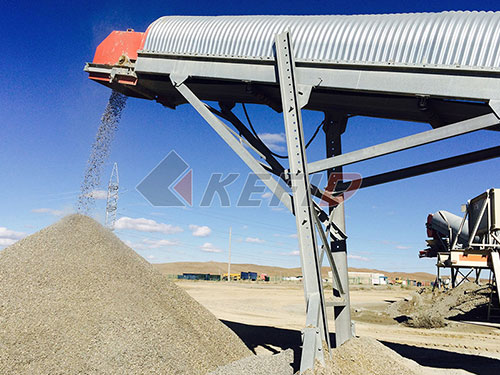
3.2. Reduced Total Cost of Ownership (TCO)
The TCO of an impact crusher includes not only the purchase price but also maintenance, wear parts, energy, and downtime. Professional design services address all these factors:
3.3. Safety and Compliance
Modern design services prioritize safety. This includes:
3.4. Scalability and Future-Proofing
A professional design service considers the client’s long-term plans. The crusher design can be modular, allowing for future upgrades such as increased rotor speed, larger motors, or integration with advanced automation systems. This flexibility ensures that the investment remains viable as production demands change.
Section 4: Industry Applications and Case Studies
4.1. Aggregate Production
In the aggregate industry, impact crushers are used to produce high-quality cubical material for concrete and asphalt. A design service for a quarry in the Midwest United States might focus on reducing the percentage of flat and elongated particles. By adjusting the apron gap and rotor speed, the service can achieve a particle shape index of less than 10%, meeting strict DOT specifications.
4.2. Mining and Mineral Processing
In hard rock mining, impact crushers are often used for secondary or tertiary crushing. A design service for a copper mine in Chile would need to address the extreme abrasiveness of the ore. The solution might involve using a VSI crusher with a rock-on-rock configuration to minimize wear on metal parts, combined with a closed-circuit system to ensure consistent product size.
4.3. Recycling
The recycling industry, particularly for concrete and asphalt, demands robust crushers that can handle steel reinforcement and other contaminants. A design service for a construction and demolition (C&D) recycling plant would focus on:
4.4. Industrial Minerals
For processing materials like gypsum, limestone, or phosphate rock, the design service must account for the material’s friability and potential for dust generation. A closed-circuit design with a high-efficiency air classifier might be recommended to produce a fine, consistent product.
Section 5: The Design Process – A Step-by-Step Overview
To illustrate the rigor of a professional design service, here is a typical workflow:
Section 6: Challenges and Considerations
While professional design services offer immense value, there are challenges:
Conclusion
Impact crusher company design services are a critical component of modern material processing operations. They transform a generic machine into a tailored solution that maximizes efficiency, reduces costs, and ensures safety. By combining deep engineering knowledge with advanced simulation tools and a client-centric approach, these services enable operators to achieve their production goals while minimizing environmental impact and operational risk. Whether for a new greenfield project or an upgrade to an existing plant, investing in professional design services is a strategic decision that pays dividends over the entire lifecycle of the equipment. As the industry moves toward greater automation and sustainability, the role of specialized design services will only become more vital, driving innovation in rotor design, wear materials, and control systems. For any company serious about optimizing its crushing operations, partnering with a reputable design service is not an option—it is a necessity.
If you have any questions about our products, please feel free to contact us. We take all inquiries and suggestions very seriously.