Quality Control in a 250–300 TPH Stone Crushing Plant: A Comprehensive Framework
Introduction
A 250–300 tonne-per-hour (TPH) stone crushing plant represents a substantial industrial investment, typically comprising primary jaw or impact crushers, secondary cone or impact crushers, vibrating screens, feeders, conveyors, and associated dust suppression and control systems. At this production scale, even minor deviations in material quality, equipment performance, or process consistency can translate into significant financial losses, rejected shipments, and reputational damage. Consequently, quality control (QC) in such a plant is not a single inspection step but a plant-wide management system spanning raw material acceptance, process monitoring, finished product verification, and continuous improvement.
This article examines the key dimensions of quality control in a 250–300 TPH stone crushing plant, covering raw material control, process control, product testing, equipment maintenance, documentation, and the human factors that underpin consistent output. The objective is to provide a structured, practical reference for plant managers, quality engineers, and operators.
1. Defining Quality Requirements
Quality control begins with a clear specification of what “quality” means for the plant’s target markets. Aggregates produced at 250–300 TPH are typically destined for concrete production, asphalt mixtures, railway ballast, road base, or construction fill. Each application imposes distinct requirements:
- Gradation (particle size distribution): Specified by standards such as ASTM C33, EN 12620, or local equivalents. A concrete aggregate may require a tightly controlled envelope, while road base material tolerates broader limits.
- Particle shape: Cubicity and flakiness indices matter greatly for concrete and asphalt; jaw and cone crushers generally produce better-shaped product than impact crushers in certain configurations, but the circuit design determines the outcome.
- Cleanliness: Clay, silt, and dust content must be limited, often requiring washing or effective dust collection.
- Strength and durability: Los Angeles abrasion value, soundness, and crushing strength are relevant for structural applications.
- Consistency: Perhaps the most important and most difficult attribute—batch-to-batch variation must be minimized.
Translating these requirements into internal control limits (tighter than customer specifications) is the foundation of effective QC. For example, if a customer permits 5% passing the 4.75 mm sieve for a 19 mm nominal aggregate, the plant might set an internal target of 2–4% to provide a safety margin.
2. Raw Material Quality Control
The quality of the finished product cannot exceed the quality of the feed material. In a 250–300 TPH plant, quarry feed arrives from blasting, ripping, or excavation, and its variability is the single largest source of downstream quality problems.
Key control measures include:
- Geological assessment and quarry mapping: Understanding the deposit’s lithology, weathering profiles, and contaminants (e.g., clay seams, chert, pyrite) allows selective extraction and blending.
- Feed size control: Oversized boulders that exceed the primary crusher’s feed opening cause bridging, downtime, and inconsistent reduction ratios. A grizzly feeder or hydraulic breaker station helps regulate feed size.
- Contamination screening: Visual inspection at the feed point for wood, metal, and clay lumps prevents blockages and product contamination.
- Moisture management: Wet or sticky feed reduces screening efficiency and can blind decks, causing gradation drift. Stockpile management and, where necessary, blending of dry and wet material stabilize moisture content.
- Blending strategy: Where the deposit is heterogeneous, controlled blending from different quarry faces or stockpiles can homogenize the feed and reduce product variability.
A practical tool is a feed acceptance log recording source location, visual characteristics, and any observed anomalies, correlated with downstream product test results. Over time, this data reveals which quarry zones produce problematic material.
3. Process Control in the Crushing Circuit
Process control focuses on the crushing and screening circuit itself, where reduction ratios, circulating loads, and screen efficiency determine product quality.
3.1 Crusher Settings and Reduction Ratios
Each crusher stage has an optimal reduction ratio. In a typical three-stage circuit—primary jaw, secondary cone, tertiary cone or VSI—the settings (CSS, or closed-side setting) must be monitored and adjusted as liners wear. A worn mantle or jaw plate changes the effective CSS, shifting the product gradation coarser or finer. Routine measurement of CSS and liner wear, combined with power draw monitoring, allows operators to maintain consistent reduction.
3.2 Circulating Load and Screen Efficiency
Screens are the quality gatekeepers of the plant. A 250–300 TPH plant typically uses double- or triple-deck screens with high efficiency requirements. Key parameters include:
- Bed depth: Excessive bed depth reduces stratification and causes fines to report to oversize, degrading gradation.
- Screen media condition: Worn or broken decks cause misplaced material and contamination between size fractions.
- Stroke, speed, and slope: These must be set according to the manufacturer’s specification for the material’s characteristics.
- Circulating load: In closed-circuit configurations, an excessive circulating load indicates screen inefficiency or crusher setting issues, and it increases wear and energy consumption while risking gradation drift.
3.3 Dust and Fines Control
Dust is both a quality and environmental issue. Excessive fines in coarse aggregates can exceed specification limits, while airborne dust creates health and safety hazards. Control measures include:
- Enclosed transfer points and chutes
- Water sprays or fog cannons at crushing and screening stages
- Baghouse dust collectors on screens and crushers
- Proper stockpile management to prevent segregation and wind entrainment
3.4 Automation and Instrumentation
Modern 250–300 TPH plants increasingly employ PLC-based control systems with:
- Belt scales for real-time tonnage monitoring
- Level sensors in crusher chambers to prevent overload
- Power draw monitoring to detect liner wear and feed hardness changes
- Automated CSS adjustment (in advanced cone crushers)
- Cameras and vision systems for particle size estimation
These tools enable operators to detect deviations early and make corrective adjustments before out-of-spec material is produced.
4. Finished Product Testing and Verification
Even with strong process control, finished product testing is essential for verification and customer assurance.
4.1 Sampling
Representative sampling is critical. Samples should be taken from:
- Belt discharge points (using cross-stream cutters where possible)
- Stockpile surfaces (with care to avoid segregation bias)
- Truck or rail load-out points
Sampling frequency should be statistically meaningful—typically at least one composite sample per shift for each product, with increased frequency during startup, after maintenance, or when feed characteristics change.
4.2 Laboratory Testing
Standard tests for aggregates include:
- Sieve analysis (gradation): The primary quality test, performed per ASTM C136 or EN 933-1.
- Flakiness and elongation indices: ASTM D4791 or EN 933-3.
- Los Angeles abrasion: ASTM C131 or EN 1097-2.
- Specific gravity and absorption: ASTM C127/C128.
- Clay lumps and friable particles: ASTM C142.
- Sulfate soundness: ASTM C88.
- Moisture content: For mass balance and customer billing.
In a 250–300 TPH operation, an on-site laboratory with a sieve shaker, balances, and drying oven is standard. Larger operations may invest in automated particle size analyzers or online vision-based systems for near-real-time gradation feedback.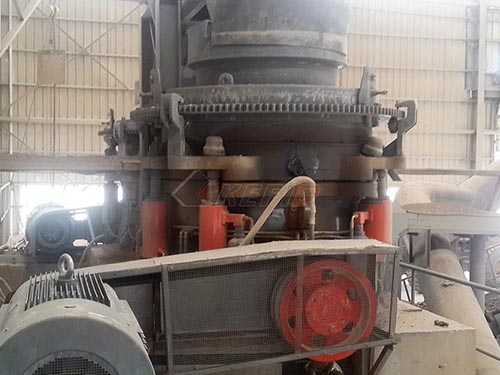
4.3 Statistical Process Control (SPC)
Plotting gradation results on control charts (e.g., X-bar and R charts) allows the plant to distinguish normal variation from special-cause variation. For example, a gradual drift in the percentage passing the 9.5 mm sieve may indicate progressive screen media wear, while a sudden shift suggests a broken deck or a change in feed.
5. Equipment Maintenance and Calibration
Quality control and maintenance are inseparable. A neglected plant cannot produce consistent quality.
- Preventive maintenance schedules: Crusher liners, screen media, conveyor belts, and idlers must be inspected and replaced on a planned basis, not reactively.
- Calibration: Belt scales, weighing systems, and laboratory equipment (balances, ovens, sieves) must be calibrated at defined intervals. A miscalibrated belt scale, for instance, distorts production data and can lead to systematic errors in plant balance calculations.
- Wear part quality: Using genuine or equivalent-quality wear parts ensures predictable wear patterns and product consistency. Low-cost substitutes often alter gradation and increase downtime.
- Root cause analysis: When out-of-spec product is detected, a structured investigation (e.g., fishbone diagram, 5 Whys) should identify whether the cause is feed, equipment, process settings, or human error.
6. Documentation, Traceability, and Compliance
A robust QC system is documented and auditable.
- Quality manual and procedures: Define sampling plans, test methods, acceptance criteria, and corrective action workflows.
- Batch/lot traceability: Linking product stockpiles to production shifts and feed sources enables rapid response to customer complaints or regulatory issues.
- Certificates of analysis (COA): Issued with shipments, summarizing test results against specifications.
- Regulatory compliance: Adherence to local mining, environmental, and occupational health regulations, including dust and noise limits.
- Customer feedback loop: Tracking complaints and returns, and feeding them back into process improvement.
7. Human Factors and Training
Technology alone does not ensure quality. Operators, lab technicians, and maintenance staff must be competent and motivated.
- Training programs: Covering crusher operation, screen inspection, sampling techniques, and test procedures.
- Standard operating procedures (SOPs): Clear, accessible, and enforced.
- Quality awareness culture: Encouraging operators to report anomalies and suggest improvements.
- Performance metrics: Linking quality KPIs (e.g., percentage of in-spec batches, customer complaint rate) to team performance.
8. Continuous Improvement
Quality control is not static. A 250–300 TPH plant should periodically review:
- Control limits and specifications: Are internal limits too tight (wasting material) or too loose (risking rejection)?
- Circuit configuration: Could adding a tertiary crusher, a sand screw, or a air classifier improve product quality and market flexibility?
- Technology upgrades: Online analyzers, advanced automation, or improved dust collection.
- Benchmarking: Comparing performance against similar plants and industry best practices.
Conclusion
Quality control in a 250–300 TPH stone crushing plant is a comprehensive, plant-wide discipline. It begins with understanding customer specifications and geological variability, extends through crusher and screen process control, relies on rigorous sampling and laboratory testing, and is sustained by maintenance, documentation, and trained personnel. Because the plant operates at a scale where small deviations accumulate into large financial and reputational consequences, a systematic QC framework is not optional—it is a core business function. By integrating raw material control, process monitoring, statistical analysis, and continuous improvement, operators can consistently deliver aggregates that meet specification, satisfy customers, and maximize the plant’s economic value.
