
ISO-Certified Gold Ore Crushing Equipment: Specification Framework and Technical Requirements
Introduction
Gold ore crushing is a critical stage in the extractive metallurgy chain, determining downstream recovery efficiency, throughput stability, and overall project economics. For operations targeting international markets, regulatory compliance, and long-term operational reliability, equipment specified and supplied under ISO certification provides a structured assurance of quality, safety, and environmental performance. This article presents a detailed specification framework for ISO-certified gold ore crushing equipment, covering applicable standards, mechanical and process parameters, material selection, automation requirements, and verification protocols. It is intended for project engineers, procurement specialists, and metallurgical consultants engaged in the design or expansion of gold processing plants.
1. Applicable ISO Standards and Certification Scope
ISO certification for crushing equipment is not a single certificate but a composite of management system and product-specific standards. A credible specification should reference the following:
Specifications should require the supplier to submit valid certificates, certification body accreditation details (e.g., IAF member), and the scope statement confirming that the specific equipment model falls within the certified scope.
2. Process and Capacity Specifications
Gold ore characteristics—Bond work index (typically 12–20 kWh/t), abrasiveness, moisture content, and feed size distribution—dictate crusher selection. The specification should define:
For primary crushing, jaw crushers (e.g., 900×1200 mm feed opening) or gyratory units are specified; for secondary and tertiary duty, high-capacity cone crushers with hydroset adjustment are standard. The specification must state the duty cycle (continuous, 24/7) and design life (typically 20 years for structural components, 10 years for wear parts).
3. Mechanical and Structural Requirements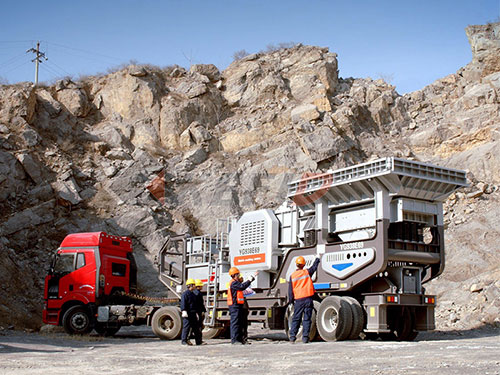
4. Wear Parts and Materials Specification
Wear part metallurgy directly affects cost per tonne. The specification should mandate:
Suppliers should provide wear-rate curves and reference installations treating comparable gold ores.
5. Dust, Noise, and Environmental Controls
Gold ore crushing generates silica-bearing dust; controls are mandatory:
6. Automation, Instrumentation, and Control
Modern specifications require:
7. Inspection, Testing, and Acceptance
Factory acceptance testing (FAT) should include:
Site acceptance testing (SAT) confirms installation alignment, commissioning, and 72-hour continuous performance run.
8. Documentation and Warranty
The specification should require a full documentation set in English (or project language), including GA drawings, foundation loads, electrical schematics, and risk assessment per ISO 12100. Warranty terms: minimum 24 months from commissioning or 12 months from production start, with wear-part guarantees expressed in tonnes processed.
Conclusion
An ISO-certified gold ore crushing equipment specification is a composite instrument linking management-system assurance (ISO 9001/14001/45001) with product-safety and performance standards (ISO 12100, 21873, 10816). By defining capacity, materials, automation, environmental controls, and verification protocols explicitly, project owners can secure equipment that is not only compliant but demonstrably reliable, safe, and economically optimized for gold ore processing. Procurement teams should treat the certification scope statement and performance guarantees as contractual deliverables, ensuring that ISO compliance translates into measurable operational value.
If you have any questions about our products, please feel free to contact us. We take all inquiries and suggestions very seriously.