
Iron Ore Crushing Plant Producer Quotation: A Comprehensive Guide to Cost, Configuration, and Procurement
Introduction
The global iron ore market remains a cornerstone of industrial development, supplying the raw material essential for steel production. As mining operations scale up to meet demand, the efficiency and reliability of iron ore processing plants become paramount. Central to this processing chain is the crushing plant, which reduces run-of-mine (ROM) ore to a size suitable for further beneficiation or direct shipping. For project owners, engineering firms, and procurement managers, obtaining a precise and competitive Iron Ore Crushing Plant Producer Quotation is a critical step in capital expenditure planning. This article provides an in-depth, professional analysis of the factors influencing quotations, the typical scope of supply, cost breakdowns, and best practices for engaging with producers.
1. Understanding the Iron Ore Crushing Process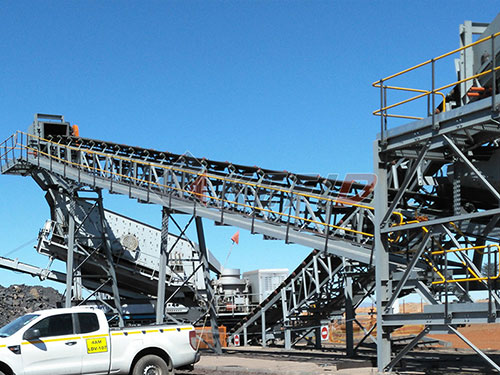
Before delving into quotations, it is essential to understand the crushing stages and equipment involved. Iron ore, with its high abrasiveness and hardness (typically 4–7 on the Mohs scale), requires robust machinery. A standard crushing plant configuration includes:
Additional components include vibrating feeders, screens, conveyors, dust suppression systems, and control cabins. The complexity of the plant directly influences the quotation.
2. Key Factors Influencing a Producer’s Quotation
A quotation from a reputable iron ore crushing plant producer is not a simple price list. It is a customized document reflecting multiple variables:
2.1. Capacity and Throughput
The most significant cost driver is the plant’s designed capacity, measured in tons per hour (TPH) or million tons per annum (MTPA). A small-scale plant (100–300 TPH) will have a lower absolute cost but higher cost per ton compared to a large-scale plant (1,000–5,000 TPH). Producers typically offer modular or stationary designs, with modular plants commanding a premium for mobility but lower civil works costs.
2.2. Ore Characteristics
The mineralogical composition, moisture content, and abrasiveness of the specific iron ore deposit affect equipment selection. For instance, high-silica ores may require additional crushing stages or specialized wear liners. Producers often request a sample for testing before finalizing a quotation.
2.3. Automation and Control Systems
Modern plants integrate advanced PLC/SCADA systems for real-time monitoring, load balancing, and predictive maintenance. A fully automated plant can increase capital expenditure by 15–25% but reduces long-term operational costs. Quotations should clearly delineate between basic manual control and advanced automation.
2.4. Environmental and Regulatory Compliance
Stringent dust and noise regulations in mining jurisdictions (e.g., Australia, Brazil, India) necessitate inclusion of baghouses, water spray systems, and soundproofing enclosures. A quotation for a plant in an environmentally sensitive area will include these costs, which can account for 5–10% of the total.
2.5. Scope of Supply
Producers may offer different scopes:
A turnkey quotation will be significantly higher but offers single-point responsibility.
3. Typical Cost Breakdown of an Iron Ore Crushing Plant
While exact figures vary by region and producer, a representative cost structure for a 500 TPH stationary plant (excluding civil works) is as follows:
| Component | Percentage of Total Equipment Cost | Remarks |
|---|---|---|
| Primary Jaw Crusher | 20–25% | Heavy-duty, often with hydraulic adjustment. |
| Secondary Cone Crushers (2 units) | 25–30% | High-speed, fine crushing chambers. |
| Tertiary HPGR or Cone Crushers | 15–20% | Energy-efficient but higher initial cost. |
| Vibrating Screens (multi-deck) | 10–15% | For closed-circuit operation. |
| Feeders & Conveyors | 10–12% | Apron feeders for primary, belt conveyors. |
| Electrical & Control System | 8–12% | Motors, VFDs, control panels. |
| Dust Suppression & Safety | 3–5% | Water mist, enclosures. |
| Spare Parts & Wear Liners | 2–3% | Initial set of manganese liners. |
Total Equipment Cost (indicative): USD 2.5–4.5 million for a 500 TPH plant. Adding civil works, installation, and engineering can double this figure.
4. How Producers Structure Their Quotations
A professional quotation from a leading producer (e.g., Metso Outotec, Sandvik, Thyssenkrupp, or regional players like FLSmidth) typically includes:
5. Regional Variations in Quotations
The origin of the producer significantly impacts pricing:
6. Best Practices for Requesting and Evaluating Quotations
To obtain accurate and comparable quotations, procurement teams should:
6.1. Provide a Detailed Request for Quotation (RFQ)
Include:
6.2. Request Lifecycle Cost Analysis
A lower initial quotation may hide higher operating costs. Ask for:
6.3. Evaluate Total Cost of Ownership (TCO)
Consider:
6.4. Negotiate Payment Terms
Producers often offer discounts for upfront payment or bank guarantees. However, retain a significant portion (10–15%) until successful performance testing.
7. Case Study: Quotation Comparison for a 1,000 TPH Plant
A hypothetical comparison for a medium-grade hematite ore plant in West Africa:
| Parameter | European Producer (A) | Chinese Producer (B) | Indian Producer (C) |
|---|---|---|---|
| Equipment Cost (USD) | 8.5 million | 5.2 million | 6.0 million |
| Automation Level | Full SCADA | Semi-automated | Manual with PLC |
| Delivery Time | 14 months | 10 months | 12 months |
| Warranty | 24 months | 18 months | 18 months |
| Estimated TCO (5 years) | 12.3 million | 9.8 million | 10.5 million |
Producer B offers the lowest initial cost, but Producer A’s higher efficiency and lower wear costs may yield better TCO for high-utilization operations.
8. Conclusion
Securing an Iron Ore Crushing Plant Producer Quotation is a multifaceted exercise that extends beyond price comparison. It requires a deep understanding of process engineering, equipment durability, and regional market dynamics. Project owners must balance upfront capital with long-term operational efficiency, while also considering regulatory compliance and after-sales support. By providing comprehensive RFQs, evaluating lifecycle costs, and engaging with multiple producers, stakeholders can make informed decisions that ensure the crushing plant delivers optimal performance for decades. As the iron ore industry continues to evolve toward higher efficiency and lower environmental impact, the role of the crushing plant producer as a strategic partner becomes ever more critical.
If you have any questions about our products, please feel free to contact us. We take all inquiries and suggestions very seriously.