
Bulk Stone Crusher Plant Cost: A Comprehensive Analysis of Factors, Economics, and Strategic Investment
The establishment of a bulk stone crusher plant represents a significant capital investment in the mining, construction, and infrastructure sectors. Whether for producing aggregates for road construction, concrete manufacturing, or railway ballast, the cost of such a plant is influenced by a multitude of variables ranging from raw material characteristics to regulatory compliance. This article provides a detailed, professional, and objective examination of the costs associated with bulk stone crusher plants, breaking down the key components, operational expenses, and strategic considerations that determine the total investment required.
A bulk stone crusher plant is an industrial facility designed to process large volumes of raw rock (e.g., granite, limestone, basalt, or river gravel) into smaller, graded aggregates. These plants typically integrate primary, secondary, and tertiary crushing stages, along with screening, washing, and conveying systems. The term “bulk” implies high throughput capacities, often ranging from 100 tons per hour (tph) to over 1,000 tph, catering to large-scale construction projects or commercial aggregate supply.
The cost of such a plant is not a fixed figure; it varies widely based on geographic location, technology selection, automation level, and project-specific requirements. Understanding these cost drivers is essential for investors, project managers, and procurement specialists to make informed decisions.
The total cost can be categorized into capital expenditure (CAPEX) and operational expenditure (OPEX). Below is a breakdown of each.
CAPEX represents the one-time costs incurred before the plant becomes operational. These include:
a) Equipment and Machinery Costs
This is the largest portion of CAPEX, typically accounting for 50–70% of the total investment. Key equipment includes:
b) Civil Works and Foundation
This includes site preparation, concrete foundations, steel structures, and retaining walls. For a medium-sized plant (300–500 tph), civil works can cost $500,000–$2 million. Factors such as soil conditions, seismic zones, and local labor rates significantly affect this cost.
c) Installation and Commissioning
Labor costs for assembling equipment, electrical wiring, and testing. Installation typically adds 10–15% to equipment costs. For a $5 million equipment package, installation may be $500,000–$750,000.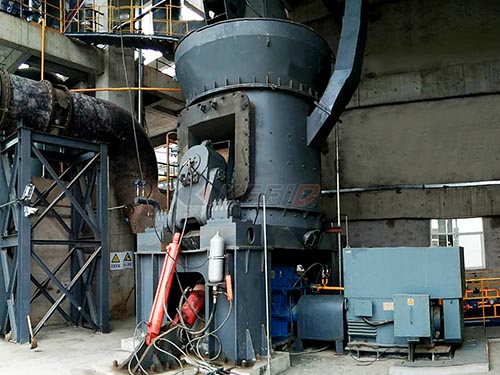
d) Land Acquisition and Permitting
Land costs vary dramatically by region. In rural areas, 5–10 acres may cost $100,000–$500,000, while in urban or peri-urban zones, prices can exceed $2 million. Permitting fees for environmental impact assessments, mining licenses, and construction permits can add $50,000–$200,000.
e) Infrastructure and Utilities
Access roads, power supply (transformers, substations), water supply systems, and drainage. A dedicated power line for a 500 kW plant may cost $100,000–$400,000. Water infrastructure for dust suppression and washing adds $50,000–$150,000.
f) Spare Parts and Initial Inventory
First-year spare parts (e.g., jaw plates, cone liners, screen meshes) typically cost 5–10% of equipment value. For a $4 million plant, this is $200,000–$400,000.
OPEX includes recurring costs over the plant’s lifetime (typically 10–20 years). These are critical for calculating return on investment (ROI).
a) Raw Material Costs
If the plant is located near a quarry, raw material (rock) may be free except for extraction costs. Otherwise, purchasing stone from third parties can cost $5–$20 per ton, depending on quality and distance.
b) Energy Costs
Crushing is energy-intensive. A 500 tph plant may consume 1.5–3 MW of power. At $0.08–$0.15 per kWh, monthly electricity bills can range from $50,000 to $200,000. Diesel generators for remote sites add $0.20–$0.40 per kWh.
c) Labor Costs
Skilled operators, maintenance staff, and administrative personnel. For a 500 tph plant, a crew of 20–40 people may be needed. Annual labor costs vary from $200,000 (low-wage countries) to $1.5 million (high-wage countries).
d) Maintenance and Wear Parts
Wear parts (liners, hammers, screens) require frequent replacement. For a granite crushing plant, wear part costs can be $0.10–$0.50 per ton of material processed. Annual maintenance (including lubricants, welding, and repairs) adds $100,000–$500,000.
e) Transportation and Logistics
Hauling aggregates to customers or stockpiles. If the plant is not co-located with the quarry, trucking costs can be $0.05–$0.20 per ton-mile.
f) Environmental Compliance
Dust suppression (water sprays, baghouses), noise barriers, and wastewater treatment. Annual costs can be $50,000–$200,000, plus potential fines for non-compliance.
To provide a practical perspective, here are approximate total CAPEX ranges for bulk stone crusher plants of different capacities (in USD, as of 2025, excluding land and permitting):
| Plant Capacity (tph) | Typical Equipment Cost | Total CAPEX (including civil, installation, infrastructure) |
|---|---|---|
| 100–200 | $1–3 million | $2–5 million |
| 300–500 | $3–8 million | $6–15 million |
| 600–1,000 | $8–20 million | $15–40 million |
| >1,000 | $20–50 million | $40–100 million |
Note: These figures are indicative. For example, a 500 tph plant in India may cost $8–12 million, while the same capacity in Australia or North America could exceed $20 million due to higher labor and regulatory costs.
Processing hard, abrasive rock (e.g., granite, quartzite) requires more robust crushers (e.g., cone crushers with manganese liners) and higher wear part consumption. This increases both CAPEX (equipment selection) and OPEX (wear costs). Soft materials like limestone allow for cheaper impact crushers and lower wear rates.
A simple two-stage crushing plant (jaw + cone) costs less than a multi-stage plant with VSI crushers for sand production. Fully automated plants with remote monitoring and predictive maintenance reduce labor costs but increase CAPEX by 20–30%.
Permits for air emissions, water discharge, and noise control can require expensive equipment (e.g., baghouse filters, noise enclosures). In regions like the European Union or California, compliance costs can add 10–20% to total CAPEX.
Premium brands (e.g., Metso, Sandvik, Terex) offer higher reliability and efficiency but at a 20–40% premium over Chinese or Indian manufacturers (e.g., SBM, Zhengzhou Yifan). However, lower-cost brands may have shorter lifespans and higher maintenance needs.
A typical bulk stone crusher plant can achieve payback in 2–5 years, depending on market demand and operational efficiency. For example, a 500 tph plant producing aggregates at $15/ton with a production cost of $10/ton yields a gross margin of $5/ton. At 80% utilization (3,200 hours/year), annual profit is $8 million, allowing a $15 million investment to be recovered in under 2 years.
The cost of a bulk stone crusher plant is a complex interplay of equipment selection, site conditions, regulatory environment, and market dynamics. While a small plant may cost as little as $2 million, a large-scale, fully automated facility can exceed $100 million. Investors must conduct thorough feasibility studies, considering not only CAPEX but also long-term OPEX, raw material availability, and demand forecasts. By optimizing plant design, leveraging local resources, and negotiating favorable financing, stakeholders can achieve a competitive edge in the aggregate industry. Ultimately, the key to success lies in balancing upfront investment with operational efficiency and market positioning.
If you have any questions about our products, please feel free to contact us. We take all inquiries and suggestions very seriously.