Title: Optimizing High-Throughput Aggregates Production: A Technical Evaluation of the CE-Marked 250–300 TPH Stone Crushing Plant and Its Customization Potential

Introduction

In the modern construction and infrastructure sector, the demand for high-quality aggregates—crushed stone, gravel, and sand—has never been more acute. Large-scale projects such as highway networks, railway ballast, dam construction, and commercial concrete batching require a consistent, continuous supply of graded materials. At the heart of this supply chain lies the stationary crushing plant, a complex assembly of feeders, crushers, screens, and conveyors engineered to transform raw rock into saleable products. Among the most sought-after configurations is the 250–300 tons per hour (TPH) capacity class, which balances throughput with operational flexibility for mid-to-large quarries and contract crushing operations.

This article provides a comprehensive, professional, and objective analysis of a CE-marked 250–300 TPH stone crushing plant, with a specific focus on its customization capabilities. We will examine the regulatory significance of the CE mark, dissect the core equipment modules, analyze the mechanical and electrical design parameters, and critically evaluate the options available for tailoring the plant to specific feed materials, product specifications, site constraints, and environmental regulations. The goal is to equip project owners, procurement managers, and quarry operators with the technical knowledge required to make informed investment decisions.

1. The Significance of the CE Mark in Crushing Equipment

Before delving into customization, it is essential to understand the regulatory framework. The CE (Conformité Européenne) mark is a mandatory conformity marking for machinery sold within the European Economic Area (EEA). For a 250–300 TPH stone crushing plant, the CE mark indicates that the entire assembly—including primary jaw crusher, secondary cone crusher or impact crusher, vibrating screens, and conveyors—complies with the essential health and safety requirements of the Machinery Directive (2006/42/EC), the Electromagnetic Compatibility Directive (2014/30/EU), and the Low Voltage Directive (2014/35/EU) where applicable.

From a professional standpoint, the CE mark is not merely a sticker; it represents a rigorous process of risk assessment, technical file compilation, and often third-party testing. For a customized plant, the CE mark is particularly challenging because the final configuration is unique. The plant manufacturer must ensure that the customized integration—e.g., a modified chute design or a relocated control panel—does not introduce new hazards. Therefore, when a supplier offers a “CE-marked 250–300 TPH plant with customization,” they are committing to re-evaluating the entire system post-modification. This is a significant quality indicator, as it separates reputable engineering firms from mere assemblers of imported components.

2. Baseline Configuration of a 250–300 TPH Plant

To understand customization, one must first grasp the standard architecture. A typical 250–300 TPH stationary plant operates in a three-stage crushing process, though two-stage configurations are possible for softer materials.

  • Primary Crushing: The raw feed (often blasted limestone, granite, or basalt) is dumped into a vibrating grizzly feeder (e.g., ZSW 490×130) which removes fines and scalps oversized rock. The material then enters a primary jaw crusher (e.g., PE-900×1200 or equivalent), producing a discharge of 150–200 mm. The jaw crusher is selected for its high compression strength and reliability.

  • Secondary Crushing: The primary discharge is conveyed to a secondary crusher. For hard, abrasive rock (granite, basalt), a standard or short-head cone crusher (e.g., CS160 or HP300) is preferred. For softer, less abrasive limestone, a secondary impact crusher (e.g., PFW1318) offers higher reduction ratios and better cubical shape.

  • Tertiary Crushing and Screening: The secondary product is screened on a circular vibrating screen (e.g., 3YK2160). Oversized material returns to a tertiary cone crusher (e.g., CS160) or a vertical shaft impact (VSI) crusher for final shaping. The final screen separates products into typical fractions: 0–5 mm (manufactured sand), 5–10 mm, 10–20 mm, and 20–31.5 mm.

  • Conveying and Electrical: A network of belt conveyors (B800–B1200) links all units. The electrical system includes a centralized control cabinet with soft starters or variable frequency drives (VFDs) for the main crushers, plus motor control centers (MCC) for all auxiliary equipment.

The baseline plant typically has a footprint of approximately 2,500–3,500 square meters, a total installed power of 450–600 kW, and a dust suppression system using water spray nozzles.

3. The Core of Customization: Mechanical and Process Engineering

Customization of a 250–300 TPH plant is not about changing the brand of the paint; it is a deep engineering exercise. The following are the primary customization vectors, each with objective technical implications.

3.1 Feed Material Characteristics

The single most critical factor is the rock type. A plant designed for 250 TPH of soft limestone will fail catastrophically if fed with river pebble or unweathered granite.

  • Hardness and Abrasiveness (Mohs scale, Abrasion Index): For granite (Mohs 6–7, high silica), the customization requires:
    • A heavy-duty primary jaw with a deeper crushing chamber.
    • A secondary cone crusher with a larger eccentric throw and manganese liners (18% Mn) to handle high impact.
    • A VSI crusher with a closed rotor and tungsten carbide tips for the tertiary stage.
    • Slower belt speeds (2.0–2.5 m/s) to reduce wear.
  • Moisture Content and Clay Content: If the feed contains high clay or is sticky, customization involves:
    • A longer grizzly section with adjustable bar gaps.
    • A scalping screen before the primary crusher to bypass wet fines.
    • Heated screen meshes or polyurethane panels with anti-clogging designs.
    • Increased chute angles (minimum 55–60 degrees) and the addition of wear-resistant ceramic liners.

3.2 Product Gradation and Shape

The target product mix dictates the crusher settings and screen deck configurations.

  • Cubical Shape Requirement: For high-performance concrete or asphalt, the flakiness index must be below 15%. Customization here involves adding a tertiary VSI crusher, even if the secondary crusher could theoretically meet the tonnage. The VSI operates at a rotor speed of 60–80 m/s to achieve particle-on-particle crushing.
  • Manufactured Sand (0–5 mm) Production: If the plant must produce 30–40% of its output as sand, customization requires:
    • A dedicated sand-making line (e.g., a VSI plus a high-frequency dewatering screen).
    • A sand washing unit (bucket wheel or hydrocyclone) to remove minus 75-micron particles.
    • A fines recovery system to minimize water consumption.
  • Multi-Product Simultaneous Output: Standard plants often produce only 2–3 products. Customization allows for a four-deck screen (e.g., 4YK2460) to produce four fractions simultaneously, with a reversible conveyor system to allow blending of aggregates to meet specific gradation curves (e.g., ASTM C33 or EN 12620).

3.3 Site Topography and Layout

The physical location of the quarry drastically affects the plant’s structural design.

  • Flat Terrain vs. Mountainous Terrain: On a flat site, a conventional horizontal layout is used, requiring taller support structures for the screens. On a slope, a “stepped” layout can be engineered to use gravity flow, reducing the number of conveyors and the total installed power. Customization includes designing the foundation loads (dynamic loads from crushers are 1.5–2.0 times the static weight) to match local soil bearing capacity.
  • Mobile vs. Semi-Mobile Integration: While the keyword specifies a “stationary” plant, customization can include a semi-mobile primary module. This involves mounting the jaw crusher and grizzly feeder on a skid with hydraulic lifting legs, allowing the primary to be relocated as the quarry face advances, while the secondary and tertiary remain stationary. This reduces haulage costs by up to 30%.

3.4 Environmental and Regulatory Compliance

Beyond the CE mark, local environmental permits often dictate customization.

  • Dust Control: A standard water spray system may be insufficient in arid regions or where water is scarce. Customization options include:
    • A baghouse dust collector (pulse-jet type) with a capacity of 10,000–20,000 m³/h, ducted to the crusher discharge points and screen inlets.
    • Fully enclosed transfer chutes with rubber sealing skirts.
    • A fog cannon system for stockpile areas.
  • Noise Reduction: To meet nighttime noise limits (e.g., 55 dB(A) at the property boundary), customization includes:
    • Acoustic enclosures around the primary jaw crusher (reducing noise from 95 dB(A) to 75 dB(A)).
    • Rubber-lined screen decks and polyurethane screen media instead of steel.
    • Low-noise conveyor idlers with deep-groove ball bearings.
  • Wastewater Management: If a washing plant is included, customization requires a thickener tank and a filter press to recycle 90% of the process water, achieving zero-liquid discharge.

4. Electrical and Automation Customization

The modern 250–300 TPH plant is a cyber-physical system. Customization extends deeply into the control architecture.

  • PLC and HMI Programming: The standard Siemens S7-1200 or Allen-Bradley CompactLogix PLC can be customized to include:
    • A load-following algorithm that automatically adjusts the feeder speed and crusher CSS (closed side setting) based on the amperage draw of the secondary crusher, maximizing throughput without overloading.
    • A remote monitoring interface (SCADA) that provides real-time data on bearing temperatures, vibration levels, and oil pressure for each crusher.
  • Power Supply Variability: In developing regions, grid power may be unstable. Customization includes:
    • Installing soft starters with a bypass contactor to reduce inrush current by 60%.
    • Adding a diesel generator synchronization panel for hybrid operation.
    • Designing the motor control center with a power factor correction capacitor bank (to achieve 0.95 PF).
  • Safety Interlocks: Customized safety systems go beyond standard emergency stops. They include:
    • Zero-speed sensors on all critical conveyors to prevent belt slippage.
    • Pull-cord switches with latching relays for immediate shutdown.
    • A two-hand control system for the hydraulic mantle adjustment on the cone crusher.

5. Structural and Mechanical Customization for Longevity

A 250–300 TPH plant operates 3,000–5,000 hours per year. Customization for durability is a cost-benefit analysis.

  • Wear Parts Selection: The standard manganese steel (12–14% Mn) can be upgraded to high-chrome alloy for impact crusher blow bars, or to a composite material (ceramic-embedded) for VSI wear plates. This increases the initial cost by 15–20% but extends wear life by 50–100% when crushing abrasive granite.
  • Chute and Hopper Design: Customization includes:
    • Rock-box liners (a layer of trapped rock) instead of steel liners in high-impact areas.
    • Removable wear panels for quick replacement without welding.
    • A rock breaker boom mounted over the primary crusher grizzly to handle oversized boulders, preventing blockages.
  • Conveyor System Upgrades: For a customized plant, the standard 3-ply EP conveyor belt can be upgraded to a 4-ply steel-cord belt with a higher safety factor (10:1 vs. 8:1). Additionally, the tail pulley can be equipped with a spiral wing design to shed material buildup.

6. The Customization Process: From Inquiry to Commissioning

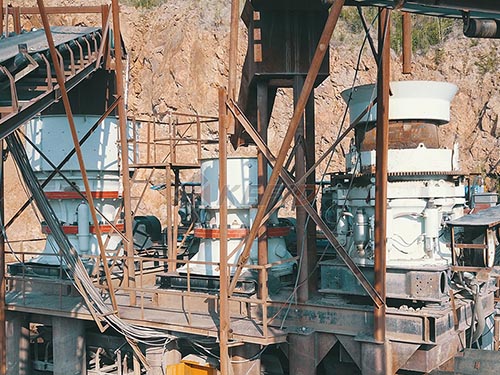
A professional customization project follows a structured engineering workflow:Ce Marked 250 300tph Stone Crushing Plant Customization
  1. Technical Audit: The manufacturer sends a process engineer to the site to collect feed samples (minimum 500 kg) for laboratory testing (crushability, abrasion index, bulk density).
  2. Flow Sheet Design: Using simulation software (e.g., Bruno or AggFlow), the engineer models the entire plant to predict throughput and product gradation. This is the critical step where customization is validated mathematically.
  3. 3D Modeling and Clash Detection: The customized layout is drawn in SolidWorks or Inventor. This allows for the precise positioning of access platforms, maintenance clearances (minimum 800 mm around crushers), and overhead crane beams.
  4. Fabrication and Quality Control: Customized components (e.g., a non-standard chute with a 70-degree bend) are fabricated with full penetration welds and stress-relieved. The CE mark requires that all welded joints on load-bearing structures meet ISO 5817 quality level B.
  5. Factory Assembly Test: The plant is dry-run assembled at the factory to verify belt alignment, pulley concentricity, and electrical continuity. This is a mandatory step for CE compliance.
  6. Site Installation and Commissioning: The customized plant is installed on prepared foundations. Commissioning includes a 72-hour continuous load test at 100% capacity, followed by a performance guarantee test to verify that the plant achieves 250–300 TPH with the specified feed.

7. Economic and Operational ConsiderationsCe Marked 250 300tph Stone Crushing Plant Customization

Customization is not free. The cost premium for a heavily customized plant (e.g., with baghouse, VSI, and full automation) can be 25–40% higher than a standard “off-the-shelf” unit. However, the return on investment (ROI) is often justified:

  • Increased Uptime: A customized chute design that eliminates blockages can increase plant availability from 85% to 95%, translating to an additional 250 hours of production per year.
  • Product Premium: Producing a cubical, well-graded aggregate for high-spec concrete allows the operator to charge a 10–15% price premium over standard crushed rock.
  • Energy Efficiency: A VFD-controlled feeder and crusher can reduce specific energy consumption from 1.2 kWh/ton to 0.9 kWh/ton, saving significant operating costs over a 10-year lifespan.

Conclusion

The CE-marked 250–300 TPH stone crushing plant represents a mature, reliable technology for high-volume aggregate production. However, its true value is unlocked through professional customization. Whether it is adapting the crushing chamber geometry to a specific rock type, integrating a complex water recycling system, or programming a predictive maintenance algorithm, customization transforms a generic machine into a site-specific production asset.

For the discerning buyer, the key takeaway is this: the CE mark guarantees safety and compliance, but it does not guarantee optimal performance. Only a detailed customization process—grounded in material testing, process simulation, and rigorous structural engineering—can ensure that the plant delivers its rated 250–300 TPH with the desired product quality, operational efficiency, and environmental stewardship. When evaluating suppliers, insist on a comprehensive engineering proposal that addresses feed analysis, layout constraints, and automation levels. In doing so, the 250–300 TPH plant becomes not just a piece of machinery, but a strategic investment in long-term profitability.

Leave Message

*

If you have any questions about our products, please feel free to contact us. We take all inquiries and suggestions very seriously.