Title: Quality Control Protocols for a Luxury 250–300 TPH Stone Crushing Plant: Ensuring Premium Aggregate Output
Introduction
In the high-stakes world of infrastructure development and premium construction, the demand for superior quality aggregates has never been more stringent. A “Luxury” stone crushing plant, particularly one with a capacity of 250 to 300 tons per hour (TPH), is not merely a production unit; it is a precision-engineered system designed to deliver consistent, high-grade material for projects such as high-speed rail, airport runways, luxury real estate, and high-performance concrete. Quality control (QC) in such a plant transcends basic sieve analysis. It encompasses a holistic, multi-stage approach that integrates raw material selection, crushing circuit optimization, screening efficiency, dust suppression, and final product verification. This article provides a detailed, professional, and objective examination of the quality control measures essential for operating a luxury 250–300 TPH stone crushing plant, ensuring that every ton produced meets the most demanding international standards.
1. Pre-Processing Quality Control: Raw Material and Feed Management
The foundation of any high-quality aggregate product lies in the characteristics of the feed material. For a luxury plant, QC begins before the first rock enters the jaw crusher.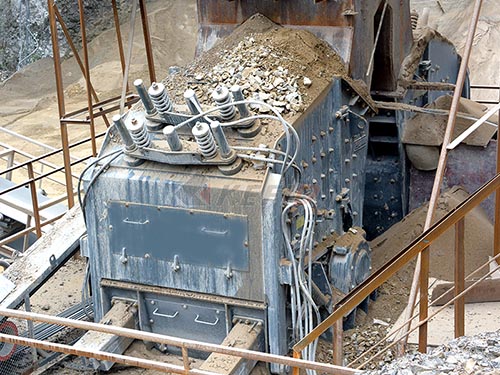
- Geological and Petrographic Analysis: Before quarrying or sourcing, a comprehensive analysis of the parent rock is mandatory. This includes testing for unconfined compressive strength (UCS), Los Angeles abrasion value, water absorption, and petrographic composition. Rocks with high silica content, excessive clay, or reactive minerals (e.g., opal, chert) are rejected as they can cause alkali-silica reaction (ASR) in concrete. For a 250–300 TPH plant, the feed must be homogeneous to prevent frequent adjustments to crusher settings.
- Feed Size and Contamination Control: A grizzly feeder or vibrating scalper is used to remove fines (typically < 20 mm) and clay lumps before the primary crusher. This step is critical because fines can clog the jaw crusher, reduce throughput, and contaminate the final product. QC checks at this stage involve visual inspection and periodic sampling to ensure that the feed material does not contain more than 1% deleterious materials (e.g., wood, plastic, soft particles).
- Moisture Content Monitoring: High moisture content in the feed can lead to clogging in the secondary and tertiary crushers, especially in cone crushers. A moisture sensor or rapid drying test is performed on incoming material. If moisture exceeds 5%, the plant may need to adjust crusher speed or incorporate a pre-drying step, though this is rare in hard rock crushing.
2. Crushing Circuit Quality Control: Precision and Consistency
The 250–300 TPH plant typically employs a three-stage crushing circuit: primary (jaw crusher), secondary (cone crusher), and tertiary (cone or vertical shaft impactor – VSI). Each stage requires rigorous QC to maintain product shape, gradation, and strength.
- Primary Crushing (Jaw Crusher): The jaw crusher reduces run-of-mine rock to a size of 150–250 mm. QC here focuses on the closed-side setting (CSS). A deviation of even 5 mm can cascade into downstream inefficiencies. Daily calibration of the CSS using lead foil or a laser measurement tool is standard. The product from the primary crusher should have a maximum of 10% oversize material (above the target top size).
- Secondary and Tertiary Crushing (Cone Crushers): Cone crushers are the workhorses of a luxury plant. They are responsible for producing cubical, well-graded aggregates. QC parameters include:
- Eccentric Throw and CSS: These are adjusted based on the desired product size. For a 250–300 TPH plant, the secondary cone typically produces 40–60 mm material, while the tertiary cone produces 10–20 mm. Real-time monitoring of power draw and hydraulic pressure is used to detect liner wear or choking.
- Cubicity Index: A key metric for luxury aggregates. The percentage of flaky and elongated particles must be kept below 10% (often below 5% for premium applications). This is achieved by using a VSI crusher in the final stage, which employs a rock-on-rock crushing action to improve shape. QC involves periodic manual measurement of particle shape using a proportional caliper.
- VSI Crusher (if used): For high-end concrete and asphalt, a VSI is indispensable. QC here focuses on the rotor speed and cascade ratio. A higher rotor speed increases the crushing ratio but can generate more fines. The plant must balance this to achieve a target sand equivalent value (SEV) of > 70% for manufactured sand.
3. Screening and Classification: The Gatekeepers of Quality
Screening is where the plant’s ability to produce consistent, well-defined fractions is tested. A luxury 250–300 TPH plant uses multi-deck vibrating screens (typically 2–3 decks) with high-frequency vibration and efficient cloth tensioning.
- Screen Efficiency: The primary QC metric is screening efficiency, which should exceed 90%. Inefficient screening leads to oversize material in finer fractions (contamination) or undersize material in coarser fractions (waste). Daily checks include:
- Sieve Analysis: Representative samples from each screen deck are taken every 2–4 hours. The cumulative passing percentage is plotted against the target gradation curve. Any deviation beyond ±5% triggers an immediate adjustment of screen amplitude, slope, or cloth replacement.
- Blinding and Peening: Screens can become blinded (clogged) by wet fines or peened (deformed) by oversized rocks. QC inspectors visually inspect screen surfaces and use a “ball deck” or ultrasonic cleaning system to mitigate blinding.
- Fraction Control: The plant typically produces multiple fractions: 0–5 mm (manufactured sand), 5–10 mm, 10–20 mm, and 20–40 mm. Each fraction must meet strict limits on flakiness, elongation, and dust content. For luxury applications, the dust content (particles < 75 microns) in coarse aggregates must be below 1%, and in sand below 3%. This is achieved through wet washing or dry dedusting systems (e.g., baghouse filters or air classifiers).
4. Final Product Quality Assurance: Laboratory Testing and Certification
The final product from a luxury plant is not shipped without a comprehensive battery of tests. A dedicated on-site laboratory is essential for a 250–300 TPH operation.
- Physical and Mechanical Tests:
- Los Angeles Abrasion (LAA): Must be < 25% for premium concrete aggregates.
- Aggregate Crushing Value (ACV): Typically < 20%.
- Impact Value (AIV): < 15% for high-stress applications.
- Water Absorption: < 2% to ensure durability in freeze-thaw cycles.
- Geometric Tests:
- Flakiness and Elongation Index: As mentioned, < 10% combined.
- Shape Index (SI): A modern metric using 3D imaging to quantify angularity. Luxury plants often use digital image analysis systems (e.g., CAMSIZER or QICPIC) for real-time shape measurement.
- Chemical Tests:
- Chloride and Sulfate Content: Must be below 0.05% and 0.5% respectively to prevent corrosion in reinforced concrete.
- Alkali-Silica Reactivity (ASR): Accelerated mortar bar tests (ASTM C1260) are performed quarterly to ensure the aggregate is non-reactive.
- Gradation and Fineness Modulus: For manufactured sand, the fineness modulus (FM) must be tightly controlled (typically 2.6–3.0). A deviation of 0.1 in FM can significantly alter concrete workability. QC uses automated sieve shakers and laser diffraction analyzers for rapid feedback.
5. Process Control and Automation: The Role of Technology
A luxury 250–300 TPH plant is rarely operated manually. Advanced automation systems (e.g., PLC and SCADA) are integral to QC.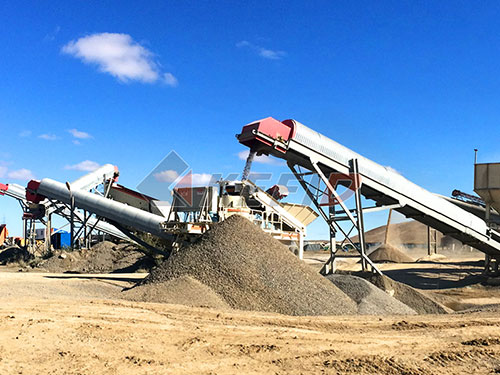
- Real-Time Monitoring: Sensors on crushers (power, temperature, oil pressure), screens (vibration amplitude), and conveyors (belt speed, load) feed data to a central control room. Alarms are triggered if any parameter deviates from the setpoint. For example, a sudden increase in cone crusher power draw may indicate a tramp metal event or liner wear.
- Automatic Sampling: Many luxury plants employ automatic samplers at key transfer points (e.g., after the tertiary crusher, before the stockpile). These samplers collect a representative sample every 30 minutes, which is then analyzed in the lab. This eliminates human bias and ensures continuous monitoring.
- Data Logging and Traceability: Every batch of aggregate is tagged with a digital ID that records the time, crusher settings, screen configuration, and test results. This traceability is crucial for warranty claims or project audits.
6. Environmental and Operational Quality Control
Quality is not limited to the product; it extends to the plant’s operation and environmental impact.
- Dust Suppression: A luxury plant must maintain a dust concentration below 10 mg/m³ in the working environment. This is achieved through water spray systems, mist cannons, and enclosed conveyor belts. QC involves regular air quality monitoring using gravimetric samplers.
- Noise Control: Noise levels must be below 85 dB at a 1-meter distance from the plant. QC includes periodic noise mapping and maintenance of silencers on crushers and screens.
- Wear Parts Management: The quality of the final product degrades as crusher liners wear. QC schedules regular liner inspections (every 200–500 operating hours) and replaces them before the product shape or gradation is compromised. A worn liner can increase flakiness by 5–10%.
7. Challenges and Mitigation Strategies
Even with robust QC, a 250–300 TPH luxury plant faces challenges:
- Variability in Feed: Even with pre-screening, the quarry face can change. Mitigation: Maintain a surge pile with a capacity of 1–2 days of production to blend material and homogenize feed.
- Moisture Fluctuations: Rainy seasons can cause screen blinding and increase dust content. Mitigation: Install heated screen decks or use dry dedusting systems with adjustable airflow.
- Human Error: Despite automation, operators may misadjust settings. Mitigation: Implement a “lock-out/tag-out” system for critical adjustments and provide continuous training on QC protocols.
Conclusion
Operating a luxury 250–300 TPH stone crushing plant demands a culture of precision, discipline, and continuous improvement. Quality control is not a single department but an integrated system that spans from the quarry face to the customer’s silo. By implementing rigorous pre-processing checks, maintaining tight control over crushing and screening parameters, leveraging advanced automation, and conducting comprehensive laboratory testing, such a plant can consistently produce aggregates that meet the most exacting standards for high-performance concrete, asphalt, and infrastructure projects. The investment in QC—both in equipment and personnel—is not an expense but a strategic advantage that ensures product reliability, customer satisfaction, and long-term profitability in the competitive luxury aggregate market.
