
Importing Stone Quarry Crushing Plant Suppliers: A Comprehensive Guide for Global Buyers
Introduction
The global aggregates industry is the backbone of modern infrastructure. From highways and bridges to residential developments and industrial complexes, the demand for crushed stone, sand, and gravel remains insatiable. For quarry operators, contractors, and mining companies, establishing a reliable and efficient crushing plant is critical to profitability. While domestic suppliers exist in many markets, a growing number of businesses are turning to international sources to import stone quarry crushing plant suppliers. This article provides a detailed, professional, and objective examination of the process, benefits, challenges, and best practices associated with importing crushing plant equipment from overseas suppliers.
Why Import Crushing Plant Equipment?
The decision to import rather than purchase domestically is rarely arbitrary. It is typically driven by a combination of economic, technical, and strategic factors.
First, cost competitiveness is a primary motivator. Manufacturers in regions such as China, Turkey, India, and parts of Eastern Europe often offer significantly lower production costs due to economies of scale, lower labor expenses, and established supply chains for raw materials like steel and cast iron. For a complete crushing plant—including jaw crushers, cone crushers, impact crushers, vibrating feeders, screens, and conveyors—the capital expenditure difference can be substantial, sometimes ranging from 20% to 50% lower than equivalent equipment from North American or Western European manufacturers.
Second, technological specialization plays a role. Certain countries have developed niche expertise. For example, German and Italian manufacturers are renowned for high-precision, automation-heavy plants for hard rock. Chinese suppliers have become highly competitive in manufacturing robust, high-capacity plants for limestone and granite, often incorporating advanced hydraulic systems and remote monitoring. Turkish suppliers are known for cost-effective, mobile crushing solutions. Importing allows a buyer to access this specialized technology without domestic equivalents.
Third, availability and lead times can favor imports. In periods of high domestic demand, local manufacturers may have order backlogs stretching 12 to 18 months. Overseas suppliers, particularly those with modular production lines, may offer shorter delivery times, enabling faster project commencement.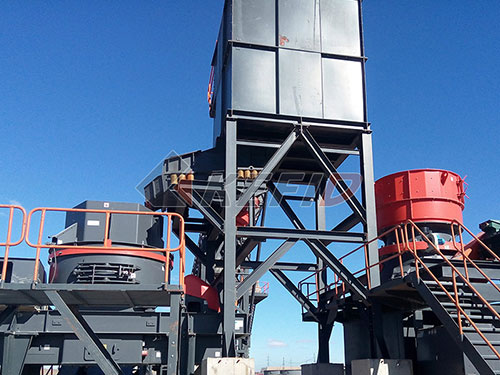
Key Factors in Selecting an Overseas Supplier
Importing heavy machinery is not a transactional purchase; it is a long-term partnership. Objective evaluation of potential suppliers is essential.
1. Manufacturing Capability and Certifications
A credible supplier must demonstrate adherence to international quality standards. Look for ISO 9001 certification for quality management, CE marking for European market compliance (even if not exporting to Europe, CE indicates safety and quality discipline), and relevant welding and structural certifications. An on-site audit or third-party inspection (e.g., SGS, Bureau Veritas) of the factory is strongly recommended. This verifies not only the production capacity but also the quality control processes, from raw material inspection to final assembly and load testing.
2. Technical Specifications and Customization
Crushing plants are not off-the-shelf products. The supplier must be able to tailor the plant to the specific rock type (e.g., granite, basalt, limestone, river stone), required output size (aggregates for concrete, asphalt, or ballast), and capacity (typically measured in tonnes per hour). Key technical parameters include:
A supplier that cannot provide a detailed process flow diagram, equipment layout, and performance guarantees should be disqualified.
3. After-Sales Support and Spare Parts
The most common failure in importing crushing plants is inadequate after-sales support. A supplier must offer:
Buyers should request a list of existing customers in their region or similar markets and, ideally, conduct reference checks.
4. Export Experience and Documentation
An experienced exporter understands the complexities of international trade. They should provide:
Inexperienced suppliers often fail at documentation, leading to customs delays, fines, or even rejection of the shipment.
The Import Process: Step by Step
Step 1: Requirement Definition
The buyer must clearly define the project scope: rock type, required product sizes, capacity, site conditions (space, power, climate), and budget. This forms the basis for requesting quotations.
Step 2: Supplier Identification and Vetting
Sources include international trade shows (e.g., bauma Munich, Canton Fair, Mining Indonesia), B2B platforms (Alibaba, Made-in-China, Global Sources), and industry referrals. However, platforms alone are insufficient. Vetting should include:
Step 3: Quotation and Negotiation
Quotations should be itemized: main equipment, motors, control panels, structural steel, shipping cost, insurance, and installation. Buyers should clarify Incoterms (FOB, CIF, or DAP). Negotiation should focus not only on price but also on warranty terms, spare parts pricing, and payment schedule (typically 30% deposit, 70% before shipment, or via Letter of Credit).
Step 4: Contract and Payment
A robust contract must specify:
Payment methods: Telegraphic Transfer (T/T) is common but carries risk. A Letter of Credit (L/C) at sight is safer for large transactions. Escrow services are rarely used for heavy machinery but can be arranged via third parties.
Step 5: Manufacturing and Inspection
During production, the buyer should arrange for pre-shipment inspection. This includes:
A third-party inspection report is a valuable document for customs and insurance.
Step 6: Shipping and Logistics
Crushing plants are bulky and heavy. Shipment is usually via bulk carrier or flat-rack containers. The buyer must consider:
Step 7: Installation, Commissioning, and Training
Upon arrival, the supplier’s engineer(s) should supervise installation. This phase often reveals missing parts or manufacturing defects. A clear punch list should be maintained. Commissioning involves trial runs with actual rock feed, adjusting crusher settings (CSS), and tuning screen angles and conveyor speeds. Operator training should cover safe operation, daily maintenance, and troubleshooting.
Challenges and Risk Mitigation
1. Quality Variability
Not all overseas suppliers maintain consistent quality. Mitigation: Factory audits, pre-shipment inspection, and a trial run before final payment.
2. Communication Barriers
Language differences can lead to misunderstandings in technical specifications. Mitigation: Use detailed drawings, 3D models, and bilingual contracts. Employ a technical translator if needed.
3. Logistical Complexity
Heavy equipment shipping is prone to delays, damage, and demurrage. Mitigation: Work with an experienced freight forwarder specializing in project cargo. Purchase comprehensive insurance.
4. After-Sales Gaps
Some suppliers disappear after payment. Mitigation: Retain a portion of payment (e.g., 10%) until successful commissioning. Include penalty clauses for non-performance.
5. Regulatory Compliance
Importing used or new machinery may require import permits, environmental clearances, or safety certifications in the destination country. Mitigation: Research local regulations early. Engage a customs broker.
Case Study: A Successful Import from China to West Africa
A granite quarry in Ghana required a 250 TPH stationary crushing plant. After evaluating local suppliers (limited capacity) and European suppliers (high cost), the operator selected a Chinese manufacturer with CE certification. The process included:
The total landed cost was 35% lower than the nearest European quote. After 18 months, the plant has achieved 92% availability, with minor issues resolved via remote support and local spare parts.
Conclusion
Importing stone quarry crushing plant suppliers is a strategic decision that can yield significant cost savings and access to advanced technology. However, it demands rigorous due diligence, clear contracts, and robust logistics planning. The buyer must shift from a price-focused mindset to a total-cost-of-ownership perspective, factoring in installation, spare parts, downtime, and after-sales support. By following a structured process—requirement definition, supplier vetting, inspection, and commissioning—quarry operators can successfully integrate imported crushing plants into their operations, enhancing productivity and competitiveness in the global aggregates market. As infrastructure demand continues to rise, particularly in emerging economies, the ability to source and manage international suppliers will remain a core competency for forward-looking quarry businesses.
If you have any questions about our products, please feel free to contact us. We take all inquiries and suggestions very seriously.