
Title: Industrial Gold Mining Equipment Prices: A Comprehensive Market Analysis
Introduction
The global gold mining industry, a cornerstone of both economic stability and technological advancement, relies heavily on a vast array of specialized equipment. From the initial stages of exploration and extraction to the final processes of recovery and refining, the machinery employed determines operational efficiency, safety, and profitability. Understanding the pricing landscape of industrial gold mining equipment is crucial for stakeholders—ranging from junior exploration companies to multinational mining conglomerates—when making capital expenditure decisions. This article provides a detailed, objective analysis of the factors influencing equipment prices, the cost ranges for key machinery categories, and the market dynamics that shape these figures.
1. The Scope of Industrial Gold Mining Equipment
Industrial gold mining equipment is not a monolithic category. It spans a spectrum from small-scale, mobile units to massive, fixed installations. For the purpose of this analysis, “industrial” refers to equipment designed for large-scale operations, typically processing thousands of tonnes of ore per day. Key categories include:
2. Primary Price Determinants
Several interrelated factors dictate the price of industrial gold mining equipment. Understanding these is essential for accurate budgeting.
2.1. Scale and Capacity
The most significant price driver is the equipment’s processing capacity. A small jaw crusher capable of 50 tonnes per hour (tph) may cost between $50,000 and $150,000, while a large primary gyratory crusher handling 5,000 tph can exceed $5 million. Similarly, a 10-foot by 20-foot ball mill might be priced at $1.5 million, whereas a 30-foot SAG mill can cost upwards of $15 million. Economies of scale apply, but the absolute cost rises sharply with capacity.
2.2. Material and Build Quality
Equipment constructed from high-grade abrasion-resistant steel (e.g., AR400, AR500) or with specialized liners (rubber, ceramic, or manganese steel) commands a premium. For instance, a flotation cell with stainless steel components and advanced wear-resistant coatings will be significantly more expensive than a standard carbon steel unit. The expected lifespan and maintenance intervals directly correlate with material quality.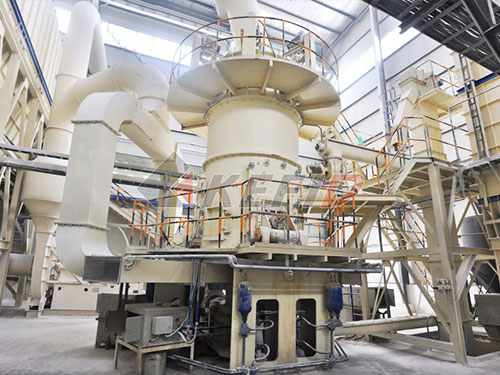
2.3. Technology and Automation
Modern industrial gold mining equipment increasingly incorporates advanced automation, remote monitoring, and data analytics. A fully automated, sensor-equipped ball mill with variable frequency drives (VFDs) and predictive maintenance software can cost 20–40% more than a manually operated equivalent. However, this premium is often justified by reduced labor costs, improved recovery rates, and lower downtime.
2.4. Brand and Manufacturer Reputation
Established manufacturers such as Metso Outotec, FLSmidth, Sandvik, and ThyssenKrupp command higher prices due to their proven reliability, global service networks, and extensive R&D investments. A Metso HP series cone crusher, for example, may be priced 15–25% higher than a comparable model from a lesser-known Chinese or Indian manufacturer. However, the latter may offer lower upfront costs with potential trade-offs in after-sales support and parts availability.
2.5. Customization and Engineering
Standard, off-the-shelf equipment is generally less expensive than custom-engineered solutions. Many large-scale gold mines require equipment tailored to specific ore characteristics (e.g., high clay content, high hardness, or presence of deleterious elements). Custom design, fabrication, and testing can add 30–50% to the base price.
2.6. Geographic and Logistical Factors
The final delivered price includes shipping, import duties, and local taxes. Equipment manufactured in Europe or North America and shipped to a remote mine site in West Africa or Central Asia can incur logistics costs equal to 10–30% of the purchase price. Additionally, installation, commissioning, and training services are often bundled or quoted separately.
3. Price Ranges for Key Equipment Categories
The following are indicative price ranges (in USD, as of 2025) for new, industrial-grade gold mining equipment. These figures are based on industry reports, manufacturer quotations, and market analysis. Used or refurbished equipment can be 40–60% lower but carries higher risk.
3.1. Crushing Equipment
3.2. Grinding Mills
3.3. Gravity Separation Equipment
3.4. Flotation Cells
3.5. Leaching and CIP Equipment
3.6. Dewatering Equipment
3.7. Mobile and Modular Plants
4. Market Trends and Price Dynamics (2024–2025)
4.1. Rising Raw Material Costs
The prices of steel, copper, and rare earth elements used in motors and electronics have increased by 15–30% since 2020, directly impacting manufacturing costs. This has led to a general upward trend in equipment prices.
4.2. Supply Chain Constraints
Post-pandemic supply chain disruptions, particularly for high-precision components (bearings, gears, hydraulic systems), have extended lead times and increased costs. Some manufacturers report delivery times of 12–18 months for large mills and crushers.
4.3. Demand from Greenfield Projects
The resurgence of gold prices (above $2,000/oz in 2024) has spurred new mine development, particularly in Africa, Latin America, and Australia. This demand has tightened supply for high-capacity equipment, pushing prices higher.
4.4. Shift Toward Modular and Mobile Solutions
There is a growing preference for modular and mobile processing plants, especially for smaller deposits and remote locations. These units, while more expensive per tonne of capacity, offer faster deployment and lower capital risk. Prices for modular plants have increased by 10–15% year-over-year.
4.5. Technological Upgrades
The integration of AI, IoT, and digital twins is becoming standard in new equipment. While this increases upfront costs, it promises lower total cost of ownership (TCO) through optimized performance and predictive maintenance.
5. Cost-Benefit Considerations for Buyers
When evaluating equipment prices, buyers must consider not only the purchase price but also the total cost of ownership (TCO). Key factors include:
6. Conclusion
The pricing of industrial gold mining equipment is a complex interplay of capacity, technology, material quality, brand reputation, and market dynamics. As of 2025, buyers can expect to pay from tens of thousands of dollars for small gravity units to tens of millions for complete processing plants. The trend is toward higher prices driven by raw material costs, supply chain constraints, and technological advancements. However, strategic investment in high-quality, efficient equipment can yield substantial long-term returns through improved recovery, reduced operating costs, and minimized downtime. For any mining operation, a thorough cost-benefit analysis, including TCO and risk assessment, is essential before committing to capital expenditure. As the gold mining industry continues to evolve, staying informed about equipment prices and market trends will remain a critical component of successful project development and operational management.
If you have any questions about our products, please feel free to contact us. We take all inquiries and suggestions very seriously.