
Title: The Backbone of Infrastructure: A Comprehensive Analysis of China’s Stone Crusher Machine Factory Industry
Introduction
China has long been recognized as the world’s manufacturing powerhouse, and within its vast industrial ecosystem, the stone crusher machine factory sector occupies a critical niche. These factories are not merely producers of heavy machinery; they are the foundational suppliers for the construction, mining, and infrastructure development industries that have driven China’s rapid urbanization and global economic influence. This article provides a detailed, objective, and professional examination of China’s stone crusher machine factory industry, covering its historical evolution, current technological landscape, major production hubs, key players, quality standards, export dynamics, and future trends. The analysis aims to offer a comprehensive understanding for industry professionals, investors, and procurement specialists seeking to navigate this complex and vital market.
1. Historical Evolution and Industrial Context
The development of China’s stone crusher manufacturing industry can be traced back to the mid-20th century, when the country began its initial industrialization under a centrally planned economy. Early factories were state-owned enterprises (SOEs) that produced basic jaw crushers and hammer crushers for domestic mining and construction projects. These machines were often heavy, inefficient, and lacked the precision of modern equipment.
The transformative period began in the 1980s and 1990s with China’s economic reforms and opening-up policy. As the country embarked on massive infrastructure projects—highways, railways, dams, and urban housing—the demand for crushed stone aggregates skyrocketed. This demand spurred the growth of private and collective stone crusher factories. Initially, many of these factories focused on low-cost, low-quality production, leading to a fragmented market with hundreds of small workshops.
The 2000s marked a significant shift. As China joined the World Trade Organization (WTO) and its construction industry adopted international standards, the stone crusher factory sector underwent a consolidation and modernization process. Larger companies began investing in research and development (R&D), adopting advanced manufacturing techniques from Europe, Japan, and the United States. The focus shifted from mere production volume to efficiency, durability, and environmental compliance. Today, China’s stone crusher factories range from small-scale workshops to massive, integrated manufacturing complexes with annual revenues exceeding billions of yuan.
2. Major Production Hubs and Geographic Distribution
China’s stone crusher machine factories are not evenly distributed. They are concentrated in regions with strong industrial bases, access to raw materials (steel, cast iron), and proximity to major transportation networks. The primary hubs include:
Henan Province (Zhengzhou, Jiaozuo, Luoyang): Henan is arguably the largest and most famous center for crushing and mining machinery in China. Zhengzhou, in particular, is home to hundreds of crusher manufacturers, ranging from small family-run businesses to publicly listed companies. The region benefits from a deep supply chain for steel casting, welding, and electrical components. Factories here produce everything from small mobile crushers to large-scale stationary plants.
Shanghai and Jiangsu Province: This coastal region is known for higher-end, technologically advanced crushers. Companies in Shanghai and surrounding cities like Nantong and Changzhou often focus on exports, producing machines that meet European and North American standards. The proximity to Shanghai’s deep-water port facilitates global shipping.
Hebei Province (Tangshan, Shijiazhuang): Hebei is a major steel-producing province, which gives local crusher factories a cost advantage in raw materials. The region specializes in heavy-duty crushers for the mining sector, including large gyratory crushers and cone crushers.
Shandong Province (Linyi, Weifang): Shandong has a strong tradition in heavy machinery manufacturing. Factories here produce a wide range of crushers, with a particular focus on sand-making machines and mobile crushing plants.
Guangdong Province: While not as dominant as Henan or Shanghai, Guangdong has a growing cluster of factories that cater to the construction industry in southern China and export to Southeast Asia.
3. Types of Stone Crushers Produced
Chinese factories manufacture a comprehensive portfolio of crushing equipment, categorized by their function and mechanism:
Jaw Crushers: The most common primary crusher. Chinese factories produce a wide range of jaw crushers, from small PE series (150x250mm) to large PE-1200x1500mm models. Modern factories have adopted advanced finite element analysis (FEA) to optimize frame strength and reduce weight.
Cone Crushers: Used for secondary and tertiary crushing. Chinese manufacturers have made significant strides in developing high-performance cone crushers that rival international brands. The Symons cone crusher design is widely produced, but many factories now offer hydraulic cone crushers with automatic adjustment and overload protection.
Impact Crushers (Horizontal Shaft Impactors – HSI): These are popular for producing cubical-shaped aggregates. Chinese factories produce both standard and heavy-duty HSI crushers with high chrome or manganese blow bars.
Vertical Shaft Impactors (VSI): Used for sand making and shaping. Chinese VSI crushers have become highly competitive, with many factories offering rock-on-rock and rock-on-anvil configurations.
Hammer Crushers: Simple and cost-effective, these are widely used for coal, limestone, and gypsum crushing. Chinese factories produce single-stage, double-stage, and reversible hammer crushers.
Mobile Crushing Plants: This is a rapidly growing segment. Chinese factories now produce track-mounted and wheel-mounted mobile crushers with integrated screens, conveyors, and control systems. These plants are increasingly popular for recycling and small-scale mining.
4. Technological Advancements and Quality Control
The perception that Chinese stone crushers are low-quality has been steadily changing. Leading factories have invested heavily in technology and quality assurance:
Advanced Manufacturing Equipment: Top-tier factories use CNC machining centers, robotic welding lines, and automated heat treatment furnaces. This ensures consistent dimensional accuracy and material properties.
Material Science: Chinese factories now use high-manganese steel (Mn13, Mn18) and high-chrome alloys for wear parts. Some have developed proprietary alloys that extend wear life by 20-30% compared to standard materials.
Hydraulic and Control Systems: Modern crushers from China feature integrated hydraulic systems for setting adjustment, tramp release, and clearing. PLC-based control systems with remote monitoring capabilities are becoming standard.
Quality Certifications: Reputable factories hold ISO 9001:2015 quality management certifications. Many also have CE (European Conformity) marking for export to Europe, and some have obtained GOST-R certification for the Russian market. The China Compulsory Certification (CCC) is mandatory for certain types of machinery sold domestically.
Testing Facilities: Large factories operate their own testing labs with equipment for hardness testing, chemical analysis, and metallographic examination. They also maintain test crushing plants where customers can run trials with their own materials.
5. Key Players and Market Structure
The Chinese stone crusher market is highly fragmented, but a few companies have emerged as industry leaders:
Zhengzhou Yifan Machinery Co., Ltd.: A well-known manufacturer specializing in mobile crushing and screening equipment. They have a strong presence in the export market.
Henan Liming Heavy Industry Science & Technology Co., Ltd.: One of the largest manufacturers in China, producing a full line of crushers, mills, and sand-making machines. They have a significant R&D center.
Shanghai Shibang Machinery Co., Ltd. (SBM): A major player with a global reputation. SBM focuses on high-end crushing and grinding equipment, with a strong emphasis on automation and energy efficiency.
Zhejiang Shuangjin Machinery Holdings Co., Ltd.: Known for their high-quality cone crushers and mining equipment. They have a strong technical partnership with international companies.
Sandvik and Metso (Foreign-Owned Factories in China): These global giants have manufacturing facilities in China, producing crushers that are identical in quality to their European counterparts. They serve the premium segment of the market.
Small and Medium Enterprises (SMEs): Thousands of smaller factories produce low-to-mid-range crushers, often sold through online platforms like Alibaba and Made-in-China. While some offer good value, buyers must exercise due diligence regarding quality and after-sales support.
6. Export Dynamics and Global Market Position
China is the world’s largest exporter of stone crushers. The export market is driven by several factors:
Cost Competitiveness: Chinese crushers are typically 30-50% cheaper than equivalent European or American models, making them attractive for developing countries and budget-conscious projects.
Wide Product Range: Chinese factories can supply everything from a single small crusher to a complete turnkey crushing plant, offering flexibility that many Western manufacturers cannot match.
Financing and Payment Terms: Many Chinese exporters offer flexible payment terms, including letters of credit, T/T, and even partial financing for large projects.
After-Sales Support: Top exporters have established service centers and warehouses in key markets such as Africa, Southeast Asia, the Middle East, and South America. They provide spare parts and technical support via local agents.
Challenges: Despite these advantages, Chinese crushers still face challenges in markets with strict quality and safety regulations (e.g., Europe, North America). Issues such as inconsistent quality, lack of detailed documentation, and intellectual property concerns remain. However, the gap is narrowing as leading factories adopt international standards.
7. Environmental and Regulatory Considerations
The Chinese government has implemented increasingly stringent environmental regulations that directly impact stone crusher factories. Key requirements include:
Dust Control: Factories must install baghouse dust collectors, water spray systems, and enclosed conveyor belts to minimize particulate emissions.
Noise Reduction: Crushers must be designed with soundproofing enclosures and vibration dampening mounts.
Wastewater Treatment: Any water used in the crushing process must be treated and recycled.
Energy Efficiency: New regulations encourage the use of high-efficiency motors and variable frequency drives (VFDs) to reduce power consumption.
Compliance with these regulations has driven innovation. Many Chinese factories now offer “green” crushing plants that meet or exceed local emission standards. This has also become a selling point for export to environmentally conscious markets.
8. Future Trends and Outlook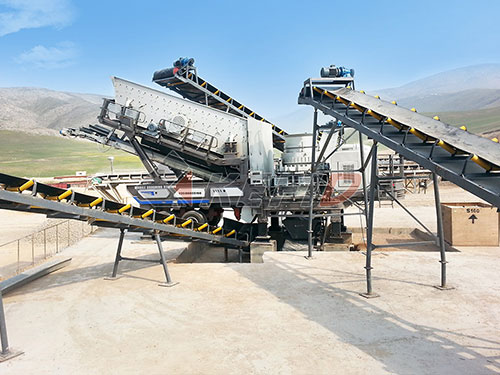
The stone crusher machine factory industry in China is poised for continued evolution:
Intelligent and Automated Systems: The integration of IoT (Internet of Things), AI (Artificial Intelligence), and big data analytics will enable predictive maintenance, real-time performance monitoring, and autonomous operation. Some factories are already developing “smart crushers” that can adjust settings based on feed material characteristics.
Mobile and Modular Solutions: The demand for mobile crushing plants will continue to grow, driven by the need for flexibility in construction and recycling projects. Modular stationary plants that can be quickly assembled and disassembled are also gaining popularity.
Recycling and Circular Economy: As China emphasizes the circular economy, crusher factories will develop more specialized equipment for construction and demolition (C&D) waste recycling, asphalt recycling, and concrete recycling.
Consolidation: The industry is expected to undergo further consolidation, with larger, more technologically advanced companies acquiring smaller players. This will lead to a more standardized and reliable product offering.
Globalization of Service: Leading Chinese factories will establish more overseas subsidiaries and service centers, moving from being mere equipment suppliers to full-service solution providers.
Conclusion
China’s stone crusher machine factory industry is a complex, dynamic, and globally influential sector. It has evolved from a fragmented collection of low-cost producers into a sophisticated manufacturing base capable of producing world-class equipment. While challenges related to quality consistency and regulatory compliance persist, the leading factories are closing the gap with traditional Western and Japanese manufacturers. For buyers, the key to success lies in careful supplier selection, thorough technical evaluation, and a clear understanding of the specific application requirements. As China continues to invest in infrastructure both domestically and abroad, its stone crusher factories will remain indispensable partners in building the world’s roads, bridges, and cities. The future of this industry is not just about crushing stone—it is about shaping the physical landscape of the 21st century.
If you have any questions about our products, please feel free to contact us. We take all inquiries and suggestions very seriously.