
Industrial Stone Crusher Machine Processing Plant: A Comprehensive Technical Overview
The industrial stone crusher machine processing plant represents the backbone of modern construction, mining, and infrastructure development. These facilities are not merely single machines but integrated systems designed to transform raw, extracted rock into precisely graded aggregates, sand, and base materials. From massive quarry operations to modular recycling units, the design, engineering, and operational efficiency of these plants determine the economic viability and environmental compliance of entire projects. This article provides a detailed, professional examination of the components, processes, technological advancements, and operational considerations inherent to industrial stone crushing and screening plants.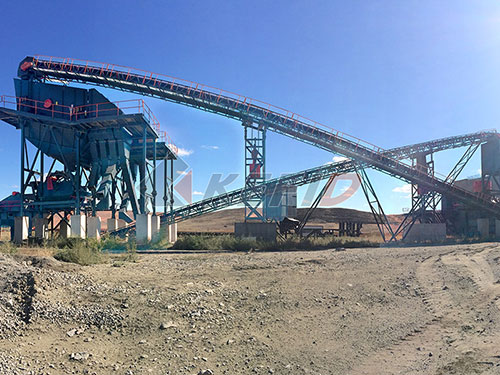
1. Primary Function and System Architecture
At its core, a stone crusher processing plant is a size-reduction and classification facility. Its primary objective is to reduce large, irregularly shaped boulders (often exceeding 1,000 mm in diameter) into smaller, uniform particles suitable for concrete production, road base, asphalt mixtures, and railway ballast. The plant operates as a continuous, multi-stage process, typically comprising four main subsystems: feeding, crushing, screening, and material handling (conveying and stacking). Each subsystem must be meticulously synchronized to maintain a steady throughput, measured in tons per hour (TPH), which can range from 50 TPH for small mobile units to over 3,000 TPH for stationary mega-quarries.
2. Primary Crushing Stage: The Jaw and Gyratory Crushers
The process begins with the primary crusher, which handles the run-of-mine (ROM) material. The two dominant technologies here are the jaw crusher and the gyratory crusher.
Jaw Crushers: These operate on the principle of compression. A fixed jaw and a moving jaw (pitman) form a V-shaped chamber. The moving jaw exerts a reciprocating force, crushing the rock against the fixed plate. Jaw crushers are favored for their simplicity, reliability, and ability to handle highly abrasive materials. Their discharge setting (closed side setting, or CSS) can be adjusted to control the top size of the output, typically ranging from 150 mm to 300 mm. However, they produce a relatively high proportion of flat and elongated particles in the secondary stage, which is why they are primarily used for initial reduction.
Gyratory Crushers: For high-capacity operations (above 1,500 TPH), gyratory crushers are preferred. They consist of a conical head gyrating eccentrically within a concave bowl. The crushing action is continuous, providing a higher throughput and a more cubical product shape than a jaw crusher. Gyratory crushers are massive, capital-intensive machines, often installed in concrete foundations deep within the quarry floor to minimize material haulage distance.
3. Secondary and Tertiary Crushing: Cone and Impact Crushers
Following primary reduction, the material enters the secondary and tertiary stages, where the goal shifts from brute force to particle shape optimization and precise size control.
Cone Crushers: These are the workhorses of most stationary plants. They utilize a rotating mantle within a concave bowl, providing compression crushing. Modern cone crushers feature hydraulic adjustment systems, tramp iron relief (allowing uncrushable objects to pass), and automated setting regulation. They are highly efficient at producing well-graded, cubical aggregates from medium-hard to hard rock. The reduction ratio is typically 4:1 to 6:1, meaning multiple passes (closed-circuit operation) are required to achieve fine sizes below 20 mm.
Impact Crushers (Horizontal Shaft Impact – HSI, and Vertical Shaft Impact – VSI): For softer, less abrasive materials (limestone, dolomite, recycled concrete), impact crushers are superior. An HSI crusher uses high-speed rotors with blow bars to hurl the rock against impact plates. This mechanism yields a high reduction ratio (up to 15:1) and an excellent cubical shape due to the rock-on-rock and rock-on-steel impact. The VSI crusher, conversely, is used for the final shaping stage. It accelerates material to high velocity and throws it against a crushing chamber or a bed of rock. VSI crushers are essential for producing manufactured sand (M-sand) with a high fines content and a smooth surface texture, which is critical for high-strength concrete.
4. Screening and Classification: The Quality Gate
No crushing plant is complete without a robust screening system. Vibrating screens, either inclined or horizontal, are used to separate crushed material into different size fractions. The screens consist of multiple decks (typically two or three) with wire mesh or polyurethane panels of varying apertures.
5. Material Handling and Conveying Systems
Between each crushing and screening stage, a network of belt conveyors transports the material. These are not simple rubber belts; they are engineered systems with:
The conveyor layout is critical to plant footprint and energy efficiency. Transfer towers, chutes, and hoppers must be designed with proper angles to prevent material buildup and ensure a smooth, uninterrupted flow.
6. Dust Suppression and Environmental Control
Modern industrial stone crusher plants are subject to stringent environmental regulations, particularly regarding particulate matter (PM10 and PM2.5) emissions. Dust generation occurs at every transfer point, crusher discharge, and screen deck. Effective mitigation strategies include:
7. Automation and Process Control
The modern processing plant is a digitally integrated system. A Programmable Logic Controller (PLC) and a Supervisory Control and Data Acquisition (SCADA) system monitor and control every component.
8. Operational and Maintenance Considerations
The economic success of a stone crusher plant hinges on uptime and wear part management.
9. Mobile vs. Stationary Plants
A critical design decision is whether to use a stationary or mobile (track-mounted or wheeled) plant.
10. Emerging Technologies and Future Trends
The industry is evolving rapidly. Key trends include:
Conclusion
The industrial stone crusher machine processing plant is a sophisticated, multi-disciplinary engineering system. It integrates mechanical crushing physics, material science, fluid dynamics (for dust suppression), electrical control systems, and environmental engineering. The selection of crusher types, screen configurations, and conveyor layouts must be tailored to the specific rock characteristics (hardness, abrasiveness, moisture content) and the final product specifications. As global infrastructure demands grow and environmental regulations tighten, these plants will continue to evolve toward greater automation, energy efficiency, and sustainability, ensuring that the fundamental building blocks of modern civilization are produced reliably and responsibly.
If you have any questions about our products, please feel free to contact us. We take all inquiries and suggestions very seriously.