
The Strategic Role of Chinese Slag Crusher Plant Private Label Manufacturers in the Global Recycling Industry
Introduction
In the global effort to achieve sustainable industrial development and circular economy goals, the management and processing of industrial by-products have become critical. Among these by-products, slag—a vitreous or crystalline residue from metallurgical smelting, incineration, and power generation—represents both an environmental challenge and a valuable resource. The efficient processing of slag into reusable aggregates, cementitious materials, and metal concentrates requires robust, reliable, and technologically advanced crushing plants. In this specialized equipment sector, Chinese slag crusher plant private label manufacturers have emerged as pivotal players, offering a unique combination of manufacturing scale, engineering adaptability, and cost efficiency that serves a diverse international clientele.
This article provides a detailed, objective examination of the Chinese slag crusher plant private label manufacturing sector. It explores the definition of private label manufacturing in this context, the technical characteristics of slag crushing plants, the strategic advantages offered by Chinese manufacturers, the challenges they face, and the future trajectory of this niche but vital industry.
Defining the Private Label Model in Heavy Industrial Equipment
In the consumer goods sector, “private label” typically refers to products manufactured by one company but sold under another company’s brand. In the context of heavy industrial machinery, such as slag crusher plants, the private label model takes on a more complex and engineering-intensive form. A Chinese private label manufacturer does not merely affix a different nameplate to a standard product. Instead, it functions as an Original Equipment Manufacturer (OEM) or Original Design Manufacturer (ODM) that collaborates closely with international distributors, engineering firms, or end-user brands.
These manufacturers provide a comprehensive suite of services. They may design the plant layout based on the client’s specific slag characteristics (e.g., steel slag, copper slag, blast furnace slag, or incineration bottom ash). They manufacture the core components—such as jaw crushers, cone crushers, impact crushers, vibrating screens, and belt conveyors—and assemble them into a cohesive, automated system. The final plant is then branded and marketed by the private label partner. This model allows international brands to offer a full line of slag processing equipment without investing in massive domestic fabrication facilities, while allowing Chinese manufacturers to focus on what they do best: precision fabrication, cost-effective production, and rapid technological iteration.
Technical Complexity of Slag Crushing Plants
Slag is an abrasive, often metallic, and highly variable material. Unlike natural rock, slag can contain large chunks of free metal, require multiple stages of crushing to achieve specific particle size distributions, and demand specialized wear-resistant materials. A typical slag crusher plant is not a single machine but an integrated system. It usually includes:
A private label manufacturer must possess deep expertise in all these sub-systems. They must also be able to customize the plant’s throughput (ranging from 50 tons per hour to over 500 tons per hour) and its mobility (stationary, semi-mobile, or fully mobile tracked units).
Strategic Advantages of Chinese Private Label Manufacturers
The rise of Chinese manufacturers in this sector is not accidental. It is rooted in several structural advantages that are difficult for competitors in Europe or North America to replicate.
First, cost efficiency without compromising core quality is paramount. Chinese manufacturers benefit from a mature domestic supply chain for steel castings, bearings, motors, and hydraulic components. While premium brands may use components from Siemens or SKF, Chinese manufacturers can offer equivalent performance using high-quality domestic alternatives (e.g., Huadian, Wafangdian bearings) or imported components at a competitive price. For private label partners, this translates into a significantly lower landed cost, allowing them to offer aggressive pricing in their home markets while maintaining healthy margins.
Second, engineering adaptability and rapid prototyping are hallmarks of the Chinese industrial ecosystem. A private label client may request a modification to the crusher chamber geometry to better handle a specific slag viscosity, or a change in the conveyor layout to fit a constrained site. Chinese manufacturers, particularly those in industrial hubs like Henan, Shandong, and Shanghai, have in-house R&D teams and flexible fabrication lines. They can often produce a modified prototype in weeks, whereas a European manufacturer might take months.
Third, scale and speed of delivery. China is the world’s largest producer of crushing and screening equipment. This scale means that private label manufacturers can source raw materials and components quickly. For large projects, such as a 300 tph steel slag processing plant in Southeast Asia or a bottom ash plant in Europe, Chinese manufacturers can often deliver and commission the plant in 4 to 6 months, compared to 9 to 12 months for many Western alternatives.
Fourth, comprehensive customization for private label branding. These manufacturers are adept at producing equipment with the client’s livery, including custom paint colors, branded control panels, and documentation in the client’s language. They respect intellectual property boundaries, ensuring that the private label partner’s brand identity is preserved. Many also offer white-label spare parts programs, allowing the partner to sell aftermarket components under their own brand.
Challenges and Quality Assurance
Despite these advantages, the private label model in Chinese heavy equipment faces challenges. The most significant is the perception of quality. Historically, some Chinese manufacturers prioritized cost over durability, leading to premature wear in abrasive slag applications. However, the leading private label manufacturers have addressed this through rigorous quality control. They now use high-chrome alloy liners (e.g., Cr26), advanced heat treatment processes, and finite element analysis (FEA) to optimize structural integrity. Many hold ISO 9001, CE, and GOST certifications, and they welcome third-party inspections (e.g., SGS, BV) before shipment.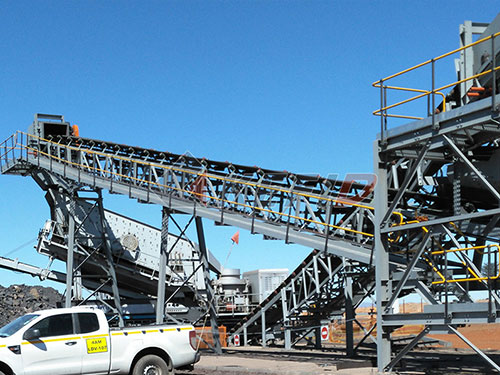
Another challenge is communication and technical documentation. A private label manufacturer must provide not only the machine but also detailed operation and maintenance manuals, electrical schematics, and spare parts lists that meet the partner’s standards. Leading Chinese firms now employ multilingual technical writers and offer remote diagnostics via IoT-enabled control systems.
Finally, after-sales support is a critical differentiator. A private label partner cannot easily send a Chinese engineer to a remote site in Africa or South America for every minor issue. Therefore, top-tier Chinese manufacturers invest in training the partner’s service team, providing video-guided troubleshooting, and maintaining regional spare parts warehouses. Some have even established overseas service centers in key markets like Indonesia, India, and Brazil.
Case Applications and Market Demand
Chinese private label slag crusher plants are deployed globally. In steel mills in Turkey and India, they process LD slag for road construction. In copper smelters in Chile and Zambia, they recover iron from copper slag. In waste-to-energy plants in Europe, they handle incineration bottom ash to extract metals and produce secondary aggregate. The demand is driven by stricter environmental regulations (e.g., the EU’s landfill directive) and the rising cost of natural aggregates.
For a private label brand, partnering with a Chinese manufacturer allows them to offer a complete solution: a plant that is technically robust, economically viable, and backed by a responsive supply chain. The private label brand focuses on marketing, client relationships, and system integration, while the Chinese manufacturer focuses on fabrication, assembly, and testing.
Future Outlook
The future of Chinese slag crusher plant private label manufacturing lies in digitalization and green technology. Manufacturers are integrating PLC-based automation with remote monitoring, allowing predictive maintenance and real-time throughput optimization. They are also developing more energy-efficient crushers (e.g., high-pressure grinding rolls for fine slag) and plants that minimize dust and noise. Furthermore, as China pushes its own “Green Manufacturing” standards, private label partners benefit from access to cutting-edge, environmentally compliant designs.
In conclusion, Chinese slag crusher plant private label manufacturers are no longer merely low-cost alternatives. They are strategic partners in the global recycling equipment supply chain. They offer a compelling value proposition: customized engineering, rapid delivery, competitive pricing, and increasingly, world-class quality. For international brands seeking to enter or expand in the slag processing market, collaborating with a reputable Chinese private label manufacturer is not just a cost-saving measure—it is a strategic move to gain agility and scale in a rapidly evolving industry. As the circular economy accelerates, the role of these manufacturers will only grow in prominence, shaping the way the world processes its industrial by-products.
If you have any questions about our products, please feel free to contact us. We take all inquiries and suggestions very seriously.