
Title: The Pinnacle of Precision: Inside a High-Quality Stone Crusher Machine Factory
Introduction: The Backbone of Modern Infrastructure
In the global construction and mining sectors, the stone crusher machine is not merely a piece of equipment; it is the fundamental engine that transforms raw geological material into the aggregate foundation of roads, bridges, dams, and high-rise buildings. The quality of this machinery directly dictates the efficiency, safety, and economic viability of any large-scale project. Consequently, the factories that design and manufacture these crushers bear an immense responsibility. A high-quality stone crusher machine factory is not defined by its production volume alone, but by a confluence of advanced metallurgy, precision engineering, rigorous quality assurance, and a deep understanding of material science. This article provides a comprehensive, technical examination of what constitutes a world-class stone crusher manufacturing facility, exploring its core processes, material standards, technological integrations, and the quality control protocols that separate industry leaders from mere assemblers.
Section 1: The Foundational Core – Metallurgy and Material Selection
The lifespan and durability of a stone crusher are overwhelmingly determined by the quality of its wear parts and structural components. A high-quality factory begins its process not on the assembly floor, but in the metallurgical laboratory. The primary materials used include high-manganese steel (e.g., Mn13Cr2, Mn18Cr2) for jaw plates, cone liners, and impact blow bars. This austenitic manganese steel is prized for its unique work-hardening property: under continuous impact and compression, its surface hardness increases dramatically (from approximately 200 HB to over 500 HB) while the core remains tough and ductile.
A premium factory does not simply purchase pre-made steel; it formulates its own alloying recipes. The precise control of carbon content (typically 1.0% – 1.4%), chromium, and molybdenum additions is critical. For instance, the addition of molybdenum (Mo) enhances hardenability and resistance to abrasive wear, while chromium (Cr) forms carbides that resist scratching. The factory’s foundry must employ advanced spectrometers (e.g., Optical Emission Spectrometry) to verify the chemical composition of every heat of molten steel. Furthermore, the heat treatment process is meticulously controlled. Solution annealing at temperatures exceeding 1050°C, followed by rapid water quenching, ensures that the carbide precipitates are fully dissolved, preventing brittleness. Without this precise thermal cycle, a crusher jaw could shatter catastrophically under load. Therefore, the first hallmark of a high-quality factory is its in-house foundry and metallurgical lab, not outsourced casting.
Section 2: Precision Machining and Fabrication
Once the raw castings are heat-treated, they move to the machining phase. Here, the tolerance levels define the quality. A high-quality stone crusher machine factory invests heavily in large-scale CNC (Computer Numerical Control) horizontal and vertical machining centers. These machines are capable of achieving tolerances of ±0.05 mm on critical mating surfaces, such as the main frame bearing housings and the eccentric shaft journals.
The main frame of a jaw crusher or cone crusher is often fabricated from heavy-duty steel plates (Q235B or Q345B) that are welded together. However, welding introduces residual stress, which can distort the frame over time. To counter this, leading factories employ a two-stage stress-relief process: first, a pre-heating phase before welding, and second, a post-weld heat treatment in a large industrial furnace. Following heat treatment, the frame undergoes precision milling to ensure that the mounting surfaces for the bearings and the toggle plate are perfectly planar. If these surfaces are off by even a fraction of a millimeter, the eccentric shaft will experience premature bearing failure, leading to unplanned downtime.
For the eccentric shaft itself, high-quality factories use forged alloy steel (e.g., 42CrMo) rather than cast steel. Forging aligns the grain structure of the metal, providing superior fatigue resistance. The shaft is then turned on a heavy-duty lathe, followed by grinding to achieve a mirror-like surface finish (Ra 0.8 or better) on the bearing journals. This precision reduces friction, heat generation, and energy consumption—critical factors for large-scale operations running 24/7.
Section 3: The Assembly Line – Engineering Integration
The assembly of a stone crusher is a complex ballet of heavy components. A high-quality factory does not rely on manual guesswork; it uses hydraulic torque wrenches to tighten all high-strength bolts to exact specifications. The assembly process is documented step-by-step, with torque values logged for traceability.
One of the most critical assembly procedures is the setting of the crusher’s closed side setting (CSS). For jaw crushers, this involves adjusting the toggle plate and hydraulic shim system. For cone crushers, it involves the rotation of the adjustment ring. A premium factory uses laser alignment tools to ensure the main shaft is perfectly vertical and concentric with the crushing chamber. Misalignment here leads to uneven wear on the mantle and concave, reducing throughput and increasing operational costs.
Furthermore, modern high-quality factories integrate hydraulic systems and lubrication systems directly into the machine design. The hydraulic unit, which provides overload protection and CSS adjustment, must be assembled with ultra-clean standards. Any contamination in the hydraulic oil can cause valve sticking or pump failure. Therefore, the factory maintains a clean-room standard for hydraulic assembly, and each system is flushed and tested on a dedicated test bench before being mounted on the crusher.
Section 4: Advanced Quality Control and Testing Protocols
The term “high-quality” is meaningless without verifiable testing. A reputable factory operates a multi-stage Quality Assurance (QA) system that begins with incoming raw material inspection and ends with a full-load test run.
Non-Destructive Testing (NDT): All critical castings (e.g., main frame, swing jaw, cone head) undergo ultrasonic testing (UT) to detect internal voids or shrinkage cavities. Magnetic particle inspection (MPI) is used on the surface of the shafts and gears to identify micro-cracks that could propagate under stress. These tests are not random; they are performed on 100% of critical components.
Dimensional Inspection: Using Coordinate Measuring Machines (CMM), the factory verifies that the machined components match the 3D CAD models within specified tolerances. This is particularly crucial for the crushing chamber profile. A slight deviation in the chamber geometry can alter the product gradation curve, making the crusher unsuitable for specific aggregate specifications.
No-Load and Load Testing: Before a machine is painted and shipped, it is run on a test stand. A no-load test checks for abnormal vibration, bearing temperature rise (should not exceed 40°C above ambient), and oil pressure stability. For larger crushers, a load test is conducted using a controlled feed of granite or basalt. The factory measures the actual power draw, throughput (tons per hour), and product size distribution. This data is compared against the theoretical performance curve. If the machine fails to meet 95% of the rated capacity, it is returned for re-engineering.
Section 5: Technological Innovation and Automation
The modern high-quality factory is a smart factory. It utilizes Enterprise Resource Planning (ERP) systems to track every component from raw material to final shipment. More importantly, it employs Digital Twin technology. Before a new crusher model is manufactured, a digital twin is created and subjected to Finite Element Analysis (FEA) and Discrete Element Method (DEM) simulations. FEA simulates stress distribution in the frame under maximum load, while DEM simulates the flow of rocks through the crushing chamber to optimize throughput and wear life.
On the production floor, robotic welding arms are used for repetitive, high-stress welds, ensuring consistent penetration and reducing human error. Automated guided vehicles (AGVs) transport heavy components between machining centers, reducing the risk of damage from overhead cranes. This level of automation not only increases efficiency but also ensures that every machine leaving the factory is identical in quality, eliminating the “Monday morning” and “Friday afternoon” variance common in manual manufacturing.
Section 6: After-Sales Support and Spare Parts Logistics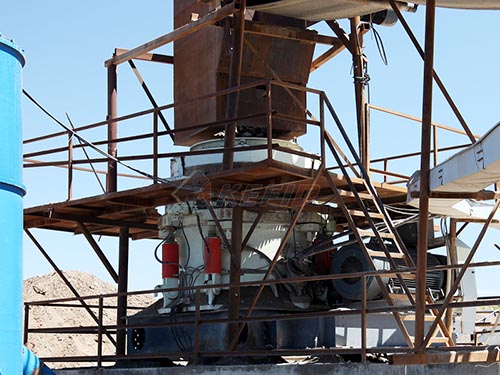
A high-quality factory’s reputation is cemented by its after-sales service. The factory maintains a comprehensive database of every machine it has produced, including serial numbers, component batches, and wear part specifications. This allows for rapid identification and dispatch of spare parts. Leading factories stock critical wear parts (jaw plates, mantles, concave) in regional warehouses to minimize downtime for their clients.
Moreover, they offer remote monitoring systems. By installing IoT (Internet of Things) sensors on the crusher, the factory can remotely monitor vibration levels, bearing temperatures, and oil quality. This predictive maintenance capability allows the factory to alert the client to potential failures weeks before they occur, transforming the relationship from a simple vendor to a strategic partner in productivity.
Section 7: Environmental and Safety Compliance
Finally, a high-quality factory adheres to stringent environmental and occupational safety standards. The manufacturing process involves high-energy furnaces, heavy machining, and chemical treatments. A responsible factory invests in dust collection systems, noise barriers, and wastewater treatment plants. It also ensures that the crushers it produces are compliant with international safety standards (e.g., CE certification in Europe, ISO 9001 for quality management, and ISO 14001 for environmental management). Safety interlocks on the crusher’s inspection doors and emergency stop systems are not optional; they are mandatory features that protect the end-user’s operators.
Conclusion: The Distinction of Excellence
In summary, a high-quality stone crusher machine factory is a complex ecosystem of metallurgical expertise, precision engineering, rigorous testing, and digital innovation. It is not defined by the size of its warehouse but by the integrity of its steel, the accuracy of its machining, and the reliability of its final product. From the controlled alloying of manganese steel to the final load test, every step is a deliberate act of engineering discipline. For mining companies and construction firms, choosing a crusher from such a factory is not a cost decision; it is an investment in operational uptime, lower cost per ton, and the long-term success of their projects. The true hallmark of this industry leader is not just the machine it ships, but the decades of reliable service that machine will provide under the harshest conditions on earth.
If you have any questions about our products, please feel free to contact us. We take all inquiries and suggestions very seriously.