
Title: Navigating the Market for Cost-Effective Gold Ore Crushing Equipment: A Comprehensive Guide for Small-Scale and Mid-Tier Operators
Introduction
The extraction of gold from its ore is a multi-stage process that begins with size reduction. Crushing is the critical first step in the comminution circuit, where run-of-mine (ROM) ore is reduced from boulders of 500–1,500 mm down to a workable size of 10–50 mm for further grinding and leaching. For small-scale miners, artisanal operations, and mid-tier producers operating on tight capital budgets, the procurement of crushing equipment represents a significant capital expenditure (CAPEX). The phrase “Gold Ore Crushing Equipment Vendors Cheap” reflects a persistent demand for low-cost solutions without necessarily sacrificing operational reliability. However, “cheap” in the mining equipment sector is a relative term—it can mean low initial purchase price, low total cost of ownership (TCO), or simply the most economical option for a given throughput. This article provides a professional, objective analysis of the vendor landscape, the types of equipment available, the hidden costs of “cheap” machinery, and strategic procurement approaches for budget-constrained operators.
1. The Core Equipment Categories and Their Price Drivers
To understand what “cheap” means in this context, one must first categorize the primary crushing equipment used in gold ore processing. Each category has distinct price ranges, driven by engineering complexity, material quality, and brand reputation.
Jaw Crushers: The workhorse of primary crushing. They are robust, simple, and relatively inexpensive compared to gyratory crushers. For small to medium throughput (50–500 tph), single-toggle jaw crushers are the standard. Prices for entry-level Chinese or Indian models can range from $10,000 to $60,000 for units handling 100–200 tph. Premium brands (Metso, Sandvik, Terex) command $80,000–$250,000 for similar capacity due to higher-grade steel, better bearing systems, and longer service intervals.
Cone Crushers (Secondary/Tertiary): Used for finer reduction after the jaw crusher. These are more complex, with hydraulic adjustment systems and higher wear part costs. A cheap, small cone crusher (e.g., 3 ft Symons type) from a non-brand vendor might cost $30,000–$70,000, while a modern HP series cone from a major OEM starts at $150,000.
Impact Crushers (Horizontal Shaft – HSI, and Vertical Shaft – VSI): Often used for softer, less abrasive gold ores. HSI crushers are cheaper upfront ($20,000–$80,000) but have higher wear costs per ton. VSI crushers are used for shaping and fine crushing but are less common in gold plants due to high energy consumption.
Hammer Mills and Roll Crushers: These are the “budget” end of the spectrum. Hammer mills, particularly for artisanal use, can be purchased for as little as $3,000–$15,000. They are simple, easy to maintain, but extremely inefficient in terms of energy and wear. Roll crushers are less common but offer a low-shear crushing action suitable for brittle gold ores.
The price of any crusher is fundamentally determined by: (a) the weight and grade of steel in the frame and wear liners; (b) the quality of bearings and seals; (c) the sophistication of the control system (manual vs. automated); and (d) the vendor’s overhead, warranty, and after-sales support network.
2. The Vendor Landscape: Who Sells “Cheap” Equipment?
The market for low-cost gold ore crushers is dominated by three tiers of vendors:
Tier 1 – Global OEMs (Metso Outotec, Sandvik, FLSmidth, ThyssenKrupp): These vendors do not sell “cheap” equipment. Their pricing reflects rigorous R&D, ISO-certified manufacturing, global service networks, and high residual value. They are the safest choice for large-scale operations where downtime costs exceed $10,000 per hour. However, they do offer “refurbished” or “pre-owned” units at 40–60% of new prices, which can be a cost-effective entry point.
Tier 2 – Regional Manufacturers (e.g., Zhengzhou Yifan, Shanghai Shibang, Henan Hongxing in China; Marsman, Propel in India; and select South African fabricators): This is the primary source of “cheap” equipment. These vendors produce functional, copy-cat designs of older Symons or Nordberg models. Their prices are 30–70% lower than Tier 1. The trade-off is in metallurgy (lower manganese content in liners), tolerance control, and a thinner after-sales network. For a small mine with a skilled maintenance crew, these can be excellent value.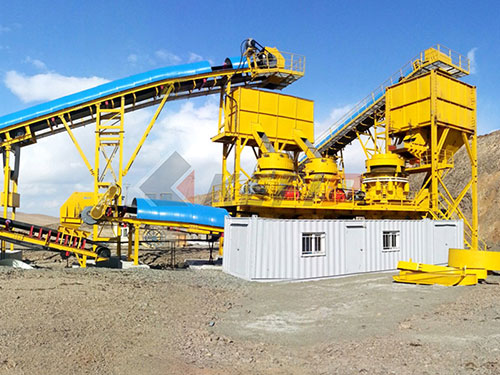
Tier 3 – Local Fabricators and Artisanal Suppliers: These are small workshops that build custom jaw crushers, hammer mills, and even DIY rock breakers. Prices can be astonishingly low ($2,000–$10,000). However, these units often lack safety guards, have unverified structural integrity, and consume excessive power. They are suitable only for very low throughput (1–5 tph) and where labor is cheaper than electricity.
3. The Hidden Costs of “Cheap” – A Total Cost of Ownership (TCO) Analysis
A professional procurement decision cannot be based solely on the invoice price. The TCO model includes several factors that often make “cheap” equipment more expensive over a 5-year lifespan.
Wear Parts Consumption: The manganese steel jaw plates and cone liners are the highest recurring cost. A cheap crusher may use lower-grade manganese (e.g., 10% Mn vs. 18% Mn in premium parts). This results in a wear life that is 30–50% shorter. For example, a premium jaw plate might last 6 months in a quartz-gold ore; a cheap plate might last 3 months. The cost per ton of crushed ore is the true metric. If a cheap crusher saves $20,000 upfront but requires an extra $15,000 in liners per year, the “savings” vanish in 16 months.
Energy Efficiency: Cheap crushers often have poorly designed crushing chambers, leading to higher recirculation loads and lower throughput per kWh. In off-grid or diesel-powered operations, this is critical. A 100 tph jaw crusher from a Tier 1 vendor might consume 90 kW; a cheap equivalent might consume 120 kW for the same output. Over 5,000 operating hours, at $0.15/kWh, that is an extra $22,500 in electricity.
Downtime and Spare Parts Availability: Cheap vendors may not stock spare parts locally. A broken bearing or shaft might take 4–6 weeks to ship from the factory. For a mine processing 200 tpd, one week of downtime at a gross margin of $50/ton equals $70,000 in lost revenue—far exceeding any initial savings.
Safety and Compliance: In many jurisdictions (e.g., Australia, Canada, USA, Chile), non-compliant equipment cannot be used. Cheap crushers often lack CE or ANSI certifications, guarding, and emergency stops. Retrofitting safety features can add 10–20% to the purchase price.
4. Strategies for Procuring Cheap but Reliable Crushing Equipment
Given the above, how can a professional operator source cost-effective equipment without falling into the “cheap trap”? The following strategies are recommended:
Buy Refurbished Tier 1 Equipment: The most reliable way to get a high-quality crusher at a low price is to purchase a factory-refurbished unit from a major OEM or a reputable dealer. These units have new bearings, seals, and often new wear liners. They come with a limited warranty (usually 6–12 months). Prices are typically 50–65% of new. This is the “sweet spot” for mid-tier miners.
Negotiate a “Package Deal” with a Tier 2 Vendor: If buying new from a Chinese or Indian manufacturer, do not buy just the crusher. Negotiate a package that includes a full set of spare wear parts (2–3 sets of liners), a critical spares kit (bearings, toggle plates, springs), and on-site commissioning support. This reduces the risk of downtime. Also, request a performance test at the factory with your specific ore sample.
Consider Modular or Mobile Units: Instead of a fixed, heavy-duty installation, consider a mobile jaw crusher (e.g., a track-mounted unit) or a skid-mounted modular system. These are often cheaper to install (no concrete foundations) and can be relocated. Many Tier 2 vendors offer mobile units at competitive prices.
Leverage the Second-Hand Market in Mining Regions: Countries like South Africa, Ghana, Peru, and Indonesia have active markets for used mining equipment. A used jaw crusher from a decommissioned plant, if properly inspected, can be purchased for scrap value plus a small premium. Always hire an independent mechanical inspector to check the main frame for cracks, the eccentric shaft for wear, and the condition of the flywheels.
Optimize the Crushing Circuit to Reduce Equipment Size: A common mistake is buying a larger, more expensive crusher than needed. By installing a vibrating grizzly feeder to remove fines before the crusher, the effective feed size and tonnage to the crusher are reduced. This allows the use of a smaller, cheaper crusher. Similarly, using a two-stage crushing circuit (jaw + cone) with a screen can reduce the required size of each unit compared to a single large jaw.
5. Case Study: The “Cheap” Crusher Dilemma in West Africa
Consider a hypothetical small-scale gold operation in Burkina Faso processing 150 tpd of free-milling ore. The operator has a budget of $80,000 for primary crushing.
Option A: Purchase a new Tier 2 Chinese jaw crusher (PE-600×900) for $45,000. It comes with one set of liners. The operator must import additional liners every 4 months at $4,000 per set, plus freight. The crusher consumes 75 kW. Over 3 years, the total cost is $45,000 + (9 sets x $4,000) + electricity ($0.20/kWh x 75 kW x 6,000 hrs) = $45,000 + $36,000 + $90,000 = $171,000. Additionally, there is an average of 10 days of downtime per year due to parts delays, costing $30,000 in lost production.
Option B: Purchase a refurbished Metso C106 jaw crusher for $70,000 from a South African dealer. It includes new liners, a 12-month warranty, and a critical spares kit. It consumes 60 kW. Over 3 years, the cost is $70,000 + (6 sets x $5,000) + electricity ($0.20 x 60 kW x 6,000 hrs) = $70,000 + $30,000 + $72,000 = $172,000. However, downtime is only 3 days per year, costing $9,000.
The TCO is nearly identical. But Option B has a higher resale value (refurbished Metso retains 40% of its value after 3 years, while the Chinese unit retains 15%). Thus, Option B is objectively cheaper in the long run, despite a higher upfront cost.
6. The Role of Aftermarket Parts and Reverse Engineering
For operators who have already purchased cheap equipment, the key to reducing TCO is to source aftermarket wear parts from specialized foundries. Many Indian and Chinese foundries produce high-quality manganese steel (18% Mn, 2% Cr) that fits OEM and Tier 2 crushers. These parts cost 30–50% less than OEM parts but offer comparable wear life. This is a legitimate way to make a “cheap” crusher more economical. However, beware of “counterfeit” parts that are cast with poor quality control—they can crack and damage the crusher frame.
7. Conclusion: “Cheap” is a Strategy, Not a Price Tag
In the procurement of gold ore crushing equipment, the term “cheap” must be redefined. A truly cheap vendor is one that offers the lowest cost per ton of ore crushed over the equipment’s useful life, while maintaining acceptable safety and reliability standards. For small-scale and mid-tier operators, the best approach is not to seek the lowest invoice price but to seek the lowest TCO. This often involves buying refurbished premium equipment, negotiating comprehensive packages with Tier 2 vendors, or investing in aftermarket wear parts.
The global market is saturated with vendors offering jaw crushers for $5,000 and hammer mills for $2,000. These have their place in artisanal mining, where labor is abundant and safety regulations are lax. However, for any operation that relies on consistent throughput to generate revenue, the hidden costs of downtime, energy inefficiency, and rapid wear will quickly erode the initial savings.
Therefore, the professional recommendation is clear: Do not buy the cheapest crusher; buy the cheapest crusher that you can keep running. That means prioritizing vendor support, spare parts availability, and metallurgical quality over the sticker price. By applying a rigorous TCO analysis and leveraging the refurbished market, gold ore processors can achieve both low upfront costs and sustainable operational economics—the true definition of “cheap” in the mining industry.
If you have any questions about our products, please feel free to contact us. We take all inquiries and suggestions very seriously.