Title: Comprehensive Analysis of Gyratory Crusher Supplier Design Services: Engineering Excellence for Primary Crushing Operations
Introduction
In the realm of mineral processing and heavy industrial comminution, the gyratory crusher stands as a cornerstone of primary crushing circuits. Its ability to handle extremely high tonnages of hard, abrasive material while maintaining a consistent product size makes it indispensable for large-scale mining operations, quarrying, and aggregate production. However, the procurement of a gyratory crusher is not merely a transaction of purchasing heavy machinery; it is a complex engineering engagement that demands meticulous design services from a qualified supplier. This article provides a professional and objective examination of what constitutes a comprehensive gyratory crusher supplier design service, exploring the technical parameters, engineering considerations, customization capabilities, and the critical role of supplier expertise in ensuring operational efficiency, safety, and long-term reliability.
1. The Fundamental Role of the Gyratory Crusher in Primary Crushing
Before delving into supplier design services, it is essential to understand the operational context of the gyratory crusher. Unlike jaw crushers, which operate on a reciprocating compression principle, gyratory crushers utilize a conical crushing head gyrating eccentrically within a stationary concave bowl. This design allows for a continuous, high-capacity crushing action with a relatively large feed opening and a steep crushing chamber profile. The machine is typically installed at the mine face or in a fixed primary crushing station, receiving run-of-mine (ROM) material that can range from 1 to 1.5 meters in diameter. The output product, typically 150–300 mm, is then conveyed to secondary and tertiary crushing stages.
Given the extreme duty cycle—often operating 24/7 with minimal downtime—the design of a gyratory crusher must be robust, maintainable, and optimized for the specific material characteristics of the site. This is where the supplier’s design service becomes paramount.
2. Core Components of a Gyratory Crusher Supplier Design Service
A reputable gyratory crusher supplier does not simply offer a catalog of standard models. Instead, they provide a suite of engineering services that tailor the machine to the client’s unique operational parameters. These services can be categorized into several key areas:
2.1. Site-Specific Feasibility and Material Characterization
The design process begins with a thorough analysis of the client’s ore body or feed material. A professional supplier will conduct or request:
- Bond Work Index (Wi) Testing: To determine the material’s resistance to crushing and grinding. A higher Wi indicates a harder ore, requiring more robust crusher components and higher power input.
- Abrasion Index (Ai) Analysis: To predict wear rates on liners and concaves. High abrasion materials necessitate specialized wear-resistant alloys and optimized chamber profiles.
- Moisture Content and Clay Content: Sticky or wet materials can cause plugging in the crushing chamber. The design must account for potential material flow issues, such as incorporating a spider arm design that minimizes material buildup.
- Feed Size Distribution (F80): The maximum feed size and the percentage of oversize material dictate the required crusher opening (gape) and mantle diameter.
2.2. Mechanical Design and Structural Engineering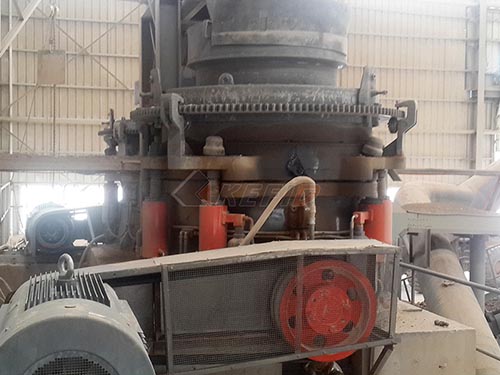
The supplier’s design service must address the mechanical integrity of the crusher under extreme loads. Key design considerations include:
- Main Shaft and Eccentric Assembly: The main shaft must be designed to withstand high bending and torsional stresses. Finite Element Analysis (FEA) is used to optimize the shaft’s geometry, material selection (typically forged alloy steel), and heat treatment processes to prevent fatigue failure.
- Hydraulic Adjustment and Overload Protection: Modern gyratory crushers incorporate hydraulic systems for adjusting the closed side setting (CSS) and for clearing tramp iron or uncrushable material. The design service must specify the hydraulic circuit’s pressure rating, cylinder size, and accumulator capacity to ensure rapid, safe response.
- Spider and Top Shell Design: The spider (the upper structure that supports the main shaft) must be engineered to distribute the crushing forces evenly. The design should also facilitate easy access for maintenance and liner replacement.
- Bottom Shell and Main Frame: The main frame is the structural backbone. It is typically fabricated from heavy steel plate or cast steel. The design service must ensure that the frame’s stiffness is sufficient to prevent deflection under load, which could lead to misalignment and premature bearing failure.
2.3. Chamber Design and Crushing Performance Optimization
The geometry of the crushing chamber—the space between the mantle and concave—directly influences throughput, product shape, and liner life. A supplier’s design service should offer:
- Chamber Profile Customization: Standard chambers (e.g., coarse, medium, fine) are available, but for optimal performance, the supplier may design a custom profile based on the material’s breakage characteristics. For example, a “curved” chamber can improve nip angle and reduce liner wear in high-abrasion applications.
- Liner Material and Profile Selection: Concaves and mantles are typically made of manganese steel (e.g., Hadfield steel) or high-chrome white iron. The supplier must recommend the appropriate alloy and profile (e.g., corrugated, smooth, or stepped) to maximize wear life and minimize downtime.
- Closed Side Setting (CSS) Optimization: The CSS determines the product size. The design service should provide a range of CSS options and recommend the optimal setting based on the downstream circuit requirements and the crusher’s power draw.
2.4. Drive System and Power Transmission Design
The drive system must be capable of delivering the required torque and speed while maintaining high efficiency. Design considerations include:
- Motor Selection: Typically, a synchronous or induction motor is used. The supplier must calculate the required power (in kW or HP) based on the material’s work index, feed rate, and reduction ratio.
- V-Belt or Direct Drive: V-belt drives offer flexibility in speed adjustment and shock absorption, while direct drives (via a gearbox and coupling) provide higher efficiency and lower maintenance. The design service must evaluate the trade-offs based on the site’s power quality and maintenance capabilities.
- Pinion and Gear Design: The pinion and gear (or ring gear) must be designed with proper tooth geometry, material hardness, and lubrication systems to ensure long service life under heavy loads.
2.5. Lubrication and Cooling Systems
Gyratory crushers generate significant heat due to friction and material compression. A robust lubrication system is critical for bearing and gear longevity. The design service should include:
- Oil Flow and Pressure Calculations: The system must deliver the correct volume of oil to all bearings (main shaft, eccentric, and countershaft) at the appropriate pressure.
- Oil Cooling: Heat exchangers (air-cooled or water-cooled) must be sized to maintain oil temperature within the recommended range (typically 40–60°C).
- Filtration: High-efficiency filters (e.g., 10-micron) are essential to remove wear debris and prevent bearing damage.
2.6. Automation and Control System Integration
Modern gyratory crushers are increasingly integrated into plant-wide distributed control systems (DCS). A supplier’s design service should offer:
- PLC-Based Control: For monitoring crusher load, power draw, oil temperature, and CSS.
- Vibration Monitoring: Accelerometers on the main frame and eccentric assembly can detect impending bearing failure or imbalance.
- Remote Diagnostics: The ability to access crusher data remotely for predictive maintenance and troubleshooting.
3. The Importance of Customization and After-Sales Support
A generic “off-the-shelf” gyratory crusher may not perform optimally in all applications. A supplier’s design service must be flexible enough to accommodate:
- Site Constraints: Limited headroom, foundation design, or access for maintenance may require modifications to the crusher’s overall height, footprint, or lifting points.
- Material Variability: If the ore body changes over time (e.g., increasing hardness or clay content), the crusher design should allow for future upgrades, such as a larger motor or a different chamber profile.
- Regulatory Compliance: In regions with strict noise, dust, or safety regulations, the design may need to include sound enclosures, dust suppression systems, or emergency stop mechanisms.
After-sales support is equally critical. A supplier offering design services should also provide:
- Installation Supervision: On-site engineering support to ensure correct assembly and alignment.
- Commissioning and Training: Start-up assistance and operator training to maximize uptime.
- Spare Parts Management: A recommended spare parts list, including critical items like mantles, concaves, bearings, and seals, with lead times and inventory planning.
- Lifecycle Services: Periodic inspections, wear analysis, and performance audits to optimize the crusher’s operating life.
4. Evaluating Supplier Capabilities: Key Criteria
When selecting a gyratory crusher supplier for design services, buyers should evaluate the following objective criteria:
- Engineering Experience: How many years has the supplier been designing gyratory crushers? Do they have a track record in similar applications (e.g., copper, gold, iron ore, or limestone)?
- R&D Investment: Does the supplier have in-house metallurgical and mechanical engineering teams? Do they use advanced simulation tools (e.g., DEM, FEA, CFD) for chamber and structural design?
- Manufacturing Capabilities: Can the supplier produce large castings and forgings in-house, or do they rely on third-party foundries? Quality control certifications (e.g., ISO 9001, ASME) are essential.
- Global Service Network: A supplier with a local service center or regional partners can provide faster response times for maintenance and spare parts.
- References and Case Studies: Request examples of custom-designed crushers for challenging applications. Look for evidence of improved throughput, reduced liner wear, or lower energy consumption.
5. Case Study: Custom Design for a High-Abrasion Copper Mine
To illustrate the value of a supplier’s design service, consider a hypothetical scenario: a copper mine in a remote desert region processing ore with a Bond Work Index of 18 kWh/t and an Abrasion Index of 0.8. The client requires a primary crusher capable of handling 5,000 tonnes per hour with a feed size of 1.2 meters.
A standard 60-110 gyratory crusher might be initially considered. However, the supplier’s design service conducts a detailed analysis:
- Chamber Optimization: A custom “stepped” concave profile is designed to improve the nip angle and reduce slippage, increasing throughput by 8%.
- Liner Material: High-chrome white iron is selected for the concaves, offering three times the wear life of standard manganese steel, reducing liner change-out frequency from every 6 months to every 18 months.
- Hydraulic System: A larger accumulator is specified to handle the high tramp iron risk from the mine’s blasting practices.
- Drive System: A 1,200 kW synchronous motor with a direct-drive gearbox is chosen to minimize energy losses in the high ambient temperatures.
The result is a crusher that not only meets the throughput requirement but also reduces total cost of ownership by 15% over a 10-year period, primarily due to lower liner costs and reduced downtime.
6. Conclusion
A gyratory crusher supplier’s design service is far more than a simple equipment selection exercise. It is a comprehensive engineering partnership that integrates material science, mechanical design, process optimization, and lifecycle support. For mining and aggregate operators, investing in a supplier that offers robust design services—including site-specific feasibility studies, FEA-based structural analysis, chamber customization, and automation integration—is essential for achieving maximum return on investment. The right design service ensures that the crusher operates at peak efficiency, withstands the harshest conditions, and delivers consistent, high-quality product for decades. As the industry moves toward larger, more efficient, and more automated primary crushing systems, the role of the supplier as a design partner will only grow in importance. Therefore, due diligence in evaluating a supplier’s engineering capabilities, customization flexibility, and after-sales support is not just advisable—it is a strategic imperative for any large-scale comminution project.
