Title: Export Slag Crusher Plant Customization: Engineering Tailored Solutions for Global Metallurgical Waste Processing
Introduction
In the global metallurgical industry, slag—a byproduct of steelmaking, ferroalloy production, and non-ferrous metal smelting—represents both a significant waste management challenge and a valuable secondary resource. The efficient processing of slag into reusable aggregates, metal recovery, and cementitious materials requires specialized crushing and screening equipment. However, no two slag compositions are identical. Variations in feed material chemistry, physical hardness, moisture content, metal entrapment, and end-product specifications demand a high degree of customization. For exporters of slag crusher plants, the ability to offer tailored solutions is not merely a value-add; it is a prerequisite for market competitiveness and operational success. This article provides a comprehensive, technical, and objective examination of the customization parameters, engineering considerations, and commercial implications involved in exporting slag crusher plants to diverse global markets.
1. The Rationale for Customization in Slag Crushing
Standard, off-the-shelf crushing plants are rarely optimal for slag processing. Unlike natural stone, slag exhibits unique properties that directly influence equipment design and plant layout:
- Abrasive Nature: Slag, particularly steel slag, contains high levels of iron oxides, calcium silicates, and free lime. This makes it highly abrasive, accelerating wear on crusher liners, hammers, and screens.
- Variable Hardness: The Mohs hardness of slag can range from 5 to 7, depending on the cooling method (air-cooled, granulated, or foamed) and the source metal. A plant designed for soft limestone will fail catastrophically when processing basic oxygen furnace (BOF) slag.
- Metal Content: Slag often contains entrapped metallic iron or ferroalloys. Effective recovery of this metal is a primary economic driver. The crusher plant must be designed to liberate metal without damaging downstream equipment.
- Free Lime and Magnesia: Steel slag contains free CaO and MgO, which can cause volumetric expansion when hydrated. This necessitates aging or specialized processing to ensure stability in construction applications.
- Moisture and Stickiness: Granulated blast furnace slag (GBFS) is often wet and sticky, requiring specific feeder and screen designs to prevent clogging.
Customization addresses these variables by optimizing throughput, reducing downtime, maximizing metal recovery, and ensuring the final product meets local construction or export standards.
2. Key Customization Parameters for Export Slag Crusher Plants
When an exporter receives an inquiry, the technical team must evaluate a matrix of parameters to design a plant that is fit for purpose. The following are the critical customization dimensions:
2.1 Feed Material Characterization
- Chemical Composition: Analysis of SiO₂, CaO, Fe₂O₃, Al₂O₃, MgO, and free lime content dictates the need for magnetic separation, washing, or aging systems.
- Physical Properties: Bulk density, angle of repose, moisture content (as-received), and abrasion index (Ai) determine feeder selection (apron feeder vs. vibrating grizzly) and crusher type.
- Particle Size Distribution (PSD): The maximum feed size (e.g., 800 mm from slag pot dumping) and the percentage of fines influence the number of crushing stages.
2.2 Crushing Stage Configuration
- Primary Crushing: For large, tough slag, a jaw crusher with a deep cavity and high manganese steel (Mn14%–Mn18%) jaws is standard. Customization may involve a hydraulic wedge adjustment system for rapid setting changes.
- Secondary Crushing: Cone crushers (for hard, abrasive slag) or impact crushers (for softer, less abrasive slag) are selected based on the desired reduction ratio and product shape. For slag with high metal content, a specialized “metal crusher” with a unique hammer and grate design is often preferred to prevent clogging.
- Tertiary Crushing: Vertical shaft impactors (VSI) or roller crushers are used for fine shaping and to produce sand-grade material. Customization here includes rotor tip speed adjustment and wear part material (e.g., tungsten carbide inserts).
2.3 Metal Recovery System Integration
This is arguably the most critical customization for economic viability. Export plants must incorporate:
- Overbelt Magnetic Separators: Positioned after each crusher to extract ferrous metals. The magnetic strength (Gauss rating), belt speed, and pulley diameter must be tailored to the slag’s metal content and particle size.
- Eddy Current Separators (ECS): For non-ferrous slag (e.g., copper or aluminum slag), ECS units are customized with rotor frequency and belt speed to separate non-ferrous metals from non-metallic residue.
- Density Separation: Jigs or heavy media separation may be integrated for fine metal recovery, requiring custom water management and dewatering systems.
2.4 Screening and Classification
- Vibrating Screens: Multideck screens with polyurethane or rubber panels (to reduce blinding) are standard. For sticky slag, heated screen decks or high-frequency vibration systems are customized.
- Air Classifiers: For dry processing of fine slag powder (e.g., for cement additive), air classifiers with adjustable cut points (e.g., 45 µm to 150 µm) are integrated.
2.5 Environmental and Safety Adaptations
Export destinations have varying environmental regulations. Customization includes:
- Dust Suppression: Dry fog systems, baghouse filters, or wet scrubbers designed for the specific dust particle size (PM2.5, PM10) generated by slag crushing.
- Noise Reduction: Enclosures, acoustic panels, and low-noise crusher designs for urban or noise-sensitive areas.
- Water Management: Closed-loop water systems for wet processing, with sludge thickeners and filter presses customized for slag fines.
3. Engineering and Design Considerations for Export
3.1 Modular vs. Stationary Design
- Modular Plants: Highly preferred for export due to ease of shipping (containerized), rapid on-site assembly, and relocation flexibility. Customization involves designing modules that fit standard 40-ft open-top containers while maintaining structural integrity.
- Stationary Plants: For large, permanent operations (e.g., integrated steel mills), stationary plants offer higher throughput (200–500 tph). Customization includes foundation design, conveyor routing, and integration with existing plant infrastructure.
3.2 Electrical and Control Systems
- Voltage and Frequency: Export plants must accommodate local electrical standards (e.g., 380V/50Hz in Europe, 480V/60Hz in North America, 415V/50Hz in India). Custom transformers and VFDs (Variable Frequency Drives) are standard.
- Automation Level: From basic PLC control with local pushbuttons to advanced SCADA systems with remote monitoring, predictive maintenance algorithms, and real-time metal recovery tracking. For developing markets, simpler, more robust controls are often preferred.
3.3 Wear Parts and Maintenance Accessibility
- Material Selection: For abrasive slag, crusher liners are customized from high-chrome iron (e.g., Cr26%–Cr28%) or ceramic composites. Exporters must offer a range of wear part materials to balance cost and lifespan.
- Maintenance Features: Hydraulic crusher adjustment, quick-change screen cassettes, and centralized lubrication systems are customized to reduce downtime in remote locations where skilled labor is scarce.
4. Commercial and Logistical Customization
4.1 Documentation and Compliance
Exporting slag crusher plants requires adherence to multiple international standards:
- CE Marking: Mandatory for EU markets, covering machinery safety, electromagnetic compatibility (EMC), and noise directives.
- ISO 9001/14001: Quality and environmental management system certifications are often contractual requirements.
- Local Certifications: For example, GOST-R for Russia, BIS for India, or UL for North America. Customization includes modifying electrical panels and safety guards to meet local codes.
4.2 Shipping and Packaging
- Containerization: Critical components (crushers, screens, motors) are disassembled and packed in steel-framed crates with desiccants and corrosion inhibitors.
- Spare Parts Kits: Customized based on the expected wear rate. A plant processing high-abrasion slag may require a “commissioning kit” with extra liners, belts, and bearings.
- Documentation: Bill of materials, assembly drawings, hydraulic schematics, and electrical diagrams must be translated into the local language (e.g., Spanish, Arabic, French) and provided in both hard copy and digital format.
4.3 After-Sales Support and Training
- Remote Commissioning: For complex plants, exporters offer virtual commissioning via augmented reality (AR) or video guidance.
- On-Site Training: Customized training modules for local operators covering safety, routine maintenance, and troubleshooting. For markets with low technical literacy, visual aids and simplified manuals are essential.
- Wear Parts Supply Chain: Establishing regional warehouses or partnerships to ensure rapid delivery of customized wear parts (e.g., within 48 hours for critical components).
5. Case Studies: Customization in Practice
Case 1: Steel Slag Plant for the Middle East
- Challenge: High free lime content (8–12%) and ambient temperatures exceeding 50°C.
- Customization: Integrated a 6-month aging yard with water spray system to hydrate free lime. Crusher lubrication system upgraded with high-temperature synthetic oil and air-cooled heat exchangers. Dust suppression system designed for arid conditions (dry fog with minimal water consumption).
- Outcome: Produced stable, non-expansive aggregates for road base, meeting local Abu Dhabi Municipality standards.
Case 2: Ferrochrome Slag Plant for Southern Africa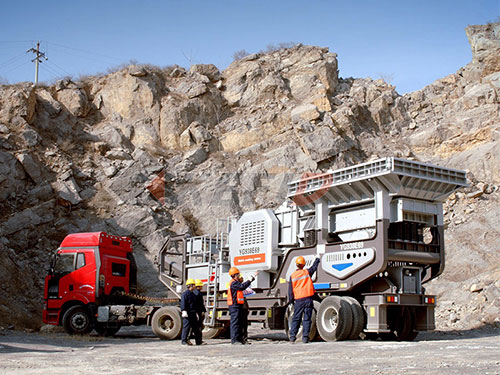
- Challenge: Extremely hard slag (Mohs 7.5) with high chromium content, causing rapid wear.
- Customization: Primary jaw crusher with Mn18Cr2 liners. Secondary cone crusher with ceramic composite bowl liners. Overbelt magnet with rare-earth neodymium magnets for high-gradient metal recovery. All conveyor belts upgraded to abrasion-resistant (AR) rubber.
- Outcome: Reduced wear part replacement frequency by 40% compared to standard designs, with metal recovery rate exceeding 95%.
Case 3: Copper Slag Processing for Southeast Asia
- Challenge: Wet, sticky feed (moisture 15–20%) and requirement for fine sand (0–5 mm) for cement additive.
- Customization: Apron feeder with variable speed and anti-stick coating. Double-roll crusher with serrated teeth for wet material. High-frequency vibrating screen with polyurethane panels and heated bottom deck. Closed-loop water system with thickener for sludge recycling.
- Outcome: Achieved consistent production of 50 tph of dry, fine copper slag sand, meeting ASTM C33 specifications.
6. Challenges and Risk Mitigation in Export Customization
- Communication Gaps: Misunderstanding of local material characteristics or regulatory requirements. Mitigation: Require a representative 50–100 kg sample of slag for in-house testing before finalizing the design.
- Lead Time: Custom engineering extends delivery times (typically 12–20 weeks). Mitigation: Maintain a library of pre-engineered modules that can be rapidly adapted.
- Cost Overruns: Customization increases engineering and manufacturing costs. Mitigation: Provide a clear, itemized quotation with optional features, allowing the buyer to prioritize based on budget.
- Installation Errors: Complex custom plants are prone to assembly mistakes. Mitigation: Provide detailed 3D assembly animations and a dedicated commissioning engineer for the first 30 days of operation.
7. Future Trends in Customized Slag Crusher Plants
- Digital Twins: Exporters are increasingly offering virtual replicas of the plant for simulation, training, and predictive maintenance.
- AI-Driven Optimization: Customized software that adjusts crusher settings in real-time based on feed material analysis (e.g., using NIR sensors to detect metal content).
- Circular Economy Integration: Plants designed to produce multiple end-products (e.g., metal concentrate, construction aggregate, and cementitious powder) from a single slag stream, requiring highly flexible customization.
- Mobile Customization: Fully mobile, track-mounted slag crusher plants with integrated metal recovery, designed for temporary or remote operations.
Conclusion
Exporting a slag crusher plant is not a transaction of standard machinery; it is the delivery of a bespoke engineering solution tailored to the unique chemical, physical, and regulatory environment of the destination market. Successful customization requires deep metallurgical knowledge, robust engineering flexibility, and a commitment to understanding the client’s economic drivers—whether that is maximizing metal recovery, producing high-value aggregates, or minimizing environmental liability. For exporters, the ability to offer a fully customized plant—from the primary crusher jaw profile to the final dust collector filter bag material—is the defining factor that separates a commodity supplier from a strategic partner in the global slag processing industry. As environmental regulations tighten and the demand for secondary raw materials grows, the market for customized slag crusher plants will only expand, rewarding those who invest in technical depth and client-centric innovation.
