Bulk 250-300 TPH Stone Crushing Plant Fabricators: Engineering, Design, and Operational Excellence
The global demand for construction aggregates, road base materials, and industrial minerals has driven the evolution of stone crushing plants from simple, single-stage crushers to complex, multi-stage processing systems. Among the most sought-after capacities in medium-to-large scale operations is the 250-300 tons per hour (TPH) range. This throughput level strikes a critical balance between capital investment, operational efficiency, and production output, making it a preferred choice for quarry operators, infrastructure contractors, and mining companies. The fabricators—engineering firms and manufacturers—that specialize in designing and building these bulk 250-300 TPH stone crushing plants must possess deep expertise in material science, mechanical engineering, process optimization, and project management. This article provides a comprehensive, professional, and objective examination of the key aspects of these fabricators, including design principles, core equipment, material handling, automation, quality control, and global market considerations.
1. Understanding the 250-300 TPH Capacity Segment
A 250-300 TPH stone crushing plant is typically designed to process hard rock (e.g., granite, basalt, quartzite), medium-hard rock (e.g., limestone, dolomite), or recycled concrete aggregates. The output product is usually a combination of various sizes, such as 0-5 mm (manufactured sand), 5-10 mm, 10-20 mm, and 20-40 mm, depending on the end-use specifications. This capacity range is often deployed in:
- Large-scale road and highway construction projects.
- Commercial aggregate production for ready-mix concrete plants.
- Dam and hydroelectric project sites.
- Large infrastructure development in emerging economies.
Fabricators targeting this segment must ensure that the plant can operate continuously for 8-16 hours per day, with minimal downtime, while maintaining consistent product quality and meeting environmental regulations.
2. Core Design Philosophy of Fabricators
Reputable fabricators of 250-300 TPH plants follow a modular and scalable design philosophy. The plant is typically divided into several stages: primary crushing, secondary crushing, tertiary crushing, and screening. Each stage is designed to handle a specific range of feed material size and to produce a specific output fraction. Key design considerations include:
- Feed Material Characteristics: The fabricator must analyze the abrasiveness, compressive strength, moisture content, and clay content of the raw material. For example, a plant processing highly abrasive granite will require different wear-resistant liners and crusher chamber designs compared to one processing softer limestone.
- Crushing Circuit Configuration: The most common configurations for 250-300 TPH are:
- Jaw + Cone + VSI (Vertical Shaft Impactor): Ideal for producing high-quality cubical aggregates and manufactured sand.
- Jaw + Cone + Cone: Suitable for producing multiple grades of coarse aggregates with minimal fines.
- Jaw + Impact Crusher: Often used for limestone or recycled materials where shape is less critical.
- Closed-Circuit vs. Open-Circuit: Most 250-300 TPH plants incorporate closed-circuit screening to ensure that oversized material is recirculated back to the crusher, maximizing yield and reducing waste.
3. Key Equipment and Components
A bulk 250-300 TPH stone crushing plant fabricator must source or manufacture a range of heavy-duty equipment. The following are the critical components:
- Primary Jaw Crusher: Typically a 48” x 36” or 42” x 30” jaw crusher, capable of handling feed sizes up to 600-800 mm. The fabricator must ensure that the jaw crusher has a robust frame, high manganese steel jaws, and a hydraulic adjustment system for quick setting changes.
- Secondary Cone Crusher: A 4.25 ft or 5.5 ft standard or short-head cone crusher is common. The fabricator must select a cone with a proven track record for high reduction ratios and consistent product gradation. Features like hydraulic clearing, tramp iron relief, and automatic setting adjustment are essential.
- Tertiary Crusher (VSI or Cone): For sand production, a VSI crusher with a capacity of 150-200 TPH is often integrated. The fabricator must ensure that the VSI has a rotor diameter of at least 800 mm, with tungsten carbide or ceramic wear parts.
- Vibrating Screens: Multi-deck screens (typically 2-3 decks) with dimensions of 6’ x 16’ or 6’ x 20’ are used. The fabricator must design the screen supports to handle dynamic loads and ensure proper stroke and amplitude for efficient separation.
- Feeders and Conveyors: Apron feeders or vibrating grizzly feeders are used at the primary stage. Belt conveyors must be sized for 250-300 TPH capacity, with proper belt width (e.g., 800-1000 mm), idler spacing, and motor power. The fabricator must also include safety features like pull cords, belt sway switches, and emergency stops.
- Electrical and Control Systems: A centralized PLC-based control panel is standard. The fabricator must integrate motor control centers (MCCs), variable frequency drives (VFDs) for conveyors, and remote monitoring capabilities. Advanced fabricators offer IoT-enabled systems that provide real-time data on crusher load, bearing temperature, and oil pressure.
4. Material Handling and Stockpiling
Efficient material handling is a hallmark of a well-designed 250-300 TPH plant. Fabricators must design the layout to minimize material re-handling and reduce operational costs. Key considerations include:
- Stockpile Management: The plant should have multiple stockpile areas for different product sizes. Radial stackers or telescopic conveyors are often used to create large, conical stockpiles that minimize segregation.
- Dust Suppression: Given the high throughput, dust generation is a significant concern. Fabricators must integrate water spray systems, mist cannons, or baghouse filters at transfer points, crusher discharge, and screen decks. Compliance with local environmental standards (e.g., PM10 limits) is mandatory.
- Noise Control: Enclosures for crushers and screens, as well as acoustic barriers, are often specified by fabricators to meet occupational noise limits.
5. Quality Assurance and Fabrication Standards
Professional fabricators adhere to stringent quality control processes throughout the fabrication and assembly phases. This includes:
- Material Selection: Steel plates for chutes, hoppers, and frames must meet ASTM A36 or equivalent standards. Wear plates should be made of AR400 or AR500 steel.
- Welding Standards: All structural welds must comply with AWS D1.1 or ISO 3834 standards. Non-destructive testing (NDT) such as ultrasonic or magnetic particle inspection is performed on critical welds.
- Factory Assembly and Testing: Before shipment, the fabricator should conduct a full dry-run test of the plant, including conveyor alignment, crusher rotation, and electrical system verification. This reduces site installation time and commissioning risks.
- Certifications: Many fabricators hold ISO 9001:2015 certification for quality management, and some are certified for environmental management (ISO 14001) and occupational health and safety (ISO 45001).
6. Global Fabricators and Market Dynamics
The market for 250-300 TPH stone crushing plant fabricators is dominated by both established multinational corporations and specialized regional manufacturers. Notable global players include:
- Metso Outotec (Finland): Known for their Lokotrack series and stationary plants, they offer comprehensive solutions with advanced automation.
- Sandvik (Sweden): Their CH and CS series cone crushers are widely used in this capacity range.
- Terex MPS (USA): Provides Cedarapids and Simplicity brand equipment.
- ThyssenKrupp (Germany): Specializes in large-scale, high-capacity plants.
- Chinese Fabricators: Companies like SBM, Liming Heavy Industry, and Shanghai Shibang (SBM) offer cost-competitive solutions with capacities up to 300 TPH. They have gained significant market share in Africa, Southeast Asia, and South America due to lower initial capital costs and faster delivery times.
- Indian Fabricators: Firms like Puzzolana, Propel Industries, and Marsman India have established a strong reputation for robust, low-maintenance plants suitable for hard rock applications.
The choice of fabricator often depends on factors such as budget, after-sales support, spare parts availability, and local service network. For bulk 250-300 TPH plants, fabricators typically offer turnkey solutions, including civil engineering, erection, commissioning, and operator training.
7. Operational Considerations and Maintenance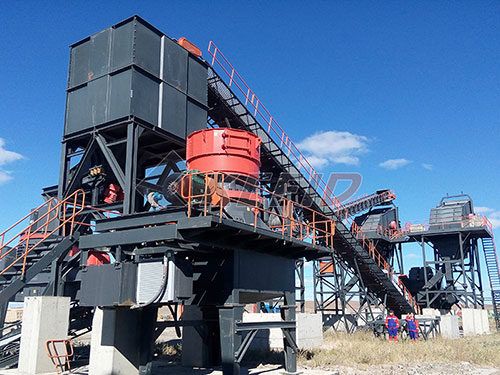
A 250-300 TPH plant represents a significant capital investment, often ranging from $1.5 million to $4 million depending on the level of automation and equipment brand. Fabricators must provide detailed operational manuals and maintenance schedules. Key maintenance aspects include:
- Crusher Liner Replacement: Cone crusher liners may need replacement every 200-400 hours, depending on material abrasiveness. Fabricators should design quick-change systems to minimize downtime.
- Belt Conveyor Maintenance: Regular tracking, tensioning, and idler replacement are critical. Fabricators often include belt scales for real-time throughput monitoring.
- Lubrication Systems: Automatic grease lubrication systems for crushers and screens reduce manual intervention and extend component life.
- Wear Part Inventory: Fabricators should recommend a minimum stock of critical wear parts, such as jaw plates, cone liners, screen mesh, and belt scrapers.
8. Environmental and Regulatory Compliance
Modern fabricators must design plants that comply with increasingly stringent environmental regulations. This includes:
- Water Management: Closed-loop water systems for dust suppression and washing are becoming standard. Fabricators must design settling ponds or filter presses to treat process water.
- Emissions Control: Diesel-powered generators (if used) must meet Tier 3 or Tier 4 emission standards. Electric-powered plants are preferred in regions with stable grid power.
- Noise and Vibration: Fabricators must conduct noise impact assessments and design foundations that isolate vibration from nearby structures.
9. Future Trends in Fabrication
The industry is moving toward more intelligent and sustainable solutions. Fabricators are increasingly incorporating:
- Digital Twins: Virtual models of the plant that allow for simulation of material flow, bottleneck identification, and predictive maintenance.
- Energy Efficiency: High-efficiency motors, VFDs, and regenerative braking systems are being integrated to reduce power consumption by 10-20%.
- Mobile and Semi-Mobile Plants: While 250-300 TPH stationary plants dominate, some fabricators offer modular, containerized plants that can be relocated, reducing civil works costs.
Conclusion
Bulk 250-300 TPH stone crushing plant fabricators play a pivotal role in the global construction and mining industries. Their expertise extends beyond simply assembling machinery; it encompasses process engineering, material science, structural design, and project management. A well-fabricated plant in this capacity range offers high reliability, consistent product quality, and low operating costs. When selecting a fabricator, project owners must evaluate not only the initial capital cost but also the long-term support, spare parts availability, and the fabricator’s track record in similar applications. As technology advances, fabricators that embrace automation, digitalization, and sustainability will lead the market, delivering plants that are not only productive but also environmentally responsible. Whether for a greenfield quarry or an expansion of an existing operation, a 250-300 TPH stone crushing plant remains a benchmark of industrial efficiency and engineering excellence.
