
Title: Stone Quarry Crushing Plant OEM Factory: Affordable Solutions for High-Volume Aggregate Production
Introduction
The global demand for construction aggregates—crushed stone, sand, and gravel—continues to rise, driven by urbanization, infrastructure development, and industrial expansion. At the heart of this supply chain lies the stone quarry crushing plant, a complex assembly of machinery designed to reduce large rocks into specified sizes for use in concrete, asphalt, road base, and other applications. For quarry operators, the decision to invest in a crushing plant is capital-intensive, and the choice between branded equipment and Original Equipment Manufacturer (OEM) factory solutions often determines long-term profitability. This article provides a professional, objective analysis of stone quarry crushing plants from OEM factories, with a focus on affordability, quality assurance, technical specifications, and operational considerations. It aims to equip decision-makers with the knowledge needed to evaluate OEM offerings without compromising performance or reliability.
1. Understanding OEM Factories in the Crushing Industry
An Original Equipment Manufacturer (OEM) in the crushing industry is a company that designs, engineers, and produces crushing and screening equipment under its own brand name. These factories are responsible for the entire production process—from raw material sourcing and component fabrication to assembly, testing, and after-sales support. Unlike third-party assemblers or resellers, OEM factories possess proprietary intellectual property, including patented crushing chamber geometries, hydraulic systems, and control algorithms.
For stone quarry crushing plants, OEM factories typically offer a range of stationary, semi-mobile, and fully mobile configurations. Their product lines include jaw crushers, cone crushers, impact crushers, vibrating feeders, screens, and belt conveyors. The term “OEM factory” implies that the buyer is purchasing directly from the source, eliminating intermediary markups. This direct channel is a primary driver of affordability, as it reduces distribution costs and allows for more competitive pricing.
2. The Affordability Factor: Cost Breakdown and Value Engineering
Affordability in the context of OEM factory crushing plants is not synonymous with low quality. Instead, it reflects a deliberate value engineering approach that optimizes manufacturing costs without sacrificing essential performance parameters. Key factors contributing to affordability include:
A typical 200–300 ton per hour (tph) stationary crushing plant from an OEM factory may cost between $500,000 and $1.2 million, depending on configuration and automation level. In contrast, equivalent plants from premium Western brands can exceed $2 million. The price differential is often 30–50%, making OEM factories an attractive option for budget-conscious quarry operators in emerging markets.
3. Technical Specifications and Performance Metrics
Affordability must be evaluated against technical performance. A well-designed OEM crushing plant should meet or exceed industry benchmarks for throughput, reduction ratio, product shape, and energy efficiency. Below are critical technical parameters to consider:
4. Quality Assurance and Reliability Considerations
One common concern about affordable OEM factories is quality consistency. Reputable OEMs adhere to international standards such as ISO 9001 for quality management, ISO 14001 for environmental management, and CE or GOST certifications for specific markets. They conduct rigorous testing at every stage:
Furthermore, OEM factories provide detailed documentation, including mechanical drawings, electrical schematics, lubrication charts, and spare parts lists. This transparency allows buyers to verify specifications and plan maintenance schedules.
5. After-Sales Support and Spare Parts Availability
Affordability extends beyond the initial purchase price. Total cost of ownership (TCO) includes installation, commissioning, operation, maintenance, and spare parts. OEM factories that offer affordable plants often have global or regional service networks. Key support elements include:
Buyers should verify that the OEM factory has a local distributor or service center in their region to avoid delays in case of breakdowns.
6. Application Suitability: Matching Plant Configuration to Quarry Conditions
Not all affordable OEM plants are suitable for every quarry. The choice of crusher type, plant layout, and automation level depends on:
7. Comparative Analysis: OEM Factory vs. Branded Equipment
To provide an objective perspective, the following table summarizes key differences between affordable OEM factory plants and premium branded equipment:
| Parameter | OEM Factory (Affordable) | Premium Brand (e.g., Metso, Sandvik) |
|---|---|---|
| Initial Cost | 30–50% lower | Higher |
| Build Quality | Good, with standardized components | Excellent, with proprietary alloys |
| Automation | Semi-automatic to PLC-based | Fully automated with AI integration |
| Spare Parts Cost | Lower (local sourcing) | Higher (brand-specific) |
| After-Sales Network | Regional, growing | Global, established |
| Resale Value | Moderate | High |
| Customization | Limited to modular options | Extensive, custom engineering |
For a quarry operator with a tight budget and moderate production requirements (100–400 tph), an OEM factory plant offers a compelling value proposition. For high-capacity, mission-critical operations (500+ tph) with demanding product specifications, premium brands may justify their higher cost through superior reliability and support.
8. Case Study: Successful Implementation of an Affordable OEM Plant
Consider a limestone quarry in Southeast Asia with a capacity of 250 tph. The operator selected a Chinese OEM factory’s stationary plant comprising a PE-900×1200 jaw crusher, PF-1315 impact crusher, and 3YK-2460 vibrating screen. Total ex-factory cost was $680,000, including a 12-month warranty and one set of spare wear parts. Installation took 45 days with on-site supervision. After 18 months of operation, the plant achieved 92% uptime, with wear part replacement every 6 months. The operator reported a payback period of 14 months, significantly shorter than the 20-month projection for a premium brand plant.
9. Risks and Mitigation Strategies
While affordable OEM factories offer clear benefits, buyers must be aware of potential risks:
10. Conclusion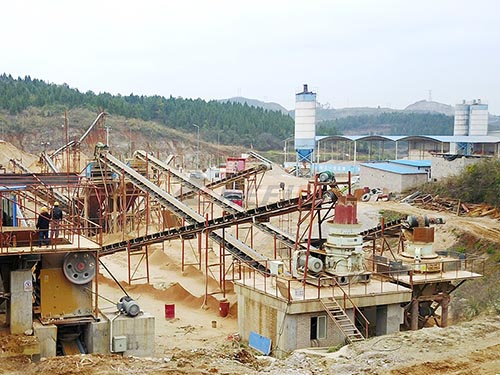
Stone quarry crushing plants from OEM factories represent a viable, affordable solution for aggregate producers seeking to balance capital expenditure with operational performance. By leveraging economies of scale, vertical integration, and modular design, these factories deliver equipment that meets industry standards at significantly lower prices than premium brands. However, affordability should not be the sole criterion. Buyers must conduct thorough technical evaluations, verify quality certifications, and establish clear after-sales support agreements. When properly selected and maintained, an OEM factory crushing plant can provide reliable, cost-effective service for decades, enabling quarry operators to compete effectively in the global aggregates market.
For decision-makers, the key takeaway is clear: affordable does not mean inferior. With careful planning and due diligence, an OEM factory stone quarry crushing plant can be a strategic investment that maximizes return on investment while meeting production goals.
If you have any questions about our products, please feel free to contact us. We take all inquiries and suggestions very seriously.