Title: Eco-Friendly Stone Quarry Crushing Plant Prices: A Comprehensive Market Analysis, Cost Drivers, and Investment Considerations
Introduction
The global construction and infrastructure sectors are undergoing a paradigm shift toward sustainability. As a result, the demand for aggregates—crushed stone, sand, and gravel—remains robust, but the methods of production are increasingly scrutinized for their environmental footprint. The stone quarry crushing plant, once a symbol of dust, noise, and diesel fumes, is now being redesigned around principles of circular economy, energy efficiency, and emission control. For procurement managers, project owners, and quarry operators, the central question is no longer simply “What does a crusher cost?” but rather “What is the price of an eco-friendly stone quarry crushing plant, and what factors justify that premium?”
This article provides a professional, objective, and detailed examination of eco-friendly stone quarry crushing plant prices. It will dissect the cost structure, compare conventional versus green technologies, analyze regional price variations, and offer a framework for evaluating total cost of ownership (TCO). The goal is to equip decision-makers with the data and insights needed to make informed capital investments that align with both regulatory compliance and long-term profitability.
1. Defining “Eco-Friendly” in the Context of Crushing Plants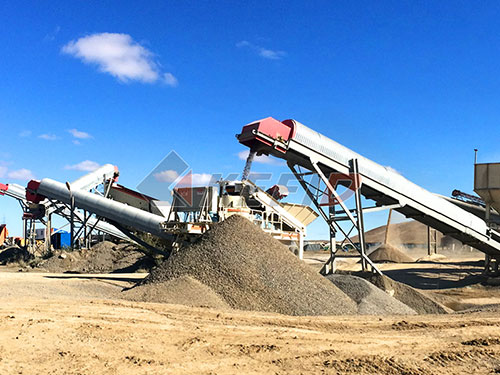
Before discussing prices, it is essential to define what constitutes an eco-friendly crushing plant. Unlike a standard plant, a green or eco-friendly system integrates multiple environmental controls and efficiency measures:
- Dust Suppression Systems: High-pressure water misting, dry fog systems, and baghouse filters that capture particulate matter (PM2.5 and PM10) at transfer points, crushers, and screens.
- Noise Reduction Enclosures: Acoustic cladding, rubber-lined chutes, and vibration-isolated foundations to reduce decibel output to below 75 dB(A) at the property boundary.
- Water Recycling: Closed-loop water systems that treat and reuse process water, minimizing freshwater withdrawal and preventing slurry discharge into local waterways.
- Energy Efficiency: High-efficiency motors (IE4/IE5), variable frequency drives (VFDs), and hybrid or fully electric power systems (grid-connected or solar-assisted) instead of diesel generators.
- Waste Valorization: Integration of crushers that can process recycled concrete and asphalt, reducing the need for virgin quarry extraction.
- Smart Automation: IoT sensors and AI-based control systems that optimize crusher settings in real time, reducing energy consumption per ton by 10–20%.
An eco-friendly plant is not a single machine but a system of interconnected components. Consequently, its price is a function of the cumulative cost of these green features, which can range from 15% to 40% above a conventional plant of equivalent capacity.
2. Base Price Ranges for Eco-Friendly Crushing Plants (2025 Market Data)
Prices vary significantly based on capacity (tons per hour, TPH), mobility (stationary, skid-mounted, or fully mobile), and the degree of automation. The following are indicative price ranges for eco-friendly configurations in USD, excluding civil works and installation:
| Plant Type |
Capacity (TPH) |
Conventional Price (USD) |
Eco-Friendly Price (USD) |
Green Premium (%) |
| Mobile Jaw + Cone (Diesel-Electric Hybrid) |
150–250 |
$1.2M – $2.0M |
$1.5M – $2.6M |
20–30% |
| Stationary Primary Jaw + Secondary Cone |
300–500 |
$3.5M – $6.0M |
$4.5M – $7.8M |
25–35% |
| High-Capacity Stationary (Impact + VSI) |
600–1000 |
$8.0M – $15M |
$10.5M – $20M |
30–40% |
| Modular / Containerized (Fully Electric) |
100–200 |
$800K – $1.5M |
$1.0M – $2.0M |
25–33% |
Note: These prices include primary, secondary, and tertiary crushers, screens, conveyors, dust collection systems, and basic automation. They do not include quarry development, permits, or site infrastructure.
3. Key Cost Drivers for Eco-Friendly Systems
Understanding the price requires dissecting the major cost components. The following are the primary drivers that elevate the price of a green plant:
3.1. Dust Collection and Filtration Systems
- Baghouse filters (pulse-jet type) for crusher discharge points cost between $50,000 and $250,000 depending on air-to-cloth ratio and filter media (e.g., PTFE-coated for fine silica).
- Dry fog systems using ultrasonic atomizers cost $30,000–$80,000 per transfer point. A typical plant with 15 transfer points adds $450,000–$1.2M.
- High-efficiency cyclones for pre-cleaning add 10–15% to the dust control budget.
3.2. Electric and Hybrid Drives
- Replacing a 500 kVA diesel generator with a grid connection and VFDs adds $200,000–$500,000 for transformer, switchgear, and cabling.
- Solar-assisted power (e.g., 200 kWp rooftop panels on the plant structure) adds $150,000–$300,000 but reduces operational energy costs by 30–40%.
- Energy storage systems (lithium-ion batteries) for peak shaving add $100,000–$250,000.
3.3. Noise Mitigation
- Acoustic enclosures for crushers and screens cost $80–$150 per square meter. A full enclosure for a 400 TPH plant can cost $300,000–$600,000.
- Rubber screen media (instead of polyurethane or steel) reduces noise by 5–8 dB but costs 20–30% more per square meter.
3.4. Water Management
- A closed-loop water treatment plant (clarifier, thickener, filter press) for a 500 TPH plant costs $400,000–$900,000.
- Slurry dewatering using a filter press (to produce dry cake for backfilling) adds $150,000–$350,000.
3.5. Advanced Automation and Monitoring
- A full SCADA system with environmental sensors (PM, noise, water flow) costs $100,000–$250,000.
- AI-based crusher optimization (e.g., Metso Outotec’s VisioRock or Sandvik’s AutoMine) adds $50,000–$150,000 per crusher.
4. Regional Price Variations
Eco-friendly plant prices are not uniform globally. The following regional factors influence final quotes:
- North America (USA, Canada): High labor costs and strict EPA/OSHA compliance push prices 10–15% above the global average. However, federal tax incentives (e.g., Section 48C for advanced manufacturing) can offset up to 30% of the green premium.
- Europe (Germany, Sweden, Spain): The EU’s Industrial Emissions Directive (IED) mandates Best Available Techniques (BAT), making eco-features non-negotiable. Prices are 15–20% higher than Asia, but financing is cheaper (low-interest green loans).
- Asia-Pacific (China, India, Vietnam): Local manufacturers (e.g., Shanghai Shibang, Zhengzhou Yifan) offer eco-friendly configurations at 30–40% lower cost than Western brands. However, quality of dust filters and automation may require third-party upgrades. For example, a 300 TPH eco-friendly plant from a Chinese OEM costs $2.8M–$3.5M versus $4.5M–$5.5M from a European OEM.
- Middle East & Africa: Due to water scarcity, closed-loop water systems are mandatory, adding 20–25% to the base price. Logistics and import duties can increase total cost by another 10–15%.
5. Total Cost of Ownership (TCO) Analysis
The purchase price is only the entry ticket. A professional evaluation must consider TCO over a 10-year lifecycle. Eco-friendly plants typically have a higher initial capex but lower opex.
| Cost Category |
Conventional Plant (USD/ton) |
Eco-Friendly Plant (USD/ton) |
Savings |
| Energy (electricity/diesel) |
$0.45 – $0.60 |
$0.25 – $0.35 |
40–50% |
| Water (freshwater + discharge fees) |
$0.10 – $0.15 |
$0.02 – $0.05 |
70–80% |
| Dust suppression chemicals |
$0.05 – $0.08 |
$0.01 – $0.02 |
75% |
| Maintenance (filters, wear parts) |
$0.20 – $0.30 |
$0.18 – $0.25 |
10–20% |
| Regulatory fines / carbon taxes |
$0.05 – $0.20 |
$0.00 – $0.02 |
90–100% |
| Total Opex |
$0.85 – $1.33 |
$0.46 – $0.69 |
45–50% |
Assuming a plant produces 1 million tons per year, the annual operating savings of an eco-friendly plant range from $390,000 to $640,000. Over 10 years, this translates to $3.9M–$6.4M in savings, which often exceeds the initial green premium of $1.0M–$3.0M. Therefore, the payback period for the eco-friendly premium is typically 2–4 years, depending on local energy and water costs.
6. Hidden Costs and Budgetary Pitfalls
When budgeting for an eco-friendly plant, buyers often overlook the following:
- Permitting and Environmental Impact Assessment (EIA): Green features may reduce permitting time, but the EIA itself costs $50,000–$200,000.
- Civil Works for Water Tanks and Filter Presses: These require reinforced concrete foundations, adding $100,000–$300,000.
- Commissioning and Training: Eco-systems are more complex. Operator training on automation and water chemistry adds $20,000–$50,000.
- Spare Parts for Green Components: Baghouse filter bags (replace every 2–3 years) cost $15,000–$40,000 per set. Nozzles for misting systems wear out annually.
- Grid Connection Fees: If switching from diesel to electric, utility companies may charge $50,000–$150,000 for transformer upgrades and line extensions.
7. Financing and Incentives for Eco-Friendly Plants
The higher upfront cost can be mitigated through various financial mechanisms:
- Green Bonds and ESG Loans: Many commercial banks offer interest rate reductions of 0.5–1.5% for projects certified as green (e.g., under the Climate Bonds Standard).
- Government Subsidies: In India, the National Clean Energy Fund provides up to 20% capital subsidy for dust suppression and water recycling. In the EU, the Just Transition Fund covers up to 40% of the green premium for quarries in coal-transition regions.
- Carbon Credits: A 500 TPH plant that reduces diesel use by 1.5 million liters per year can generate 3,500–4,000 carbon credits annually. At $50–$80 per credit (EU ETS), this yields $175,000–$320,000 per year in additional revenue.
- Leasing Models: Some OEMs (e.g., Metso, Sandvik) offer “green as a service” contracts where the plant is leased, and the OEM guarantees energy and water consumption targets.
8. Case Study: Comparative Quote for a 400 TPH Plant
To illustrate, consider a mid-sized quarry in the southeastern United States requiring a 400 TPH stationary plant (jaw + cone + VSI) with full dust control and water recycling.
- Conventional Quote (OEM A): $4.8M (diesel generator, no baghouse, open water system)
- Eco-Friendly Quote (OEM B): $6.5M (grid electric, baghouse, dry fog, closed-loop water, SCADA)
- Green Premium: $1.7M (35%)
- Annual Opex Savings: $520,000 (energy $300k, water $80k, dust chemicals $40k, fines avoided $100k)
- Payback Period: 3.3 years
- 10-Year Net Benefit: $3.5M (savings) + $0.8M (carbon credits) = $4.3M net positive.
9. Future Price Trends
The price of eco-friendly components is expected to decline over the next 5 years due to:
- Economies of scale in baghouse and filter press manufacturing, especially in China and India.
- Falling battery costs (projected to drop 30% by 2028), making hybrid-electric plants more affordable.
- Modularization: OEMs are standardizing eco-kits (e.g., “GreenPack” by Terex) that can be retrofitted, reducing custom engineering costs by 20%.
- Regulatory convergence: As more countries adopt IED-like standards, the “green premium” will shrink as eco-features become the baseline, not the upgrade.
However, prices for advanced AI-based automation and high-end acoustic enclosures may remain stable or increase due to specialized materials and software development costs.
10. Conclusion and Strategic Recommendations
Eco-friendly stone quarry crushing plant prices are undeniably higher—typically 15–40% above conventional systems. However, this premium is not a cost but an investment. When evaluated through the lens of total cost of ownership, green plants deliver superior returns through energy savings, water conservation, regulatory compliance, and carbon credit revenue. The payback period is generally under 4 years, and the long-term competitive advantage is significant, especially as environmental regulations tighten and ESG criteria become mandatory for public infrastructure projects.
For procurement professionals, the following steps are recommended:
- Conduct a site-specific TCO model that includes local electricity tariffs, water costs, and carbon credit prices.
- Request performance guarantees from OEMs for dust emission levels (e.g., <10 mg/Nm³) and energy consumption (kWh/ton) to ensure the premium translates into measurable savings.
- Explore hybrid financing that combines green loans with carbon credit pre-sale agreements.
- Negotiate retrofitability—ensure that the plant can accept future upgrades (e.g., hydrogen-ready engines or advanced AI) without major structural changes.
In summary, the price of an eco-friendly stone quarry crushing plant is a reflection of its ability to future-proof operations. In an era where environmental liability is a financial risk, paying a 30% premium today is often the most cost-effective decision a quarry operator can make for the next decade.
