
Title: The Strategic Advantage of ISO-Certified Crushing and Screening Equipment: Factory Pricing, Quality Assurance, and Global Standards
Introduction
In the modern mining, quarrying, and construction industries, the efficiency and reliability of material processing equipment directly impact project timelines, operational costs, and final product quality. Among the most critical machinery in these sectors are crushing and screening plants—systems designed to reduce large rocks into smaller, usable aggregates and to separate them by size. As global demand for infrastructure development and mineral extraction continues to rise, the market for such equipment has become increasingly competitive. One term that consistently appears in procurement discussions is “ISO Certified Crushing And Screening Equipment Factory Price.” This phrase encapsulates three key pillars: international quality certification, direct-from-manufacturer pricing, and the technical capability of the equipment itself.
This article provides a comprehensive, objective analysis of what ISO certification means for crushing and screening equipment, the economic and operational benefits of purchasing directly from a factory, and the factors that influence pricing. It aims to equip procurement managers, project engineers, and business owners with the knowledge needed to make informed investment decisions.
Part I: Understanding ISO Certification in the Context of Crushing and Screening
ISO (International Organization for Standardization) is an independent, non-governmental international organization that develops standards to ensure quality, safety, and efficiency. For industrial machinery like crushers and screens, the most relevant certifications are ISO 9001 (Quality Management Systems) and, in some cases, ISO 14001 (Environmental Management) or ISO 45001 (Occupational Health and Safety).
1.1 ISO 9001: The Foundation of Quality
ISO 9001 certification indicates that a manufacturer has implemented a robust quality management system (QMS). This means that every stage of production—from raw material sourcing and design to welding, assembly, testing, and after-sales service—is documented, controlled, and subject to continuous improvement. For a crushing and screening plant, this translates to: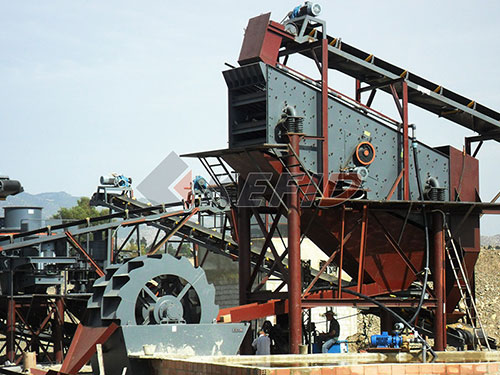
1.2 Beyond ISO 9001: Environmental and Safety Standards
While ISO 9001 is the most common, some leading factories also hold ISO 14001 (environmental management) and ISO 45001 (occupational health and safety). For crushing and screening equipment, these certifications indicate:
1.3 The Myth of “ISO Certified” vs. “ISO Compliant”
It is important to distinguish between a factory that is truly ISO certified (audited by an accredited third-party body) and one that merely claims to follow ISO principles. A genuine ISO certification is verifiable through the certifying body’s registry. When evaluating “ISO Certified Crushing And Screening Equipment,” buyers should request the certificate number and verify its validity. This certification is not a marketing gimmick; it is a legally binding commitment to quality.
Part II: The Economics of Factory-Direct Pricing
The phrase “Factory Price” is often used interchangeably with “direct price” or “manufacturer’s price.” In the heavy machinery industry, the supply chain typically involves multiple layers: manufacturer, distributor, dealer, and sometimes a sub-dealer. Each layer adds a margin—typically 10% to 30%—to cover logistics, warehousing, sales commissions, and regional support. Purchasing directly from an ISO-certified factory eliminates these intermediaries.
2.1 Cost Breakdown: What Does Factory Price Include?
A factory price for a complete crushing and screening plant (e.g., a 200-300 tons per hour stationary or mobile plant) generally includes:
2.2 Hidden Costs to Consider
While factory pricing is lower, buyers must account for additional costs that are not included:
2.3 Price Range Examples (for reference only)
Please note that prices fluctuate based on raw material costs, exchange rates, and specific configurations. As of 2025, approximate factory prices for ISO-certified equipment might be:
These prices are significantly lower (often 20-40%) than those offered through regional dealers, but the buyer assumes more responsibility for logistics and local support.
Part III: Technical Considerations for Crushing and Screening Equipment
An ISO-certified factory price is meaningless if the equipment does not meet the operational requirements. The following technical factors must be evaluated:
3.1 Material Characteristics
The design of the crushing circuit depends on:
3.2 Plant Configuration
A typical ISO-certified plant includes:
3.3 Mobility vs. Stationary
Part IV: The Role of After-Sales Support and Warranty
One common concern about factory-direct purchases is the lack of local support. However, many ISO-certified factories have established global service networks or offer remote troubleshooting via video calls and digital platforms.
4.1 Warranty Terms
A standard warranty for ISO-certified equipment is typically 12 to 24 months from the date of commissioning or 18 months from shipment, whichever comes first. The warranty covers manufacturing defects but not wear parts (liners, belts, bearings) or damage caused by improper operation.
4.2 Spare Parts Availability
Reputable factories maintain a stock of critical spare parts (e.g., eccentric shafts, main frames, hydraulic pumps) and can ship them within 48-72 hours. Some offer “kitting” services where a complete set of wear parts for the first 6-12 months is included in the factory price.
4.3 Training and Documentation
ISO certification requires that the manufacturer provide comprehensive training materials. This includes:
Part V: How to Evaluate an ISO-Certified Factory
Not all ISO-certified factories are equal. The following criteria can help buyers distinguish between a world-class manufacturer and a basic producer:
5.1 Production Capacity and Experience
5.2 Testing Facilities
5.3 Customer References
5.4 Compliance with Local Standards
Part VI: The Future of ISO-Certified Crushing and Screening Equipment
The industry is moving toward digitalization and sustainability. ISO-certified factories are at the forefront of these trends:
6.1 Smart Crushing Plants
Modern plants integrate IoT sensors that monitor bearing temperature, vibration, oil quality, and power consumption. This data is fed into a cloud-based platform for predictive maintenance, reducing unplanned downtime by up to 30%.
6.2 Energy Efficiency
New generation crushers use variable frequency drives (VFDs) and optimized chamber designs to reduce energy consumption by 15-25% compared to older models. ISO 50001 (Energy Management) certification is becoming more common.
6.3 Circular Economy
Factories are designing equipment with higher recyclability. For example, steel structures are designed for easy disassembly, and wear parts are made from materials that can be remanufactured.
Conclusion
Investing in ISO Certified Crushing And Screening Equipment at factory price offers a compelling value proposition for serious operators. The certification provides a verifiable guarantee of quality, safety, and environmental responsibility. The factory-direct pricing model eliminates intermediary margins, allowing buyers to allocate more budget to essential items like spare parts, installation, and operator training.
However, this approach requires due diligence. Buyers must verify the certification, assess the factory’s technical capability, and carefully calculate total landed costs including shipping, duties, and local support. When executed correctly, this procurement strategy results in a lower total cost of ownership, higher equipment reliability, and a faster return on investment.
For project managers and procurement professionals, the key takeaway is clear: an ISO-certified factory price is not just a discount—it is a strategic partnership built on international standards, engineering excellence, and long-term operational efficiency. In an industry where downtime costs thousands of dollars per hour, the peace of mind that comes with certified quality is invaluable.
If you have any questions about our products, please feel free to contact us. We take all inquiries and suggestions very seriously.