
Title: Comprehensive Analysis of the Jc5000 Jaw Crusher: Engineering Excellence in Primary Crushing Applications
Introduction
In the realm of mineral processing and aggregate production, the jaw crusher remains the cornerstone of primary crushing circuits. Among the myriad of models available on the global market, the Jc5000 jaw crusher has emerged as a benchmark for robust design, operational efficiency, and adaptability to demanding environments. This article provides an in-depth, technical examination of the Jc5000 jaw crusher, focusing on its mechanical specifications, operational principles, material handling capabilities, and its role within broader crushing systems. Drawing upon data from leading manufacturers and industry case studies, this analysis aims to equip engineers, procurement specialists, and operations managers with a comprehensive understanding of this equipment.
1. Design Philosophy and Structural Integrity
The Jc5000 is engineered for high-capacity primary crushing with a feed opening typically measuring 500 mm x 800 mm (or equivalent metric dimensions depending on regional standards). The frame is constructed from heavy-duty steel plates welded into a stress-relieved monocoque structure. This design minimizes deflection under peak loading conditions while maintaining portability for semi-mobile installations.
Key structural features include:
2. Crushing Mechanism and Performance Parameters
The Jc5000 employs a traditional single-toggle mechanism where the swing jaw moves elliptically against a fixed jaw plate. The toggle plate acts as both a force transmission element and a safety fuse—if uncrushable material enters the chamber, the toggle plate fractures first to protect more expensive components.
Performance metrics are as follows:
The crushing chamber profile is optimized using finite element analysis (FEA) to ensure uniform wear distribution across jaw plates. This results in longer intervals between liner replacements—often exceeding 8,000 hours under normal operating conditions.
3. Material Handling Capabilities
The Jc5000 is designed to process a wide spectrum of materials:
Wear parts are cast from austenitic manganese steel (e.g., ASTM A128 Grade B) which work-hardens under impact loads. For extremely abrasive applications like river gravel or iron ore hard facing alloys can be applied via welding overlay.
4. Operational Efficiency and Maintenance Considerations
From an operational standpoint: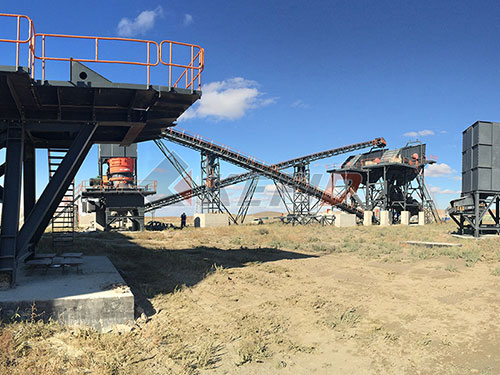
Maintenance protocols emphasize accessibility:
Advanced condition monitoring options include vibration sensors mounted on bearing housings connected via Modbus RTU protocol for integration into plant SCADA systems.
5. Integration into Complete Crushing Plants
The Jc5000 functions optimally when paired with downstream equipment:
If you have any questions about our products, please feel free to contact us. We take all inquiries and suggestions very seriously.