Custom Gyratory Crusher Quotation: A Comprehensive Guide to Procurement, Engineering, and Cost Optimization
In the realm of high-capacity primary crushing, the gyratory crusher stands as an undisputed workhorse, capable of processing thousands of tonnes of ore per hour. Unlike its more common counterpart, the jaw crusher, the gyratory crusher offers a continuous crushing action, a larger feed opening relative to its footprint, and a more uniform product size. However, for mining operators, quarry managers, and project engineers, the phrase “custom gyratory crusher quotation” represents far more than a simple price list. It is the culmination of a complex engineering dialogue, a risk assessment, and a strategic financial commitment. This article provides a detailed, professional, and objective examination of what constitutes a custom gyratory crusher quotation, the factors that influence its pricing, the technical specifications that must be defined, and the strategic steps to ensure a fair and accurate procurement process.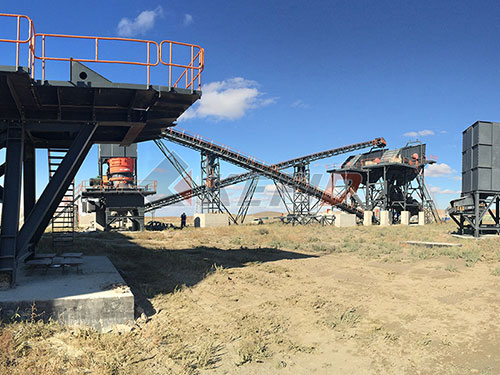
1. Understanding the Gyratory Crusher: A Baseline for Customization
Before requesting a quotation, one must appreciate the fundamental mechanics of the gyratory crusher. The machine consists of a fixed concave surface (the bowl liner) and a conical crushing head (the mantle) that gyrates eccentrically. The crushing chamber is steep and deep, allowing for a large reduction ratio in a single pass. The feed size can range from 1,000 mm to 1,500 mm, and the product size typically falls between 150 mm and 300 mm. The eccentricity, the throw, the speed (RPM), and the crusher’s power rating (kW) are all variables that can be tailored to specific ore characteristics.
A “custom” quotation implies that the standard off-the-shelf models—such as the 42-65, 54-75, or 60-110 series—are not directly applicable. Customization may be required due to:
- Ore hardness and abrasiveness: A Bond Work Index (Wi) above 20 kWh/t demands a heavier-duty design, thicker liners, and a higher installed power.
- Moisture and clay content: Sticky ores require a larger discharge opening and a different mantle profile to prevent packing.
- Site constraints: Underground installations require a lower-profile design, while tropical or arctic environments demand specialized cooling or heating systems.
- Integration with existing conveyors: The crusher’s discharge height, feed chute geometry, and base frame must align with downstream equipment.
Thus, a quotation is not a generic price; it is a proposal for a bespoke machine that must meet a performance guarantee.
2. The Anatomy of a Professional Quotation Document
A credible custom gyratory crusher quotation should be a multi-page technical dossier, not a one-line email. The following sections are mandatory for a professional evaluation:
- Executive Summary: A brief overview of the proposed model, its capacity (tph), and the total price in the agreed currency (e.g., USD, EUR, CNY).
- Technical Specifications Table: This includes the feed opening dimensions, maximum feed size, closed side setting (CSS) range, eccentric throw, motor power (kW), weight (tonnes), and dimensions (L×W×H). For a custom unit, the quotation must state the design basis, e.g., “Based on a feed of 1,200 mm and a CSS of 175 mm, the throughput is 2,500 tph.”
- Mechanical Drawings and 3D Models: A professional quotation includes preliminary GA (General Arrangement) drawings, foundation loads, and dynamic force calculations. This is critical for civil engineering design.
- Component Breakdown: A detailed list of major components—main shaft, eccentric bushing, hydraulic adjustment system, lubrication unit, and drive motor—with their respective manufacturers (e.g., Siemens, ABB, or WEG for motors).
- Material Specifications: The metallurgy of the mantle and concave (e.g., manganese steel 18% Mn, or chrome-moly alloys) and the hardness (e.g., 400-500 BHN).
- Performance Guarantee: The quotation must include a guaranteed throughput at a defined CSS, with a tolerance of ±5%. It should also state the expected liner life in hours or tonnes crushed.
- Scope of Supply: Clearly delineate what is included (crusher, motor, lubrication system, hydraulic power unit, and control panel) and what is excluded (foundation bolts, chutes, structural steel, and installation supervision).
- Commercial Terms: This includes the Ex-Works (EXW) or Free-On-Board (FOB) price, payment terms (e.g., 30% down payment, 60% against inspection, 10% after commissioning), delivery time (lead time), and validity period of the quotation (typically 60-90 days).
- After-Sales Support: Spare parts availability, warranty period (usually 12-24 months), and the location of the nearest service center.
3. Key Cost Drivers in a Custom Quotation
The price of a custom gyratory crusher can range from $1.5 million for a small 42-inch unit to over $10 million for a massive 110-inch machine with full automation. The following factors disproportionately influence the final quotation:
- Installed Power and Drive System: A 600 kW motor costs significantly less than a 1,200 kW motor, but the latter may be necessary for hard ores. The drive system—whether a direct drive, a V-belt drive, or a gearless ring motor—also affects cost. Gearless drives are the most expensive but offer superior efficiency and lower maintenance.
- Main Frame and Shaft Material: The main frame is typically cast steel (e.g., ASTM A148) or fabricated from heavy steel plates. For high-impact applications, a forged alloy steel shaft is required, which adds 15-20% to the base cost.
- Hydraulic System Complexity: A simple mechanical adjustment system is cheaper, but modern custom crushers use hydraulic support for the main shaft, allowing for automatic tramp iron release and CSS adjustment. A fully automated system with sensors, PLC control, and remote monitoring can add $200,000 to $500,000.
- Liner Design and Alloy: Custom manganese liners with a specific profile (e.g., corrugated, high-curve, or straight) are machined to order. If the ore is highly abrasive, the use of composite liners (ceramic inserts) can double the liner cost but extend life by 50%.
- Customization for Site Conditions: For underground mines, the crusher must be disassembled into smaller modules for transport down a shaft. This requires additional flanges, split frames, and specialized lifting points, increasing engineering and fabrication costs by 10-15%.
- Compliance and Certification: If the crusher is to be used in a region with strict safety standards (e.g., CE marking in Europe, or MSHA compliance in the USA), the quotation will include costs for third-party testing, documentation, and certification.
4. The Engineering Process: From Inquiry to Final Quotation
A professional quotation is the result of a structured engineering process. The buyer must provide a comprehensive “Request for Quotation” (RFQ) that includes:
- Ore Characterization Data: A full geochemical analysis, including bulk density, moisture content, compressive strength (UCS), and abrasion index (AI).
- Site Layout and Constraints: A topographical map, available crane capacity, power supply voltage and frequency (e.g., 50 Hz vs. 60 Hz), and ambient temperature range.
- Performance Targets: Desired throughput (tph), required product size (P80), and the allowable variation in feed size.
Upon receiving the RFQ, the manufacturer’s engineering team will perform a simulation using discrete element modeling (DEM) to predict the crushing chamber’s performance. They will then select a base model and modify it. The quotation is issued only after the design is frozen. It is crucial to note that a quotation is not a final contract; it is a basis for negotiation. The buyer should request a “budgetary quotation” first, followed by a “firm quotation” after detailed engineering.
5. Red Flags and Common Pitfalls in Quotations
When evaluating multiple quotations, the buyer must be vigilant against the following issues:
- Understated Power Requirements: A manufacturer may quote a lower motor power to reduce the price, but this will result in a lower throughput or frequent stall conditions. Always verify the power draw calculation against the ore’s Bond Work Index.
- Vague Scope of Supply: Some quotations exclude critical items such as the lubrication oil cooler, the hydraulic accumulator, or the motor starter. These exclusions can add 10-20% to the total installed cost.
- Unrealistic Lead Times: A custom gyratory crusher typically requires 8-12 months from order to delivery. A quotation promising 4 months is either based on an existing stock unit (which is not truly custom) or is a bait-and-switch tactic.
- Liner Life Guarantees: Be wary of quotations that guarantee an exceptionally long liner life (e.g., 12 months) without a clear metallurgical specification. In practice, liner life is highly variable and should be expressed as a range (e.g., 6,000 to 10,000 hours).
- Currency and Escalation Clauses: If the quotation is in a foreign currency, ensure that it includes a fixed exchange rate or a clear escalation formula for steel and labor costs.
6. Strategic Recommendations for Buyers
To obtain a fair and competitive custom gyratory crusher quotation, follow these professional practices:
- Engage at least three reputable manufacturers: Leading names include FLSmidth, Metso Outotec, ThyssenKrupp, and Sandvik. Each has a different design philosophy; for example, FLSmidth uses a “Top Service” design, while Metso uses a “Superior” series. Comparing their approaches will reveal the best fit for your ore.
- Request a site visit: A manufacturer that sends a team to your site to measure clearances, inspect the feed material, and discuss operational constraints will provide a more accurate quotation than one that works solely from a data sheet.
- Negotiate on performance, not just price: The lowest initial quotation may have the highest operating cost (energy consumption, liner wear, and downtime). Calculate the Total Cost of Ownership (TCO) over a 10-year period, including spare parts and maintenance labor.
- Insist on a performance test: For a truly custom unit, the quotation should include an option for a factory acceptance test (FAT) using a scaled-down model or a computational simulation. This is an additional cost but mitigates the risk of underperformance.
- Plan for installation and commissioning: The quotation should include a separate line item for supervision by a manufacturer’s engineer for 4-6 weeks on site. This is non-negotiable for a complex machine.
7. Conclusion: The Quotation as a Partnership Agreement
A custom gyratory crusher quotation is not merely a price tag; it is a technical and commercial blueprint for a long-term partnership. The buyer must treat the quotation process with the same rigor as the design of the mine itself. By providing complete data, demanding transparent specifications, and evaluating the total lifecycle cost, the buyer can secure a machine that delivers reliable performance for decades. The best quotation is not the cheapest one, but the one that demonstrates a deep understanding of the ore, the site, and the operational goals. In the high-stakes world of primary crushing, a well-negotiated custom quotation is the first step toward a profitable and safe mining operation. Therefore, invest time in the RFQ process, engage with technical experts, and always read the fine print—because in gyratory crushers, the devil is in the details, and the price is in the performance.
