The CE-Marked JC5000 Jaw Crusher: A Comprehensive Analysis of Its Fabrication, Engineering, and Compliance
Introduction
In the realm of mineral processing, aggregate production, and laboratory-scale comminution, the jaw crusher remains an indispensable piece of equipment. Among the myriad of models available, the JC5000 stands out as a robust, high-throughput primary crusher, particularly favored in mining, quarrying, and industrial laboratories. However, the designation “CE-Marked” is not merely a marketing badge; it signifies a rigorous adherence to European Union (EU) health, safety, and environmental protection standards. This article provides a detailed, professional, and objective examination of the CE-Marked JC5000 jaw crusher, focusing specifically on its fabrication methodology, material selection, structural integrity, and the compliance framework that governs its production. By dissecting the machine from its raw material inputs to its final certification, we aim to elucidate what distinguishes a compliant, high-quality JC5000 from a non-certified counterpart.
1. The Fabricator’s Role: From Steel Plate to Precision Machine
The term “fabricator” in the context of the JC5000 refers to the entity responsible for transforming raw materials—primarily high-grade steel—into a fully functional, certified crushing machine. Unlike simple assembly operations, fabrication involves cutting, welding, machining, and heat treatment. A reputable CE-marked fabricator operates under a Quality Management System (QMS) compliant with ISO 9001, and crucially, under a Factory Production Control (FPC) system as required by the EU’s Construction Products Regulation (CPR) or the Machinery Directive (2006/42/EC), depending on the crusher’s intended use.
The fabrication process for the JC5000 begins with the main frame. This is typically fabricated from low-carbon, high-yield-strength structural steel (e.g., S355J2 or equivalent). The frame is not a single casting; rather, it is a welded assembly of thick plates (often 40mm to 80mm in thickness) that are pre-cut using CNC plasma or laser cutting tables to ensure dimensional accuracy. The critical aspect here is the weld integrity. The fabricator must employ certified welders (e.g., EN 287/ISO 9606) and utilize procedures qualified under ISO 15614. Post-weld heat treatment (PWHT) is often applied to relieve residual stresses, preventing distortion and cracking during operation.
2. The Crushing Chamber: Metallurgy and Geometry
The heart of the JC5000 is its crushing chamber, defined by the fixed jaw and the movable (swinging) jaw. The fabrication of these components is where metallurgical expertise is paramount.
- Jaw Plates (Liners): These are the wear components. They are not fabricated by welding but are cast or forged from high-chromium white iron (e.g., 18-22% Cr) or manganese steel (Hadfield steel, 12-14% Mn). The fabricator sources these from specialized foundries. The CE certification process requires that the fabricator verifies the chemical composition and hardness (typically 400-550 BHN) of these liners through material test certificates (EN 10204 3.1).
- Eccentric Shaft: This is the critical transmission component. It is machined from a high-strength alloy steel forging (e.g., 42CrMo4) that has been quenched and tempered to achieve a tensile strength of at least 900 MPa. The fabrication process involves rough turning, heat treatment, and then precision grinding to achieve a surface finish of Ra 0.8 or better. The shaft’s eccentric throw (typically 10-15mm for the JC5000) is precisely machined to ensure a consistent crushing stroke.
- Toggle Plate & Pitman: The toggle plate is a sacrificial component designed to break under uncrushable loads (tramp iron). Its fabrication is deliberately less robust than other parts. The pitman, which connects the eccentric shaft to the toggle plate, is a heavy steel casting or welded fabrication that must be stress-relieved.
3. Structural Fabrication: The Frame and Bearings
The JC5000’s frame is a two-piece or four-piece bolted structure, depending on the manufacturer. The fabrication of these halves involves:
- Stress Relieving: After welding, the entire frame assembly is placed in a large furnace and slowly heated to approximately 550-600°C, held for a specific time per millimeter of thickness, and then cooled slowly. This is non-negotiable for a CE-marked machine, as it guarantees dimensional stability.
- Machining of Bearing Housings: The frame’s bearing housings are line-bored after welding and stress-relieving. This ensures perfect alignment of the two main bearings (typically spherical roller bearings with a tapered bore). The fabricator uses a horizontal boring mill to achieve tolerances of H7 or better. If the alignment is off by even a few microns, the bearing life is drastically reduced, and the machine may vibrate excessively, violating CE vibration limits.
- Flywheels: The JC5000 typically has two flywheels—one acting as a drive pulley and the other as an inertia wheel. These are fabricated from cast iron or fabricated steel with a large mass moment of inertia. They are dynamically balanced to ISO 1940 G2.5 grade. A CE-marked fabricator will have the balancing report included in the technical file.
4. The CE Marking: A Fabrication and Design Compliance Framework
The “CE” mark on the JC5000 is a legal requirement for sale within the European Economic Area (EEA). It is not a quality mark, but a declaration that the machine meets all applicable “essential health and safety requirements” (EHSRs) of the Machinery Directive 2006/42/EC. For the fabricator, this involves several mandatory steps:
- Risk Assessment: The fabricator must conduct a comprehensive risk assessment covering all phases of the machine’s life (transport, assembly, operation, maintenance, and decommissioning). For a jaw crusher, this includes risks from: rotating flywheels, nip points in the crushing chamber, ejected rock fragments, noise (often exceeding 90 dB(A)), and dust.
- Technical File (TCF): The fabricator must compile a dossier containing design drawings, calculations (e.g., finite element analysis of the frame), material certificates, welding procedure qualifications, and the risk assessment. This file must be kept for 10 years after the last unit is manufactured.
- Safety Integration: The fabrication must incorporate physical safety features. This includes:
- Guarding: Fixed guards over the flywheels and drive belts, compliant with ISO 14120.
- Interlocks: Safety interlocks on the inspection doors that prevent the motor from starting when the door is open.
- Emergency Stop: Red, mushroom-head emergency stop buttons placed at strategic points.
- Noise Reduction: The fabricator may use damping materials or design the frame to minimize resonance, aiming to reduce noise levels below the 80 dB(A) action level where feasible.
- Instructions for Use: The fabricator must supply a manual in the language of the country of use, detailing safe operation, maintenance schedules, and torque specifications for all bolted connections.
5. Quality Control and Testing During Fabrication
A CE-marked JC5000 fabricator does not rely solely on final inspection. In-process quality control is critical:
- Non-Destructive Testing (NDT): All critical welds on the frame and pitman are subjected to ultrasonic testing (UT) or magnetic particle inspection (MPI). The acceptance criteria are typically based on ISO 5817 (quality level B for highly stressed welds).
- Dimensional Verification: After machining, the fabricator uses a Coordinate Measuring Machine (CMM) to verify the critical dimensions of the jaw dies, the parallelism of the fixed and movable jaws, and the concentricity of the eccentric shaft.
- No-Load Test: Before dispatch, the crusher is run without material for a minimum of 4-8 hours. The fabricator measures:
- Bearing temperature (must stabilize below 70°C).
- Vibration velocity (typically below 2.5 mm/s RMS).
- Current draw (should be stable and within the motor’s rated amperage).
- Load Test (Optional but Recommended): Some fabricators perform a load test using a test material (e.g., granite) to verify throughput and product size distribution. This data is included in the TCF.
6. Material Traceability and Supply Chain Integrity
The fabrication of a CE-marked JC5000 requires full traceability. Every steel plate used in the frame must have a mill test certificate. The fabricator must maintain a system that links the heat number of the steel to the specific serial number of the crusher. This is crucial for liability and warranty purposes. If a weld fails, the fabricator must be able to trace back the exact batch of steel and welding consumables used.
7. Distinguishing a Genuine CE-Marked Fabricator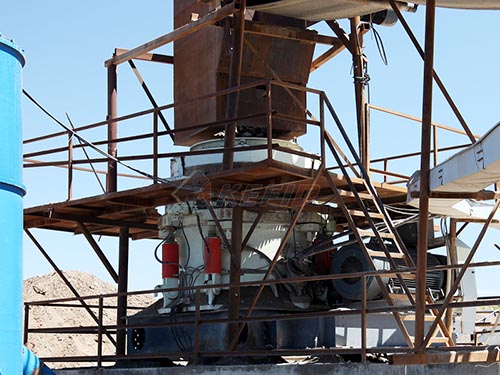
Given the high cost of capital equipment, buyers must be vigilant. A genuine CE-marked JC5000 fabricator will provide:
- A Declaration of Conformity (DoC) referencing the Machinery Directive and any harmonized standards (e.g., EN 1009-1 for crushing machinery).
- A CE mark affixed to the nameplate, which also includes the machine’s serial number, year of manufacture, weight, and power rating.
- A comprehensive technical file available for inspection upon request (though not handed over, it must be accessible).
- Evidence of a Notified Body involvement (if the machine is deemed high-risk, though jaw crushers are generally self-certified by the fabricator under Annex VIII of the Machinery Directive).
Conclusion
The CE-Marked JC5000 jaw crusher is a testament to advanced fabrication engineering. Its production is not a simple assembly of off-the-shelf parts; it is a complex, highly controlled process involving metallurgical selection, precision welding, stress-relieving, heavy machining, and rigorous testing. The CE mark serves as a guarantee that the fabricator has systematically addressed all safety and health risks, and that the machine has been built to a standard that ensures operational reliability and legal compliance within the EU market. For any buyer, understanding the fabrication nuances—from the quality of the welds to the balance of the flywheels—is essential to making an informed investment. A properly fabricated and CE-certified JC5000 will deliver decades of service, whereas a non-certified clone may pose significant safety hazards and operational inefficiencies. Therefore, the fabricator’s expertise and compliance framework are as critical as the crusher’s nominal capacity.
