
Commercial Iron Ore Crushing Plant: OEM Factory Capabilities, Design Principles, and Operational Excellence
In the global mining and metallurgical industries, the commercial iron ore crushing plant serves as a critical link between raw ore extraction and downstream processing. As an OEM (Original Equipment Manufacturer) factory, the design, fabrication, and supply of these plants demand a combination of engineering precision, metallurgical knowledge, and large-scale manufacturing capability. This article provides a detailed examination of commercial iron ore crushing plants from the perspective of an OEM factory, covering process design, equipment selection, manufacturing standards, customization, quality control, and lifecycle support.
1. The Role of a Commercial Iron Ore Crushing Plant
Iron ore is one of the most abundant and widely used mineral resources, primarily employed in steel production. Before iron ore can be smelted in blast furnaces or used in direct reduced iron (DRI) processes, it must be crushed, screened, and often beneficiated to meet granulometric and chemical specifications. A commercial iron ore crushing plant is designed to reduce run-of-mine (ROM) ore from sizes that may exceed 1,000 mm down to products typically ranging from 0–10 mm, 10–30 mm, or finer, depending on the customer’s requirements.
Unlike small-scale or mobile crushing units, a commercial plant is characterized by high throughput—often ranging from 500 to 5,000 tonnes per hour or more—continuous operation, and integration with conveying, screening, stockpiling, and sometimes grinding circuits. The OEM factory’s role is to deliver a complete, optimized system rather than individual machines.
2. OEM Factory Scope: From Design to Commissioning
An OEM factory for commercial iron ore crushing plants typically offers a full scope of supply, including:
The OEM model differs from that of a general contractor or integrator because the factory manufactures the core crushing equipment itself. This vertical integration allows for tighter quality control, faster delivery, and greater design flexibility.
3. Process Design Considerations for Iron Ore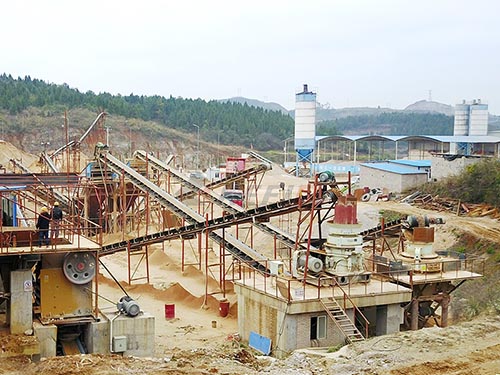
Iron ore varies significantly in hardness, abrasiveness, moisture content, and mineralogy. Hematite and magnetite are the two most common types, with magnetite generally being harder and more abrasive. The OEM factory must therefore design the crushing circuit based on ore characterization.
A typical commercial iron ore crushing plant may include:
The OEM factory uses simulation software (e.g., JKSimMet, Bruno) to predict throughput, power draw, and product size distribution. This reduces the risk of under- or over-sizing and ensures the plant meets the customer’s production targets.
4. Equipment Manufacturing Standards
As an OEM factory, manufacturing standards are paramount. Crushers and screens are subjected to extreme loads, abrasion, and fatigue. Key manufacturing considerations include:
The OEM factory also adheres to international standards such as ISO 9001, CE, and ASTM, depending on the target market.
5. Customization and Modularization
No two iron ore deposits are identical. A commercial crushing plant must be tailored to the specific ore, climate, and site constraints. OEM factories offer customization in:
Modularization is a key trend. By fabricating plant sections as transportable modules, the OEM factory reduces on-site construction time and cost. Modules are pre-assembled, pre-wired, and pre-tested before shipment.
6. Quality Control and Testing
Quality control in an OEM factory is a multi-stage process:
Documentation includes material certificates, inspection reports, operation manuals, and spare parts catalogs.
7. Automation and Digitalization
Modern commercial iron ore crushing plants incorporate advanced automation:
OEM factories increasingly offer digital twins—virtual replicas of the plant—for operator training and process optimization.
8. Environmental and Safety Features
Commercial crushing plants must comply with stringent environmental and safety regulations. OEM factories integrate:
Safety is designed into the plant, not added later. Risk assessments (e.g., HAZOP) are conducted during the design phase.
9. Logistics, Installation, and Commissioning
An OEM factory manages the logistics of oversized and heavy components. This includes special shipping frames, route surveys, and customs documentation. On-site, the OEM provides supervisory services for erection, alignment, and grouting. Commissioning involves:
10. After-Sales Support and Lifecycle Management
The OEM relationship extends beyond commissioning. Commercial iron ore crushing plants operate for decades. OEM factories provide:
A strong after-sales network is a key differentiator among OEM factories.
11. Economic and Strategic Considerations
For mining companies, selecting an OEM factory for a commercial iron ore crushing plant is a strategic decision. Factors include:
OEM factories that can demonstrate successful projects in Australia, Brazil, South Africa, India, and China are typically preferred.
12. Conclusion
A commercial iron ore crushing plant is a complex, capital-intensive asset that must deliver reliable, high-throughput performance for decades. The OEM factory model—where design, manufacturing, and service are integrated—offers significant advantages in quality, customization, and lifecycle support. From process simulation and material selection to modular fabrication and digital automation, the OEM factory acts as a true partner in the mining value chain. As iron ore demand evolves and ore bodies become more challenging, the role of the OEM factory will only grow in importance, driving innovation in crushing technology and operational excellence.
For mining companies seeking a competitive edge, engaging a qualified OEM factory early in the project cycle—ideally during feasibility studies—can reduce risks, optimize capital expenditure, and ensure a plant that meets both today’s and tomorrow’s production requirements.
If you have any questions about our products, please feel free to contact us. We take all inquiries and suggestions very seriously.