OEM Slag Crusher Plant Procurement: A Comprehensive Technical and Strategic Guide
Introduction
In the metallurgical and steel-making industries, slag—the byproduct of iron and steel production—represents both a disposal challenge and a commercial opportunity. The processing of slag into reusable aggregates, cementitious materials, or road base requires robust, high-capacity crushing and screening systems. For engineering, procurement, and construction (EPC) contractors, steel plant operators, and mineral processors, the decision to procure an Original Equipment Manufacturer (OEM) slag crusher plant is a capital-intensive, technically demanding, and strategically critical undertaking. This article provides a detailed, professional examination of the procurement process for OEM slag crusher plants, covering technical specifications, supplier evaluation, commercial frameworks, risk management, and lifecycle considerations. The objective is to equip procurement professionals and project managers with a structured methodology to secure a reliable, cost-effective, and operationally efficient system.
1. Understanding the Slag Crushing Process and Plant Architecture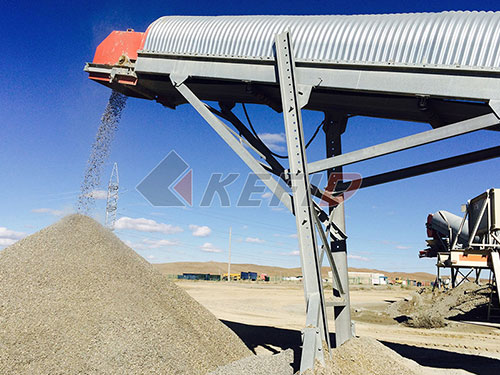
Before initiating procurement, it is essential to define the process requirements. Slag differs significantly from conventional rock in terms of abrasiveness, density, metallic content, and temperature (if hot slag is processed). A typical slag crusher plant comprises several integrated stages:
- Primary Crushing: Usually a jaw crusher or a gyratory crusher, designed to reduce large slag lumps (up to 1 meter) to a manageable size (150–200 mm). For slag with high metallic iron content, a magnetic separator is often installed before or after the primary crusher to recover scrap metal.
- Secondary Crushing: Cone crushers or impact crushers (specifically designed for slag) reduce the material to 20–50 mm. For slag, the use of a specialized “slag crusher” with a unique rotor design and wear-resistant liners is common, as standard impact crushers suffer rapid wear.
- Tertiary Crushing and Screening: Vertical shaft impactors (VSI) or high-pressure grinding rolls (HPGR) may be used for fine aggregate production. Vibrating screens classify the product into multiple fractions (e.g., 0–5 mm, 5–10 mm, 10–20 mm).
- Magnetic Separation and Metal Recovery: Overbelt magnets, drum magnets, and eddy current separators are integrated at multiple points to extract ferrous and non-ferrous metals, which are valuable byproducts.
- Dust Suppression and Collection: Given the fine particulate nature of slag dust, a comprehensive dust control system (baghouse filters, water spray nozzles, or dry fog systems) is mandatory for environmental compliance.
- Control and Automation: PLC-based control panels, remote monitoring, and variable frequency drives (VFDs) for motors ensure energy efficiency and operational safety.
An OEM (Original Equipment Manufacturer) is the entity that designs, engineers, and manufactures the core crushing equipment (crushers, screens, feeders) under its own brand. Procurement from an OEM, rather than a system integrator or reseller, ensures direct access to original spare parts, proprietary technology, and engineering support.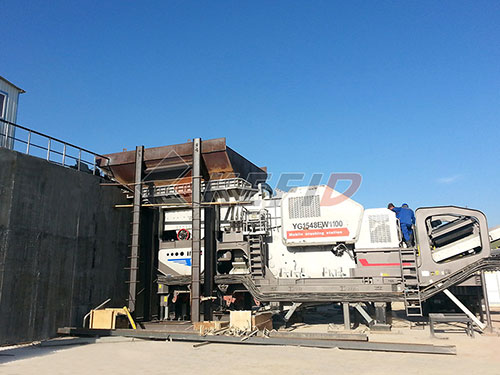
2. Pre-Procurement Technical Specifications and Feasibility
The first step in procurement is the development of a detailed technical specification document (TSD). This document serves as the contractual baseline for all bidders. Key parameters include:
- Feed Material Characteristics: Chemical composition (CaO, SiO2, MgO, FeO), moisture content, temperature (ambient vs. hot slag), and maximum lump size.
- Throughput Capacity: Expressed in tons per hour (TPH) or tons per day (TPD). This must account for peak loads, not just average production.
- Product Gradation: The required particle size distribution (PSD) for end-use applications (e.g., cement feed, aggregate for concrete, or railway ballast).
- Power Supply and Utilities: Voltage, frequency, available electrical load, and water supply for dust suppression.
- Environmental Limits: Local emission standards for particulate matter (PM10, PM2.5), noise limits (typically <85 dB at 1 meter), and wastewater discharge regulations.
- Site Constraints: Available footprint, foundation conditions, and proximity to existing infrastructure (e.g., slag pits, railway lines).
A feasibility study, including a cost-benefit analysis of metal recovery versus crushing-only operations, should be completed before issuing a request for quotation (RFQ). This study also determines whether a stationary, semi-mobile, or fully mobile plant is optimal. For brownfield steel plants, a semi-mobile plant with hydraulic walking legs may be preferred to allow relocation as the slag dump expands.
3. Supplier Selection: OEM Evaluation Criteria
Selecting the right OEM is the most consequential decision in the procurement process. The evaluation should be multi-criteria and weighted, not solely based on price. The following factors are critical:
- Proven Track Record in Slag Applications: Unlike limestone or granite, slag is highly abrasive and contains metallic iron. An OEM must demonstrate at least 10–15 successful installations in steel plants or standalone slag processing facilities. Request references and, if possible, arrange site visits to operating plants.
- Engineering and R&D Capability: The OEM should have in-house metallurgical and mechanical engineering teams capable of customizing crusher chambers, rotor configurations, and wear part alloys (e.g., high-chrome cast iron, manganese steel, or ceramic composites) for specific slag types.
- After-Sales Support and Spare Parts Availability: The OEM must maintain a regional warehouse or a guaranteed spare parts delivery time (e.g., 48 hours for critical wear parts). The availability of original parts, not generic substitutes, is essential for maintaining warranty and performance guarantees.
- Automation and Digitalization: Modern OEMs offer IoT-enabled crushers with predictive maintenance algorithms, vibration sensors, and remote diagnostics. These features reduce downtime and operational costs.
- Financial Stability and Longevity: The OEM’s balance sheet and market presence matter. A financially distressed OEM may fail to honor warranties or supply parts in the future. Review annual reports, credit ratings, and global market share.
- Compliance and Certifications: ISO 9001 (quality management), ISO 14001 (environmental management), and CE marking (for European markets) are minimum requirements. Additionally, the OEM must comply with the local safety standards of the installation country.
4. Commercial Frameworks and Contract Structuring
The procurement contract for an OEM slag crusher plant is typically structured as a lump-sum turnkey (LSTK) contract or a design, supply, and supervise (DSS) contract. The commercial terms must include:
- Scope of Supply: Clearly delineate the equipment boundary (e.g., from the slag feed hopper to the product stockpile conveyor). Include all chutes, supports, platforms, and safety guards.
- Performance Guarantees: The contract must specify guaranteed throughput (TPH), product gradation, power consumption (kWh/ton), and availability (e.g., 92% operational uptime). Liquidated damages (LDs) should be applied for non-performance, capped at a reasonable percentage (e.g., 10–15% of contract value).
- Payment Terms: A typical milestone-based schedule: 10–15% advance payment against a bank guarantee, 30–40% against approved drawings and manufacturing milestones, 30% against pre-shipment inspection, and the final 10–20% against successful commissioning and performance tests.
- Warranty and Defect Liability Period (DLP): The warranty should cover 24 months from the date of commissioning or 36 months from the date of shipment, whichever is earlier. The OEM must guarantee wear parts for a minimum operational life (e.g., 6,000 hours for crusher liners).
- Incoterms and Logistics: For international procurement, Incoterms such as FOB (Free on Board) or CIF (Cost, Insurance, and Freight) must be agreed. The buyer must account for import duties, customs clearance, and inland transportation.
- Training and Documentation: The contract must include operator and maintenance training (both classroom and on-site), as well as complete documentation: general arrangement drawings, electrical schematics, hydraulic diagrams, and a full spare parts catalog with part numbers.
5. Risk Management in OEM Procurement
Procurement of heavy industrial equipment carries inherent risks. A structured risk management plan should identify, assess, and mitigate the following:
- Technical Risk: The OEM may underperform on slag with unexpected high metallic content. Mitigation: Include a clause for performance testing with actual slag samples from the buyer’s site during the factory acceptance test (FAT).
- Schedule Risk: Delays in manufacturing or shipping can disrupt the overall project timeline. Mitigation: Require a detailed project schedule (Gantt chart) with critical path analysis. Apply LD for late delivery.
- Currency and Commodity Risk: Steel prices and foreign exchange rates can fluctuate. Mitigation: Use fixed-price contracts with a currency adjustment clause limited to a defined band (e.g., ±5%).
- Operational Risk: The plant may fail to meet environmental standards. Mitigation: Mandate third-party environmental testing during commissioning.
- Obsolescence Risk: The OEM may discontinue the model. Mitigation: Contractually require the OEM to maintain spare parts availability for a minimum of 10 years after the model’s discontinuation.
6. The Procurement Process: Step-by-Step
A disciplined procurement process typically follows these phases:
- Phase 1 – Needs Assessment and Budgeting: Define the project budget, including capital expenditure (CAPEX) and estimated operational expenditure (OPEX) over 10 years. This includes energy costs, wear parts, and maintenance labor.
- Phase 2 – RFQ and Pre-Qualification: Issue a Request for Qualification (RFQ) to a shortlist of 4–6 reputable OEMs. Evaluate their technical proposals, commercial offers, and compliance with the TSD.
- Phase 3 – Technical Bid Evaluation (TBE): A multi-disciplinary team (process engineers, mechanical engineers, electrical engineers, and environmental specialists) scores each bid against a weighted matrix. Key criteria: process design adequacy, equipment reliability, energy efficiency, and ease of maintenance.
- Phase 4 – Commercial Bid Evaluation (CBE): Compare not only the initial price but also the total cost of ownership (TCO). This includes freight, installation supervision, commissioning, training, and the cost of a recommended spare parts package (typically 2–3% of equipment cost).
- Phase 5 – Negotiation and Contract Award: Negotiate on price, delivery schedule, performance guarantees, and LD terms. The final contract should be reviewed by legal counsel with experience in international equipment supply.
- Phase 6 – Engineering and Manufacturing Oversight: Assign a dedicated project engineer to conduct periodic inspections at the OEM’s factory. Review critical drawings and approve the FAT.
- Phase 7 – Shipping, Installation, and Commissioning: Coordinate with freight forwarders and civil contractors. The OEM’s site supervisor should oversee installation and commissioning. Conduct a performance test (typically 72 hours continuous operation) to verify all guarantees.
- Phase 8 – Post-Commissioning Support: Establish a service level agreement (SLA) for annual maintenance visits, remote diagnostics, and a guaranteed response time for emergency breakdowns (e.g., 24 hours).
7. Total Cost of Ownership (TCO) and Lifecycle Considerations
The initial purchase price of an OEM slag crusher plant is often only 30–40% of the total lifecycle cost. A professional procurement strategy must evaluate TCO, which includes:
- Energy Consumption: Slag crushing is energy-intensive. A high-efficiency crusher with a VFD can reduce energy costs by 15–20% compared to a fixed-speed motor.
- Wear Parts Consumption: The cost of crusher liners, blow bars, and screen media is a major recurring expense. An OEM with advanced metallurgy (e.g., bi-metallic or composite liners) can extend wear life by 30–50%.
- Maintenance Labor: Modular designs with quick-change wear parts reduce downtime and labor costs.
- Metal Recovery Revenue: A well-designed magnetic separation system can recover 2–5% of the feed weight as scrap metal, generating significant revenue that offsets operating costs.
- Residual Value: A reputable OEM brand retains higher resale value in the secondary market.
8. Conclusion
Procuring an OEM slag crusher plant is not a transactional purchase but a long-term strategic partnership. The success of the project hinges on rigorous technical specification, meticulous supplier evaluation, robust contractual protections, and proactive risk management. By engaging directly with a proven OEM, leveraging performance-based guarantees, and focusing on total cost of ownership, buyers can ensure that their slag processing operation achieves high availability, low operating costs, and full environmental compliance. In an industry where downtime is measured in millions of dollars per day, the value of a reliable, well-procured OEM system cannot be overstated. Procurement professionals who adopt a structured, data-driven approach will not only secure the best equipment but also build a foundation for decades of efficient and profitable slag valorization.
