Coke Vibration Screen Producers Specification: Engineering Parameters, Design Standards, and Operational Criteria
Introduction
Coke, a porous carbonaceous material derived from the destructive distillation of bituminous coal, is a critical feedstock in metallurgical processes, particularly in blast furnace ironmaking and foundry operations. Its physical properties—including particle size distribution, bulk density, and mechanical strength—directly influence furnace permeability, gas flow dynamics, and overall reduction efficiency. Consequently, the screening of coke after quenching and crushing is not merely a classification step but a quality-control imperative. The equipment tasked with this separation is the vibrating screen, and its producers must adhere to a rigorous set of specifications that address material characteristics, dynamic loading, abrasive wear, and thermal stress.
This article provides a comprehensive, professional specification framework for coke vibration screen producers. It delineates the engineering parameters, material selection criteria, structural design standards, and performance validation methods that define a compliant, durable, and efficient screening system. The specification is intended for use by original equipment manufacturers (OEMs), engineering procurement and construction (EPC) contractors, and plant operators seeking to procure or evaluate such equipment.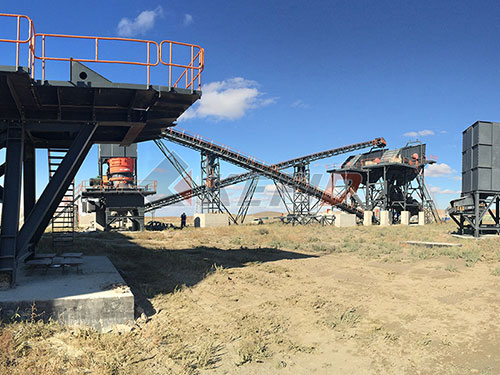
1. Material Characterization and Screening Duty
Before any mechanical design is undertaken, the producer must define the screening duty based on the physical and chemical properties of the coke. The specification must include the following feed material parameters:
- Particle Size Range: Run-of-mine coke after primary crushing typically ranges from 0 to 150 mm. The screen must handle top sizes up to 200 mm without bridging. The producer must specify the effective separation cut points, commonly at 80 mm, 40 mm, 25 mm, and 10 mm, depending on the downstream application (e.g., blast furnace nut coke vs. sinter feed).
- Bulk Density: Loose bulk density of coke varies from 400 to 600 kg/m³. The screen’s throughput calculation must use the lower bound to avoid under-designing the bed depth.
- Moisture Content: Quenched coke retains 2–5% surface moisture. This moisture, combined with fines, can cause blinding (plugging of apertures). The specification must address this via screen media selection and vibration amplitude.
- Abrasion Index: Coke has a high abrasiveness due to its sharp-edged, angular particles. The producer must specify the expected wear life of contact surfaces, typically measured in operating hours (e.g., minimum 8,000 hours for side plates, 4,000 hours for screen decks).
- Temperature: Although coke is cooled before screening, residual temperatures can reach 80–120°C. The screen’s rubber mounts, sealing strips, and bearing housings must tolerate this continuous thermal load without degradation.
2. Screen Type and Motion Characteristics
Producers must specify the type of vibrating screen based on the separation efficiency required and the plant layout. For coke, the following are standard:
- Linear Motion Screens: These employ two counter-rotating vibrators that generate a rectilinear (linear) stroke. The stroke angle (typically 30–45° to the horizontal) provides both conveying and stratification. Linear motion is preferred for fine coke (below 25 mm) due to its accurate sizing and reduced blinding tendency.
- Circular Motion Screens: A single eccentric shaft produces a circular or elliptical throw. These are used for coarse coke scalping (above 40 mm) where high throughput is more critical than sharp separation.
- Banana (Multi-Slope) Screens: For high-capacity plants, banana screens with varying deck angles (from 30° at the feed end to 10° at the discharge end) are specified. They allow a thicker bed at the feed and thinner bed at discharge, improving fines removal.
The specification must state the following dynamic parameters:
- Vibration Frequency: Typically 700 to 900 revolutions per minute (RPM) for large coke screens, and up to 1,200 RPM for smaller, fine-screening units. The producer must provide a variable-frequency drive (VFD) option to tune the frequency to the actual feed conditions.
- Stroke (Amplitude): For coke, the full stroke (peak-to-peak) should be 8–12 mm for coarse screens and 6–8 mm for fine screens. A stroke that is too low fails to fluidize the bed; too high causes particle degradation and structural fatigue.
- Acceleration (g-factor): The product of frequency and stroke must yield a resultant acceleration of 4.5 to 6.0 g at the screen deck. This ensures effective stratification without throwing coke particles off the deck.
3. Structural and Mechanical Design Specifications
The producer must adhere to the following structural specifications to ensure longevity under cyclic loading:
- Side Plates: Fabricated from high-tensile structural steel (e.g., S355J2+N per EN 10025) with a minimum thickness of 10 mm for screens up to 3 m wide, and 12 mm for wider units. All cutouts must be plasma-cut and stress-relieved. The side plates must be reinforced with internal stiffeners at the feed and discharge ends to prevent flexural fatigue.
- Cross Members and Support Beams: These must be designed as hollow rectangular sections (HRS) or I-beams, welded with full-penetration welds. The natural frequency of the cross members must be at least 20% higher than the operating frequency to avoid resonance. Finite Element Analysis (FEA) reports must be submitted by the producer to demonstrate deflection under maximum dynamic load is less than 1/1,500 of the span.
- Vibrator Assembly: The exciter (vibrator) must be a cartridge-type, oil-lubricated unit with spherical roller bearings. Bearing life (L10) must exceed 50,000 hours at rated load. The vibrator housing must be machined from forged steel or ductile iron (GGG-70) to withstand high centrifugal forces. The specification requires a dual-shaft, four-bearing design for linear motion units to balance the dynamic forces.
- Screen Media (Decks): The producer must offer multiple media options:
- Polyurethane Panels: For fine screening (below 10 mm), with aperture tolerances of ±0.5 mm. These panels must be modular (e.g., 300 mm × 300 mm) and tensioned via a rail system.
- Self-Cleaning (Tensioned) Wire Mesh: For medium cuts (10–40 mm), made of spring steel (e.g., 65Mn) with a minimum wire diameter of 5 mm. The mesh must be equipped with a secondary layer of “ball trays” or rubber rings to prevent blinding.
- Perforated Steel Plates: For coarse cuts (above 40 mm), with hole diameters of 50, 60, or 80 mm. Plate thickness must be 8–10 mm, with a minimum open area of 45%. The plates must be bolted, not welded, to allow rapid replacement.
- Mounting System: The screen must be supported on helical steel springs or pneumatic (air-bag) isolators. The static deflection of the springs must be between 8 and 12 mm to achieve 90% vibration isolation from the supporting structure. The producer must specify the isolator’s natural frequency (typically 2.5–3.5 Hz) to avoid transmitting harmful vibrations to the building or chutes.
4. Wear Protection and Corrosion Resistance
Coke screening is an abrasive process. The specification mandates the following:
- Feed Box and Discharge Lip: These areas must be lined with 20 mm thick cast basalt or 12 mm thick AR500 (abrasion-resistant) steel. The liners must be replaceable via bolted connections, not welded, to reduce downtime.
- Side Plate Liners: The lower 300 mm of the side plates, where coke impacts during transport, must be covered with 10 mm thick ceramic tile or rubber-lined steel. This prevents premature wear and subsequent structural failure.
- Surface Treatment: All external carbon steel surfaces must be grit-blasted to Sa 2.5 (near-white metal) and coated with a two-pack epoxy zinc-rich primer (80 µm dry film thickness) followed by a polyurethane topcoat (60 µm). The total DFT must be minimum 140 µm. For internal surfaces exposed to moisture, a coal-tar epoxy (200 µm) is specified.
5. Safety and Operational Specifications
- Guarding: All moving parts, including the vibrator shaft ends, V-belts, and drive motors, must be enclosed in removable, lockable guards conforming to ISO 14120. The guards must be perforated to allow heat dissipation but with apertures less than 10 mm.
- Lubrication: The vibrator must have a centralized lubrication system with a visible oil level sight glass. The specification requires automatic grease lubrication (for open-type bearings) or a forced oil circulation system (for large units). The producer must state the recommended oil grade (e.g., ISO VG 220 synthetic gear oil) and the change interval (e.g., every 2,000 hours).
- Access Platforms: The screen must be supplied with a walkway on both sides, at least 800 mm wide, with a non-slip grating and a 1,100 mm high handrail. Access ladders must conform to OSHA or EN ISO 14122 standards.
- Emergency Stop: A pull-cord emergency stop switch must be installed along the full length of the screen, connected to the motor starter circuit.
6. Performance Testing and Acceptance Criteria
The producer must provide a documented testing protocol, including:
- No-Load Test: Run the screen for 4 hours without feed. Measure vibration amplitude at four corners (feed and discharge, left and right). The variation between any two points must not exceed ±0.5 mm. Bearing temperature must stabilize below 70°C.
- Load Test: Feed the screen with representative coke at 100% rated capacity for 8 hours. Measure screening efficiency, defined as the percentage of undersize material passing through the deck relative to the total undersize in the feed. For coke, the minimum acceptable efficiency is 90% for cuts above 25 mm, and 85% for cuts below 10 mm.
- Noise Level: The A-weighted sound pressure level at 1 meter from the screen must not exceed 90 dB(A) under load.
- Structural Integrity: After the load test, a dye-penetrant or magnetic particle inspection must be performed on all critical welds. No cracks or linear indications are acceptable.
7. Documentation and Deliverables
The producer must supply the following documentation with each unit:
- General Arrangement Drawing (GA) showing dimensions, weights, and connection points.
- Vibration Analysis Report including a Campbell diagram (frequency vs. speed) to demonstrate no resonance within the operating range.
- Bearing Calculation Sheet detailing dynamic load rating, equivalent load, and calculated L10 life.
- Material Certificates (EN 10204 3.1) for all steel plates, shafts, and bearings.
- Operation and Maintenance Manual including a detailed parts list, lubrication schedule, and troubleshooting guide.
- Spare Parts List with recommended stock levels for a 2-year operation (e.g., screen panels, springs, bearings, seals).
8. Quality Assurance and Compliance
Producers must operate under an ISO 9001:2015 certified quality management system. Additionally, the screen must comply with:
- CE Marking (Machinery Directive 2006/42/EC) for European installations.
- ATEX Directive 2014/34/EU if the screen is located in a potentially explosive atmosphere (e.g., near coke oven gas). In such cases, the motor and electrical components must be Ex-rated.
- API or ASTM standards for material testing, where applicable.
Conclusion
The specification for a coke vibration screen is a multi-faceted document that balances process performance with mechanical durability. Producers must not treat a screen as a generic piece of equipment; rather, they must engineer it specifically for the unique challenges of coke—its angularity, moisture, temperature, and high abrasion. By adhering to the parameters outlined above—motion characteristics, structural steel grades, wear protection, dynamic testing, and rigorous documentation—a producer can deliver a screen that offers reliable operation, minimal downtime, and a service life exceeding 15 years. Conversely, buyers must use these specifications as a checklist during technical bid evaluation to avoid substandard equipment that leads to frequent failures and reduced blast furnace productivity. In the demanding environment of a steel plant, the vibration screen is a silent workhorse, and its specification is the contract that ensures it never fails silently.
