
Title: The Economic and Operational Imperative of ISO-Certified Crushing and Screening Equipment: A Wholesale Market Analysis
Introduction
In the global aggregates, mining, and construction recycling industries, the crushing and screening equipment sector represents a critical bottleneck—and a significant capital expenditure—for any operation. From primary jaw crushers that reduce run-of-mine ore to fine cone crushers and high-frequency vibrating screens that produce spec-compliant aggregates, the machinery’s reliability directly dictates project profitability. For procurement managers, contractors, and mining operators, the term “wholesale price” often triggers a race to the bottom. However, a more sophisticated understanding reveals that the intersection of ISO certification and wholesale pricing creates a distinct market tier—one that balances upfront cost reduction with long-term operational integrity. This article provides a comprehensive, professional analysis of ISO-certified crushing and screening equipment available at wholesale prices, examining the certification’s technical significance, the structural economics of wholesale distribution, and the critical factors that distinguish genuine value from false economy.
Section 1: Decoding ISO Certification in Heavy Machinery
ISO (International Organization for Standardization) certification is not a single, monolithic standard. For crushing and screening equipment, several specific standards apply, each with distinct implications for the buyer.
ISO 9001:2015 (Quality Management Systems): This is the most common baseline. It certifies that the manufacturer’s design, production, installation, and servicing processes are consistently monitored and improved. For a crusher, this means that the welding procedures, heat treatment of manganese steel liners, and assembly tolerances follow documented, audited protocols. A wholesale buyer must verify that the ISO 9001 certificate covers the specific plant where the equipment is manufactured, not merely the corporate headquarters.
ISO 14001 (Environmental Management): In an era of tightening environmental regulations, this certification is increasingly non-negotiable. It ensures that the manufacturing process minimizes waste, manages coolant and lubricant disposal, and controls particulate emissions. For the end-user, this indirectly affects the equipment’s compliance with local noise and dust regulations, as ISO 14001 manufacturers tend to design enclosures and dust suppression systems with higher intrinsic quality.
ISO 45001 (Occupational Health & Safety): This certification pertains to the safety of the workers who build the equipment. While it may seem distant from the product itself, it is a strong proxy for manufacturing discipline. A factory that protects its own workers is statistically more likely to produce machinery with properly guarded flywheels, safe access platforms, and compliant emergency stop systems.
ISO 9001 vs. Product-Specific Standards (e.g., CE Marking): It is crucial to distinguish ISO certification from CE marking. While CE is a legal requirement for sale in the European Economic Area (indicating conformity with health, safety, and environmental protection standards), ISO 9001 is a voluntary quality management system. The presence of both is the gold standard. A wholesale offer that cites only “ISO” without specifying the standard number (e.g., “ISO 9001:2015”) is a red flag requiring immediate clarification.
Section 2: The Structural Economics of Wholesale Pricing
The term “wholesale price” in the crushing and screening sector is not a simple discount. It is a function of volume, logistics, and market positioning. Understanding this structure is essential for evaluating a quote.
2.1 Volume-Based Cost Amortization
Wholesale pricing typically applies to bulk orders—e.g., a complete crushing plant (feeder, jaw crusher, cone crusher, vibrating screens, and conveyors) or a fleet of multiple mobile units. The manufacturer’s cost structure benefits from:
2.2 The “Gray Market” vs. Authorized Wholesale
A critical distinction must be made between authorized wholesale distribution and the gray market. Authorized wholesalers are direct partners of the OEM (Original Equipment Manufacturer) or large-scale regional distributors. They offer:
Gray market wholesalers, often operating via online marketplaces, may offer prices 15-30% lower. However, they often source equipment from distressed assets, cancelled orders, or parallel imports. Such equipment may lack the correct voltage configuration, have non-compliant safety guards, or have voided warranties. For ISO-certified equipment, the certification is tied to the manufacturing process, not the reseller. A gray market unit may be physically identical, but the buyer loses the certified supply chain that guarantees traceability of materials and components.
2.3 The Total Cost of Ownership (TCO) Model
A professional procurement strategy must calculate TCO, not just the invoice price. The TCO for crushing and screening equipment includes: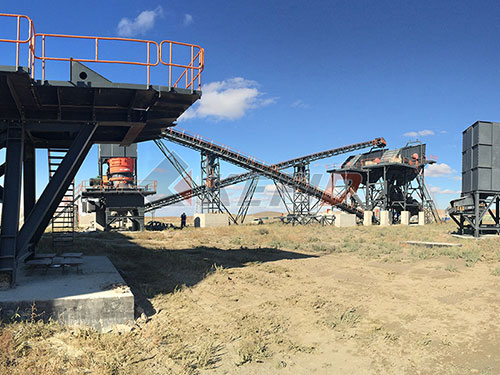
Section 3: Technical Specifications That Justify Wholesale Investment
When evaluating ISO-certified equipment at wholesale prices, the buyer must scrutinize specific technical parameters to ensure the discount is not a result of de-specification.
3.1 Primary Jaw Crushers
3.2 Cone Crushers
3.3 Vibrating Screens
Section 4: The Wholesale Market Landscape – Major Players and Regional Dynamics
The global market for crushing and screening equipment is dominated by a few major OEMs—Metso Outotec, Sandvik, Terex, and Astec Industries—alongside a robust tier of Chinese manufacturers such as SBM, Shanghai Shibang (SBM), and Zhengzhou Yifan. The wholesale price differential between these tiers can be 30-50%.
Section 5: Risk Mitigation in Wholesale Procurement
To secure a genuine ISO-certified wholesale price without compromising quality, the following professional steps are mandatory:
Audit the Certificate: Request a copy of the ISO 9001:2015 certificate and verify its validity on the certifying body’s database (e.g., BSI, TÜV, SGS). Check the scope of certification—it must explicitly mention “crushing and screening equipment” or “mineral processing machinery.”
Demand a Pre-Shipment Inspection: Engage an independent inspection agency (e.g., SGS, Bureau Veritas) to conduct a pre-shipment inspection at the factory. The inspector should verify:
Negotiate Spare Parts Inclusion: A true wholesale price should include a “commissioning spare parts kit” (e.g., a set of hydraulic hoses, seals, and a spare V-belt). This is a standard practice among ISO-certified manufacturers and indicates a professional supply chain.
Clarify the Warranty Terms: ISO-certified equipment typically carries a warranty against manufacturing defects, not wear and tear. Ensure the warranty covers the main frame, eccentric shaft, and bearings for at least 12 months from the date of commissioning, not the date of shipment.
Evaluate the After-Sales Network: Even at a wholesale price, the buyer must have access to technical support. Ask for a list of service engineers in your region or a remote diagnostic protocol. A manufacturer that cannot provide a 24-hour response for a critical spare part is not offering a true wholesale value.
Section 6: The Future of ISO-Certified Wholesale Equipment
The industry is shifting toward digitalization and sustainability. ISO-certified manufacturers are now integrating IoT (Internet of Things) sensors into their crushers and screens, allowing remote monitoring of bearing temperature, oil pressure, and wear rates. Wholesale contracts increasingly include a “digital service package” where the manufacturer monitors the equipment in real-time and provides predictive maintenance alerts. This reduces the total cost of ownership by up to 15% by preventing catastrophic failures.
Furthermore, the push for circular economy is driving demand for mobile crushing and screening plants that can process construction and demolition waste on-site. ISO 14001-certified manufacturers are leading this segment, offering equipment with lower carbon footprints and higher recycling rates. Wholesale buyers should consider the long-term regulatory landscape: as carbon taxes and emission limits tighten, equipment with higher ISO environmental compliance will retain its value better.
Conclusion
Purchasing ISO-certified crushing and screening equipment at wholesale prices is a sophisticated financial and engineering decision. It is not merely about securing a low invoice amount; it is about securing a certified production system that guarantees uptime, safety, and operational efficiency. The wholesale price should be viewed as the entry ticket to a long-term partnership with a manufacturer whose processes are audited, whose materials are traceable, and whose after-sales support is contractual.
The professional buyer must perform due diligence on the specific ISO standard, the scope of the certificate, the TCO model, and the integrity of the wholesale distributor. By doing so, they can leverage the economies of scale inherent in wholesale purchasing without falling victim to the hidden costs of non-certified, gray-market equipment. In an industry where a single hour of unplanned downtime can cost thousands of dollars, the true wholesale price of ISO-certified equipment is not the cost of the machine—it is the cost of certainty. And that certainty, certified by an independent body, is the most valuable commodity in the crushing and screening market.
If you have any questions about our products, please feel free to contact us. We take all inquiries and suggestions very seriously.