
Title: The Economics of Crushing: A Comprehensive Analysis of Affordable Stone Crusher Machine Factories
Introduction
In the global construction, mining, and infrastructure development sectors, the stone crusher machine stands as an indispensable piece of equipment. From producing aggregates for concrete to breaking down rocks for road base, these machines form the backbone of material processing. However, for small-to-medium enterprises (SMEs) and emerging market contractors, the cost of acquiring such machinery can be a significant barrier. This has given rise to a critical niche: the affordable stone crusher machine factory. This article provides a professional, objective, and detailed examination of what constitutes an affordable stone crusher machine factory, the factors that influence pricing, the trade-offs between cost and quality, and how buyers can make informed decisions in a competitive global market.
1. Defining “Affordable” in the Context of Stone Crushers
The term “affordable” is inherently relative. In the heavy machinery industry, affordability does not simply mean the lowest purchase price. Rather, it encompasses a holistic cost of ownership that includes initial capital expenditure, operational costs (fuel, electricity, wear parts), maintenance frequency, and downtime losses. An affordable stone crusher machine factory is one that offers equipment with a competitive upfront price while maintaining acceptable levels of reliability, efficiency, and after-sales support.
Typically, affordable stone crushers are found in the mid-range and entry-level segments. These machines are often manufactured in countries with lower labor and raw material costs, such as China, India, Turkey, and parts of Southeast Asia. However, “affordable” should never be conflated with “cheap” or “low-quality.” A reputable affordable factory balances cost reduction through optimized supply chains, standardized production, and economies of scale, rather than by compromising on critical engineering standards.
2. Key Machine Types and Their Price Determinants
To understand affordability, one must first understand the types of stone crushers commonly produced:
Jaw Crushers: Used for primary crushing. Affordable models typically range from $5,000 to $50,000 for small-to-medium capacities (5-100 tons per hour). Price is driven by jaw plate material (manganese steel vs. high-chrome), bearing quality, and frame construction (cast steel vs. welded plate).
Cone Crushers: For secondary and tertiary crushing. Entry-level cone crushers can cost between $20,000 and $80,000. Key cost factors include the eccentric bushing material, hydraulic system complexity, and automation level.
Impact Crushers (Horizontal Shaft Impactors – HSI, and Vertical Shaft Impactors – VSI): Used for shaping and fine crushing. Affordable HSI models start around $10,000, while VSI machines can be $15,000-$60,000. Wear parts (blow bars, anvils, rotor tips) are the primary cost drivers.
Hammer Crushers: Simple in design, often the most affordable, with prices from $3,000 to $20,000. However, they are less efficient for hard rock and have higher wear rates.
Mobile Crushing Plants: These integrated units (feeder, crusher, conveyor, screen on a chassis) are more expensive, but affordable options exist in the $30,000-$150,000 range, often using diesel engines and manual controls.
3. The Manufacturing Ecosystem of Affordable Factories
An affordable stone crusher machine factory typically operates with the following characteristics:
Vertical Integration: Many factories in cost-competitive regions produce their own castings, steel structures, and even motors. This reduces reliance on external suppliers and cuts costs by 15-30%.
Standardized Designs: Instead of custom engineering for every order, affordable factories offer modular designs. This allows for mass production of common components (e.g., eccentric shafts, toggle plates, flywheels), reducing per-unit costs.
Local Sourcing of Raw Materials: Factories located near steel mills or foundries benefit from lower transportation costs for heavy components. For example, Chinese factories in Henan or Sichuan provinces have access to local steel and casting clusters.
Labor Cost Advantage: Skilled labor in developing nations is significantly cheaper than in Europe or North America. However, this does not necessarily mean lower quality; many factories employ experienced engineers who have worked for international brands.
Simplified After-Sales Support: Affordable factories often provide basic manuals, spare parts lists, and remote technical support rather than on-site commissioning. This reduces overhead but places more responsibility on the buyer.
4. Quality vs. Cost: Critical Trade-offs
While affordable factories can deliver functional machines, buyers must be aware of common compromises:
Material Quality: Lower-cost crushers may use thinner steel plates for the frame, lower-grade manganese for jaw plates, or cheaper bearings (e.g., domestic brands vs. SKF or NSK). This can lead to faster wear, more frequent breakdowns, and reduced lifespan (e.g., 5-8 years vs. 15-20 years for premium brands).
Precision and Tolerances: Affordable machines may have looser machining tolerances, leading to higher vibration, noise, and energy consumption. This can increase operational costs over time.
Automation and Safety: Entry-level crushers often lack advanced PLC controls, hydraulic adjustment systems, or safety interlocks. This means more manual labor, higher risk of operator error, and potential safety hazards.
Spare Parts Availability: While the initial machine is cheap, proprietary or non-standard parts may be difficult to source. Some factories use non-standard bolt sizes or unique wear part geometries, forcing buyers to return to the same factory for replacements.
5. Global Market Leaders in Affordable Stone Crushers
Several countries and regions have established themselves as hubs for affordable stone crusher manufacturing:
China: The dominant player, with thousands of factories in provinces like Henan (Zhengzhou), Shandong, and Jiangsu. Brands like Zhengzhou Yifan, Shanghai Shibang (SBM), and Henan Hongxing offer a wide range of affordable machines. Chinese factories benefit from massive scale, government export incentives, and mature supply chains.
India: Known for robust, simple designs. Indian manufacturers like L&T, Puzzolana, and Singh Crushers offer affordable machines with good reliability, especially for the domestic and African markets. Indian crushers often emphasize ease of maintenance.
Turkey: Turkish factories (e.g., FABO, MEKA, General Makina) are known for high-quality, affordable mobile crushers and concrete plants. They combine European engineering standards with competitive labor costs.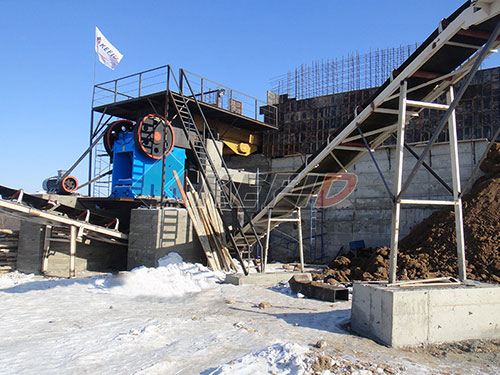
Brazil and South Africa: Regional players offer affordable machines tailored to local rock types and regulations, though their global reach is limited.
6. How to Evaluate an Affordable Stone Crusher Factory
To ensure that “affordable” does not become “expensive in the long run,” buyers should conduct due diligence:
Request a Detailed Bill of Materials (BOM): Ask for the brand and origin of key components: bearings, motors, electrics, hydraulic pumps, and wear parts. Avoid factories that cannot provide this information.
Inspect the Factory (or Request a Video Tour): Look for organized production lines, quality control checkpoints, and inventory of spare parts. A messy, disorganized factory often indicates poor quality management.
Check Certifications: ISO 9001 (quality management) and CE (European safety standards) are good indicators. However, note that some factories purchase fake certificates. Verify with the issuing body if possible.
Ask for Customer References: Contact previous buyers, especially those in similar operating conditions (e.g., hard rock, high humidity, remote locations). Ask about downtime, spare parts availability, and factory responsiveness.
Calculate Total Cost of Ownership (TCO): Factor in shipping, customs, installation, training, and estimated annual maintenance costs. A machine that is 20% cheaper upfront but requires 30% more frequent part replacement may be more expensive over 5 years.
Negotiate Spare Parts Packages: Many affordable factories offer a “starter kit” of wear parts (e.g., 1 set of jaw plates, 2 sets of blow bars) at a discounted price. This can save significant costs later.
7. The Role of Technology in Reducing Costs
Modern affordable factories are increasingly adopting technology to lower costs without sacrificing quality:
CNC Machining: Even budget factories now use CNC lathes and machining centers for critical parts like eccentric shafts and bearing housings, ensuring consistent tolerances.
Simulation Software: Finite Element Analysis (FEA) is used to optimize frame designs, reducing material weight while maintaining strength. This lowers steel costs and shipping weight.
Modular Design: Standardized modules (e.g., same feeder for multiple crusher models) reduce inventory costs and simplify assembly.
E-commerce and Direct Sales: Many factories now sell directly to end-users via Alibaba, Made-in-China, or their own websites, bypassing distributors and reducing markups by 10-20%.
8. Case Study: A Typical Affordable Stone Crusher Purchase
Consider a hypothetical buyer in Kenya needing a 50-ton-per-hour jaw crusher for basalt. A premium European brand quotes $80,000 ex-works. An affordable Chinese factory quotes $28,000 ex-works. The buyer chooses the Chinese option.
9. Risks and Mitigation Strategies
Buying from an affordable factory carries inherent risks:
Counterfeit Components: Some factories use fake brand-name bearings or motors. Mitigation: Request original invoices from the component supplier or use third-party inspection services (e.g., SGS, Bureau Veritas).
Poor After-Sales Communication: Language barriers and time zone differences can delay support. Mitigation: Insist on a dedicated English-speaking sales engineer and a written service agreement.
Shipping Damage: Heavy crushers are prone to damage during sea freight. Mitigation: Specify robust export packing (e.g., steel frame crates, waterproofing) and purchase marine insurance.
Obsolescence: Some factories discontinue models quickly, making spare parts unavailable. Mitigation: Choose factories with a long history (10+ years) and a wide product range.
10. Future Trends in Affordable Stone Crusher Manufacturing
The market for affordable stone crushers is evolving:
Hybrid and Electric Drives: To reduce fuel costs, affordable factories are developing diesel-electric hybrid mobile crushers. These are slightly more expensive upfront but offer significant operational savings.
IoT and Remote Monitoring: Even budget machines now offer basic telematics (e.g., vibration sensors, temperature monitoring) to predict failures and reduce downtime.
Wear Part Innovation: Affordable factories are experimenting with ceramic inserts and composite materials to extend wear part life, narrowing the gap with premium brands.
Sustainability: Factories are increasingly using recycled steel and energy-efficient production methods, appealing to environmentally conscious buyers.
Conclusion
An affordable stone crusher machine factory is not a myth, but it requires careful navigation. The key is to distinguish between “cheap” (low initial cost, high long-term risk) and “affordable” (competitive price with acceptable performance and support). By understanding the manufacturing ecosystem, evaluating critical components, and calculating total cost of ownership, buyers can successfully source cost-effective crushing solutions that meet their operational needs. In a world where infrastructure development is accelerating, the role of these factories in democratizing access to essential machinery cannot be overstated. The future belongs to factories that can deliver not just low prices, but also reliability, transparency, and innovation—making stone crushing truly affordable for all.
If you have any questions about our products, please feel free to contact us. We take all inquiries and suggestions very seriously.