Certified Top Ten Stone Crusher Machine Cost: A Comprehensive Analysis of Pricing, Factors, and Market Leaders
The global mining and construction industries rely heavily on stone crusher machines to process raw materials into aggregates for infrastructure, road building, and concrete production. For procurement managers, project planners, and quarry operators, understanding the cost of certified top-tier stone crusher machines is critical for budgeting, operational efficiency, and long-term return on investment (ROI). This article provides an in-depth, objective analysis of the cost structure for the top ten certified stone crusher machines on the market, examining the factors that influence pricing, the range of costs across different machine types, and the key manufacturers that dominate the industry.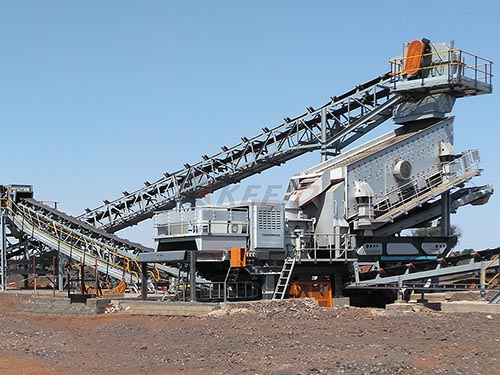
1. Introduction to Stone Crusher Machine Costs
Stone crusher machines vary widely in price, from a few thousand dollars for small, portable units to several million dollars for large, stationary, high-capacity systems. The term “certified” in this context refers to machines that meet international quality, safety, and environmental standards, such as ISO 9001, CE (Conformité Européenne), or ANSI (American National Standards Institute) certifications. Certified machines typically command a premium price due to rigorous testing, superior materials, and compliance with regulatory requirements. However, they also offer lower downtime, higher efficiency, and better resale value.
The top ten certified stone crusher machines are not ranked solely by price but by a combination of market reputation, performance, durability, and total cost of ownership (TCO). The following sections break down the cost ranges and key characteristics of these machines, with a focus on the most common types: jaw crushers, cone crushers, impact crushers, and gyratory crushers.
2. Factors Influencing Stone Crusher Machine Cost
Before delving into specific models, it is essential to understand the variables that determine the final price of a certified stone crusher. These factors include:
- Machine Type and Design: Jaw crushers are generally the most affordable, while gyratory crushers and high-capacity cone crushers are more expensive due to their complex engineering and larger throughput capacities.
- Capacity and Throughput: Machines designed to process 100–200 tons per hour (tph) cost significantly less than those handling 500–1,000 tph. Higher capacity requires larger motors, heavier frames, and more robust crushing chambers.
- Material Quality and Build: Certified machines use high-grade steel, wear-resistant alloys (e.g., manganese steel for liners), and precision bearings. These materials increase upfront cost but reduce maintenance expenses.
- Automation and Control Systems: Advanced crushers feature PLC (Programmable Logic Controller) systems, remote monitoring, and automatic adjustment of settings. These features add 10–20% to the base price.
- Brand and Warranty: Established brands like Metso, Sandvik, and Terex charge a premium for their reputation, after-sales service, and comprehensive warranties (often 2–5 years).
- Certification Costs: Obtaining ISO, CE, or other certifications involves additional design and testing expenses, which are passed on to the buyer.
- Transportation and Installation: Large crushers require specialized shipping (e.g., flatbed trucks or containerized freight) and on-site assembly, which can add 5–15% to the total cost.
- Customization: Machines tailored for specific materials (e.g., hard granite vs. soft limestone) or specific site conditions (e.g., mobile vs. stationary) incur extra engineering costs.
3. Top Ten Certified Stone Crusher Machines and Their Cost Ranges
The following list represents ten of the most widely recognized certified stone crusher machines, based on global market share, user reviews, and industry certifications. Prices are in USD and reflect new, certified units as of 2025. Note that costs can vary by region, dealer, and configuration.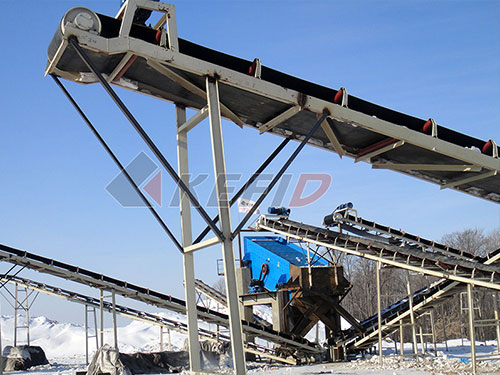
1. Metso Nordberg C Series Jaw Crusher (e.g., C120)
- Type: Jaw crusher (primary)
- Capacity: 200–800 tph
- Certification: ISO 9001, CE
- Cost Range: $150,000 – $500,000
- Overview: The Metso C Series is the industry benchmark for primary crushing. The C120 model, with a 1,200 x 870 mm feed opening, costs around $350,000 for a standard configuration. Its robust design and high reduction ratio justify the premium price. Lower-cost variants (e.g., C80) start at $150,000.
2. Sandvik CH Series Cone Crusher (e.g., CH660)
- Type: Cone crusher (secondary/tertiary)
- Capacity: 150–500 tph
- Certification: CE, ANSI
- Cost Range: $200,000 – $600,000
- Overview: Sandvik’s CH series is known for its hydraulic adjustment and automation. The CH660, a mid-range model, costs approximately $350,000–$450,000. The price reflects its ASRi (Automatic Setting Regulation) system, which optimizes production and reduces wear.
3. Terex Finlay J-1175 Jaw Crusher
- Type: Mobile jaw crusher
- Capacity: 150–400 tph
- Certification: CE, EPA
- Cost Range: $250,000 – $450,000
- Overview: This tracked mobile unit is popular for recycling and quarrying. Its cost includes a diesel engine, hydraulic drive, and on-board screening. The J-1175 typically sells for $380,000–$420,000, making it a mid-to-high-priced mobile option.
4. Kleemann MC 110 Z EVO Jaw Crusher
- Type: Mobile jaw crusher
- Capacity: 200–350 tph
- Certification: CE, ISO
- Cost Range: $300,000 – $550,000
- Overview: Kleemann (a Wirtgen Group brand) offers high-quality German engineering. The MC 110 Z EVO features a continuous feed system and costs around $450,000. Its price is justified by low fuel consumption and high mobility.
5. Nordberg HP Series Cone Crusher (e.g., HP300)
- Type: Cone crusher (secondary/tertiary)
- Capacity: 200–500 tph
- Certification: ISO, CE
- Cost Range: $250,000 – $700,000
- Overview: The HP series is Metso’s high-performance cone crusher line. The HP300, a popular model for medium-to-large operations, costs $400,000–$550,000. Its patented “multi-cylinder” design provides high reduction ratios and excellent particle shape.
6. Sandvik QJ341+ Mobile Jaw Crusher
- Type: Mobile jaw crusher
- Capacity: 300–400 tph
- Certification: CE, Tier 4 Final (engine)
- Cost Range: $350,000 – $500,000
- Overview: The QJ341+ is Sandvik’s best-selling mobile crusher. It includes a pre-screen for fines removal, reducing wear. The price, around $420,000–$480,000, reflects its advanced hydraulics and remote control.
7. Terex Pegson XR400S Jaw Crusher
- Type: Mobile jaw crusher
- Capacity: 250–400 tph
- Certification: CE, ISO
- Cost Range: $280,000 – $450,000
- Overview: This older but still widely used model is known for its reliability. A certified refurbished unit costs $200,000–$300,000, while a new one is $380,000–$430,000. It is a cost-effective option for medium-scale operations.
8. Lippmann 4800R Impact Crusher
- Type: Impact crusher (primary/secondary)
- Capacity: 300–500 tph
- Certification: ISO, CE
- Cost Range: $300,000 – $600,000
- Overview: Lippmann’s 4800R is a heavy-duty impactor designed for hard rock. Its cost, typically $450,000–$550,000, includes a large rotor and hydraulic apron adjustment. It is ideal for producing cubical aggregates.
9. Cedarapids MVP450X Cone Crusher
- Type: Cone crusher (secondary/tertiary)
- Capacity: 200–450 tph
- Certification: ISO, CE
- Cost Range: $250,000 – $500,000
- Overview: The MVP450X, manufactured by Terex, features a roller-bearing design for lower friction. It costs around $350,000–$420,000. Its price is competitive for a cone crusher with a 45-inch head diameter.
10. McCloskey J50 Jaw Crusher
- Type: Mobile jaw crusher
- Capacity: 300–500 tph
- Certification: CE, EPA
- Cost Range: $320,000 – $480,000
- Overview: McCloskey’s J50 is a rugged, high-output machine. It costs approximately $400,000–$450,000, including a 50-inch jaw and hydraulic drive. Its price is moderate for its capacity class.
4. Cost Comparison by Crusher Type
To provide a clearer perspective, the following table summarizes average certified costs for new machines (2025 estimates):
| Crusher Type |
Typical Capacity (tph) |
Price Range (USD) |
Key Features |
| Small Jaw Crusher (stationary) |
50–150 |
$50,000 – $150,000 |
Manual adjustment, low automation |
| Medium Jaw Crusher (mobile) |
200–400 |
$250,000 – $500,000 |
Hydraulic drive, pre-screen |
| Large Cone Crusher (stationary) |
300–800 |
$400,000 – $1,200,000 |
PLC control, automated setting |
| Impact Crusher (mobile) |
200–500 |
$300,000 – $600,000 |
High reduction ratio, cubical product |
| Gyratory Crusher (stationary) |
1,000–5,000 |
$1,500,000 – $5,000,000 |
Extreme capacity, heavy-duty |
5. Total Cost of Ownership (TCO) Considerations
The purchase price is only one component of the total cost. Certified machines often have lower TCO due to:
- Wear Parts: High-quality liners and hammers last 20–30% longer than non-certified alternatives. For example, Metso’s manganese steel liners for a C120 jaw crusher cost $8,000–$12,000 per set but last 6–12 months under normal conditions.
- Energy Efficiency: Modern crushers with variable frequency drives (VFDs) and efficient motors reduce electricity costs by 10–15%. A 300-hp motor running 8 hours/day can save $5,000–$10,000 annually.
- Maintenance: Certified machines have standardized parts and global service networks. Sandvik, for instance, offers 24/7 remote diagnostics, reducing downtime.
- Resale Value: A well-maintained certified crusher retains 50–70% of its value after 5 years, compared to 30–40% for non-certified units.
6. Regional Cost Variations
Costs can differ by region due to import duties, local taxes, and dealer margins:
- North America: Prices are 10–15% higher than global averages due to stringent EPA and OSHA regulations. A Sandvik QJ341+ costs $450,000–$500,000 in the US.
- Europe: CE certification is mandatory, adding 5–10% to the base price. Kleemann crushers are 15–20% cheaper in Germany than in Asia.
- Asia (India, China): Local manufacturers (e.g., Sandvik’s Chinese joint ventures) offer certified machines at 20–30% lower prices. A Metso C120 made in China costs $250,000–$300,000.
- Middle East and Africa: Import costs and logistics can increase prices by 20–40%. A Terex Finlay J-1175 in Nigeria may cost $500,000–$550,000.
7. Conclusion
The cost of certified top ten stone crusher machines ranges from $150,000 for entry-level jaw crushers to over $1 million for high-capacity cone or gyratory crushers. The most popular models, such as the Metso C Series, Sandvik CH Series, and Terex Finlay J-1175, fall in the $300,000–$500,000 range for medium-capacity applications. While the upfront investment is significant, certified machines offer superior reliability, lower operating costs, and higher resale value, making them a sound long-term investment for serious quarry and mining operations.
When selecting a crusher, buyers should evaluate not only the purchase price but also the TCO, including energy consumption, wear parts, and maintenance support. Engaging with certified dealers, requesting detailed quotes, and considering regional manufacturing options can further optimize costs. Ultimately, the right certified stone crusher machine is one that balances initial expenditure with operational efficiency and durability, ensuring a profitable and sustainable crushing operation.
