
Custom Stone Crusher Machine Brochure: Engineering Precision for Diverse Crushing Applications
Introduction
In the modern mining, quarrying, and construction industries, the demand for aggregate materials continues to rise. From road base and concrete aggregates to railway ballast and manufactured sand, the quality and consistency of crushed stone directly impact the integrity of infrastructure projects. While standard stone crusher machines offer generalized solutions, they often fall short when faced with unique material characteristics, specific production targets, or challenging site conditions. This is where the concept of a Custom Stone Crusher Machine becomes indispensable. A custom stone crusher is not merely a piece of equipment; it is an engineered solution tailored to the precise mineralogical, physical, and operational requirements of a given project. This brochure provides a comprehensive, technical overview of custom stone crusher machines, detailing their design philosophy, key components, customization parameters, performance benefits, and application scenarios. The objective is to equip decision-makers—quarry owners, project managers, and procurement specialists—with the knowledge necessary to evaluate and invest in a crushing solution that maximizes efficiency, reduces downtime, and delivers a superior return on investment.
Section 1: The Rationale for Customization
Standard off-the-shelf crushers are designed to handle a broad range of materials with average hardness, abrasiveness, and moisture content. However, real-world materials vary dramatically. A limestone quarry in a humid region will present different challenges than a granite quarry in an arid zone. Similarly, a recycling plant processing demolition concrete requires a machine with different wear characteristics and feed opening configurations than a primary crusher handling virgin basalt. Customization addresses these variables directly.
The primary drivers for choosing a custom stone crusher include: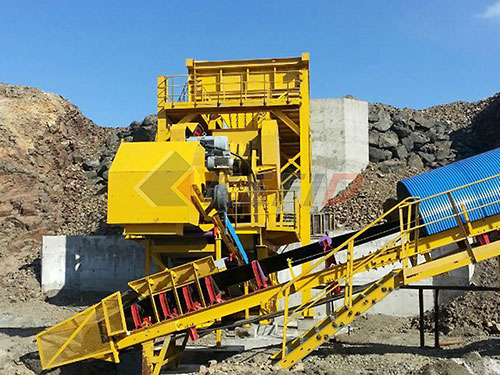
Section 2: Core Components and Customization Options
A stone crusher machine, whether jaw, cone, impact, or gyratory, consists of several critical subsystems. Each of these can be customized to meet specific operational demands.
2.1 Crushing Chamber and Liner Design
The crushing chamber is the heart of the machine. Its geometry determines the reduction ratio, particle shape, and capacity.
2.2 Drive System and Power Transmission
The power train must match the crusher’s mechanical load profile.
2.3 Frame and Base Structure
The structural integrity of the machine is paramount for longevity and vibration control.
2.4 Lubrication and Cooling Systems
Proper lubrication extends bearing and gear life.
2.5 Control and Automation
Modern custom crushers are equipped with advanced PLC-based control systems.
Section 3: Types of Custom Stone Crushers
Depending on the application, different crusher types are customized.
3.1 Custom Jaw Crushers
Best for: Primary crushing of hard, abrasive materials (granite, basalt, quartzite).
Customization: Deep crushing chamber with a large feed opening (up to 1500mm x 1200mm). Hydraulic wedge adjustment for quick CSS changes. Heavy-duty flywheels with high inertia for consistent crushing force. Options for single-toggle or double-toggle mechanisms.
3.2 Custom Cone Crushers
Best for: Secondary and tertiary crushing of medium to hard materials.
Customization: Multi-cylinder hydraulic design for high reduction ratios. Automatic tramp iron release system. Custom eccentric throw (from 18mm to 50mm) to control product fineness. Options for standard, fine, or extra-fine chamber configurations.
3.3 Custom Impact Crushers
Best for: Secondary and tertiary crushing of softer, less abrasive materials (limestone, dolomite, recycled concrete).
Customization: High-chrome or martensitic blow bars. Adjustable apron positions for variable product size. Hydraulic opening mechanism for easy maintenance. Options for horizontal shaft impactors (HSI) or vertical shaft impactors (VSI) for manufactured sand.
3.4 Custom Mobile and Semi-Mobile Units
Best for: Projects requiring relocation or multiple quarry faces.
Customization: Track-mounted or wheeled chassis. Integrated diesel engine or electric motor drive. On-board screening and recirculation conveyors. Compact dimensions for transport without special permits.
Section 4: Performance and Economic Benefits
Investing in a custom stone crusher yields tangible operational and financial advantages.
Section 5: Application Scenarios
Custom stone crushers are deployed across a wide spectrum of industries:
Section 6: Technical Specifications (Example)
Below is a representative specification table for a custom jaw crusher designed for a high-abrasion granite quarry:
| Parameter | Specification |
|---|---|
| Model | CJ-1200 Custom |
| Feed Opening | 1200mm x 900mm |
| Max Feed Size | 1000mm |
| CSS Range | 100mm – 250mm |
| Capacity | 250 – 450 TPH |
| Motor Power | 160 kW (VFD-ready) |
| Eccentric Throw | 25mm (customizable) |
| Liner Material | Mn18Cr2 (Manganese 18% + Chromium 2%) |
| Lubrication | Automatic centralized oil system with cooler |
| Weight | 48,000 kg |
| Control System | PLC with remote monitoring |
Conclusion
A custom stone crusher machine is not a luxury; it is a strategic investment for operations that demand peak efficiency, product consistency, and long-term reliability. By moving beyond the limitations of one-size-fits-all equipment, operators can unlock significant improvements in throughput, cost-per-ton, and product quality. Whether you are processing the hardest granite in a remote quarry or recycling concrete in an urban environment, a machine engineered specifically for your material and site conditions will outperform any standard alternative. We invite you to consult with our engineering team to discuss your specific crushing requirements. Together, we can design and manufacture a stone crusher that is not just a machine, but a precision tool for your success.
For detailed quotations, technical drawings, and a personalized consultation, please contact our sales engineering department.
If you have any questions about our products, please feel free to contact us. We take all inquiries and suggestions very seriously.