
Bulk Stone Quarry Crushing Plant: The Role of OEM Factories in Modern Aggregate Production
Introduction
The global construction and infrastructure sectors are fundamentally dependent on one indispensable material: crushed stone. From concrete aggregates and road base to railway ballast and manufactured sand, the demand for high-quality bulk stone has never been higher. At the heart of this supply chain lies the quarry crushing plant—a complex, high-throughput system designed to reduce massive rock formations into precise, marketable gradations. However, the efficiency, reliability, and long-term profitability of such a plant are not solely determined by the quarry’s geological conditions or the operator’s expertise. A critical, often underappreciated factor is the engineering and manufacturing quality of the equipment itself, particularly when sourced from an OEM (Original Equipment Manufacturer) factory.
This article provides a professional, objective, and detailed examination of bulk stone quarry crushing plants, with a specific focus on the strategic importance of partnering with an OEM factory. We will dissect the anatomy of a modern crushing plant, analyze the technical specifications that define performance, and evaluate the distinct advantages and considerations of OEM-supplied systems versus generic or locally assembled alternatives. The discussion will cover everything from primary jaw crushers to tertiary cone crushers and screening decks, while also addressing procurement, quality assurance, and lifecycle management.
1. The Anatomy of a Bulk Stone Quarry Crushing Plant
A bulk stone quarry crushing plant is not a single machine but an integrated, sequential processing line. Its primary objective is to transform blasted or excavated raw rock (often with a top size exceeding 1,000 mm) into saleable aggregates ranging from 0–5 mm (sand) to 20–40 mm (coarse gravel). The plant is typically divided into four distinct stages:
Primary Crushing: This stage handles the largest feed material. The dominant equipment is a heavy-duty jaw crusher or, in some high-capacity operations, a gyratory crusher. The primary crusher reduces rock to a manageable size (typically 150–300 mm) for downstream handling. Key parameters include feed opening dimensions, eccentric throw, and crushing chamber geometry. An OEM factory designs the jaw plate profile to match the specific abrasiveness and compressive strength of the target rock (e.g., basalt vs. limestone).
Secondary Crushing: The output from the primary stage is further reduced, usually to 50–100 mm. This is commonly achieved using cone crushers or horizontal shaft impactors (HSI). Cone crushers are preferred for hard, abrasive rock due to their high reduction ratios and cubic product shape. The secondary stage often includes a surge pile or buffer to decouple the primary and tertiary circuits, ensuring continuous feed.
Tertiary and Quaternary Crushing: This stage produces the final fine aggregates and manufactured sand. High-speed cone crushers, vertical shaft impactors (VSI), or high-pressure grinding rolls (HPGR) are used. The focus here is on particle shape (cubicity), minimizing flakiness, and controlling the fines content. An OEM factory’s proprietary crushing chamber designs (e.g., multi-action or full-liner systems) directly influence the product’s market value.
Screening and Classification: Vibrating screens (inclined or horizontal) separate crushed material into multiple size fractions. This is a critical quality control point. Screen media (polyurethane, rubber, or wire mesh) and the screen’s stroke and frequency are engineered by the OEM to maximize efficiency and prevent blinding. Additionally, washing systems (if required) remove clay and dust, which is essential for high-spec concrete aggregates.
2. The OEM Factory: Definition and Core Competencies
An OEM (Original Equipment Manufacturer) factory in the context of crushing plants is a company that designs, engineers, and manufactures the core processing equipment—crushers, screens, feeders, and conveyors—under its own brand name. Unlike a system integrator that merely assembles third-party components, an OEM owns the intellectual property (IP) for the machinery’s critical wear parts and structural design.
The distinction between an OEM and a non-OEM (often called a “local fabricator” or “copycat” manufacturer) is profound. A true OEM factory possesses the following core competencies:
Metallurgical Expertise: The performance of a crusher is dictated by its wear parts (e.g., jaw plates, mantle, concave). OEM factories operate their own foundries or have exclusive metallurgical partnerships. They control the alloy composition (e.g., 12–14% manganese steel for high impact, or chrome-moly alloys for abrasion) and the heat treatment process. This ensures consistent hardness (typically 400–550 HB) and toughness, which directly translates to longer wear life and lower cost per ton.
Finite Element Analysis (FEA) and Dynamic Simulation: OEM factories use advanced software to simulate the crushing process. They analyze stress distribution in the main frame, the kinematics of the eccentric shaft, and the fluid dynamics of lubrication systems. This engineering rigor prevents premature structural failures, such as frame cracking or bearing seizure, which are common in poorly designed clones.
Precision Manufacturing and Tolerance Control: Crushing involves extreme forces (often exceeding 500 tons). The main frame, shaft, and bearings must be machined to tight tolerances (e.g., concentricity within 0.05 mm). OEM factories utilize CNC machining centers, large vertical lathes, and coordinate measuring machines (CMM) to guarantee that every unit meets the original design specifications. This precision ensures that the crushing cavity remains consistent, leading to uniform product gradation.
Proprietary Crushing Chamber Design: The shape of the crushing chamber (e.g., C-shape, S-shape, or long-stroke design) is a patented feature of most leading OEMs. These designs are optimized for specific feed sizes and product requirements. For example, a modern cone crusher from a top OEM uses a “multi-cylinder hydraulic” system that allows for automatic setting adjustment and tramp iron release, features that are difficult to replicate accurately without the original engineering data.
3. Advantages of Sourcing from an OEM Factory
When a quarry operator decides to invest in a new bulk stone crushing plant, the choice between an OEM and a non-OEM supplier has long-term financial and operational consequences. The following are the objective advantages of an OEM factory:
3.1. Guaranteed Performance and Throughput
OEM factories provide a performance guarantee based on the specific rock type and feed gradation. They will conduct a comprehensive test on the client’s rock samples (crushability tests, abrasion index, and compressive strength) before proposing a plant layout. This data-driven approach ensures that the plant’s capacity (e.g., 300 tons per hour) is realistic and achievable. In contrast, non-OEM suppliers often overstate capacities to win contracts, leading to chronic underperformance and bottlenecks.
3.2. Wear Parts Availability and Interchangeability
The single largest operating cost in a crushing plant is wear parts (typically 10–20% of the total cost per ton). An OEM factory guarantees that its wear parts are manufactured to the exact original dimensions and metallurgy. This ensures perfect fitment and predictable wear life. Moreover, OEMs maintain global or regional distribution centers, offering rapid lead times (often 24–48 hours for critical parts). Non-OEM parts may be cheaper upfront, but they often have shorter wear life, cause increased downtime due to poor fit, and can void the equipment warranty.
3.3. Advanced Automation and Control Systems
Modern OEM factories integrate their crushers with proprietary PLC (Programmable Logic Controller) and SCADA (Supervisory Control and Data Acquisition) systems. These systems monitor key parameters such as crusher power draw, hydraulic pressure, and bearing temperature in real-time. They automatically adjust the closed side setting (CSS) to compensate for wear, ensuring a consistent product size. This level of automation is rarely available from non-OEM suppliers, who typically offer only basic electrical panels.
3.4. Lifecycle Support and Technical Service
An OEM factory provides a full lifecycle support package. This includes:
3.5. Resale Value and Standardization
Equipment from a reputable OEM (e.g., Metso, Sandvik, Terex, or ThyssenKrupp) retains a significantly higher resale value in the used market. This is because buyers trust the original engineering and the availability of genuine spare parts. Furthermore, if a quarry operates multiple plants, standardizing on one OEM simplifies inventory management, reduces the number of spare part SKUs, and allows for cross-training of maintenance crews.
4. Critical Technical Considerations When Selecting an OEM Factory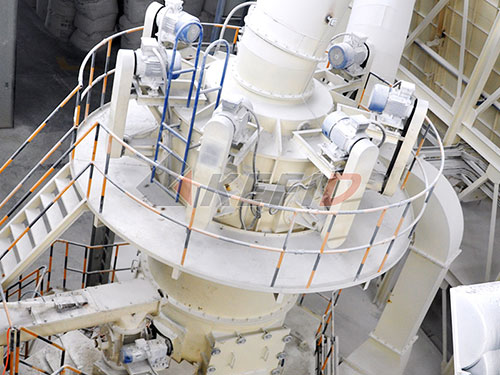
While the advantages are clear, not all OEM factories are equal. A professional procurement team must evaluate the following technical criteria:
4.1. Crusher Type and Chamber Configuration
4.2. Structural Integrity and Material Quality
Request the OEM’s material certificates for the main frame (e.g., S355J2 steel or equivalent). The frame should be stress-relieved after welding to prevent distortion. Inspect the bearing housings—they should be made of ductile iron, not cast steel, to absorb shock loads. The main shaft should be forged alloy steel (e.g., 42CrMo4) with a hardened surface.
4.3. Lubrication and Cooling Systems
A bulk stone plant operates in dusty, high-temperature environments. The OEM’s lubrication system must be a forced-feed, oil-circulating type with a dedicated cooling radiator. The system should include high-pressure and low-pressure alarms, as well as a backup oil pump. Non-OEM machines often use simple grease lubrication, which is inadequate for continuous high-load operation.
4.4. Modularity and Scalability
The best OEM factories design their plants as modular units. This means that the primary, secondary, and tertiary crushers can be relocated or reconfigured if the quarry face moves or if the product mix changes. A modular design also reduces installation time and civil works costs. Ask the OEM if the plant can be expanded (e.g., adding a fourth crushing stage) without replacing the existing core equipment.
5. The Procurement Process: From Inquiry to Commissioning
A professional procurement process with an OEM factory follows a structured, transparent path:
Technical Questionnaire: The OEM will provide a detailed questionnaire covering rock type, feed size, required product gradation, moisture content, and desired capacity. Be honest about the material’s abrasiveness—this is the most common cause of underestimation.
Sample Testing: Send 500–1,000 kg of representative rock samples to the OEM’s test laboratory. They will run a series of crushing tests to determine the optimal crusher model and settings. This is a non-negotiable step for a serious OEM.
Detailed Proposal: The OEM will issue a proposal including a process flow diagram, equipment list, power consumption estimates, and a 3D layout drawing. This document should specify the wear part life (in hours) and the cost per ton.
Factory Acceptance Test (FAT): Before shipping, the OEM should conduct a FAT. This involves running the crusher under no-load and partial-load conditions, checking vibration levels, and verifying the hydraulic system’s pressure integrity. The buyer’s engineer should be present.
Installation and Commissioning: The OEM provides a site supervisor for the installation. The commissioning phase includes a 72-hour continuous run at full capacity, during which the product gradation is sampled every hour to verify compliance with the contract.
6. Cost Analysis: OEM vs. Non-OEM – A Total Cost of Ownership (TCO) Perspective
The initial purchase price of an OEM crushing plant is typically 20–40% higher than a non-OEM equivalent. However, a TCO analysis over a 10-year lifespan reveals a different picture:
When these factors are quantified, the OEM factory often proves to be the lower-cost option over the plant’s entire lifecycle.
7. Challenges and Mitigation Strategies
No procurement is without risks. The following are common challenges with OEM factories and how to mitigate them:
8. Future Trends in OEM Crushing Plant Technology
The bulk stone industry is moving toward sustainability and digitalization. Leading OEM factories are at the forefront of this shift:
Conclusion
A bulk stone quarry crushing plant is a capital-intensive, high-stakes investment. The choice of equipment supplier is not a mere purchasing decision; it is a strategic partnership that determines the plant’s productivity, safety, and profitability for decades. An OEM factory offers unmatched advantages in engineering precision, metallurgical quality, automation, and lifecycle support. While the upfront cost is higher, the total cost of ownership is demonstrably lower when accounting for wear parts, downtime, and energy efficiency.
For quarry operators seeking to establish a competitive edge in the aggregate market, the professional recommendation is unequivocal: prioritize OEM factories with a proven track record, demand transparent test data, and negotiate a comprehensive service agreement. In an industry where a single hour of unplanned downtime can erase a week’s profit, the reliability and technical depth of an original equipment manufacturer are not luxuries—they are necessities. The future of bulk stone production belongs to those who build their plants on the foundation of genuine, engineered excellence.
If you have any questions about our products, please feel free to contact us. We take all inquiries and suggestions very seriously.