Title: The Role of Contract Manufacturers in 250–300 TPH Stone Crushing Plants: Capabilities, Quality Assurance, and Operational Considerations
Introduction
In the modern aggregate and mining industry, the demand for high-capacity crushing systems has grown exponentially, driven by large-scale infrastructure projects, urban development, and the ever-increasing need for construction materials. Among the various capacity tiers, the 250–300 tons per hour (TPH) stone crushing plant represents a critical sweet spot—sufficiently large to serve commercial quarries and major road construction projects, yet not so massive as to require the logistical complexity of a fully integrated mine-site operation. For many project owners, the decision to engage a contract manufacturer rather than building an in-house plant is both a strategic and economic one. This article provides a professional, objective examination of the 250–300 TPH stone crushing plant contract manufacturing landscape, focusing on the scope of services, engineering standards, quality control, cost structures, and the key criteria for selecting a reliable partner.
1. Defining the 250–300 TPH Crushing Plant
A 250–300 TPH plant is typically designed to process hard rock (e.g., granite, basalt, quartzite) or softer materials (e.g., limestone, dolomite) into multiple aggregate fractions, commonly including 0–5 mm (manufactured sand), 5–10 mm, 10–20 mm, and 20–40 mm. The standard configuration comprises several core components:
- Primary Jaw Crusher (e.g., PE-900×1200 or equivalent) with a feed opening of approximately 900×1200 mm, capable of reducing run-of-mine material to 150–200 mm.
- Secondary Cone Crusher (e.g., CS160, HPC220, or Symons-type) for further reduction to 40–60 mm.
- Tertiary Vertical Shaft Impact (VSI) Crusher or high-pressure grinding rolls (HPGR) for shaping and fine crushing to produce cubical aggregates.
- Vibrating Screens (typically 2–3 decks) for classification, with capacities matched to the crusher output.
- Conveyor systems, feeders, hoppers, and control panels integrated into a compact or modular layout.
The total installed power for such a plant ranges from 400 kW to 600 kW, and the footprint can vary from 1,500 m² to 3,000 m² depending on the degree of pre-engineered modularization.
2. The Contract Manufacturing Model: Definition and Scope
A contract manufacturer for stone crushing plants is not merely a fabricator of steel frames and a reseller of crushers. Instead, it acts as a turnkey solution provider, assuming responsibility for the following:
- Process design and flow sheet engineering: Determining the correct crusher types, screen apertures, and conveyor speeds to achieve the target TPH and product gradation.
- Mechanical fabrication: Manufacturing of chutes, hoppers, support structures, walkways, and safety guards, typically in carbon steel with wear-resistant liners (e.g., Hardox or 12% manganese steel).
- Procurement of core equipment: Sourcing crushers, screens, and motors from either in-house production lines or reputable third-party OEMs (e.g., Sandvik, Metso, or Chinese brands like Shibang, Zenith, or Liming).
- Electrical and automation integration: Designing control cabinets, soft starters, variable frequency drives (VFDs), and optional remote monitoring systems.
- Erection and commissioning: Supervising or executing on-site assembly, aligning pulleys, tensioning belts, and conducting trial runs to verify capacity and product quality.
- After-sales support: Providing spare parts, wear parts (jaw plates, cone liners, VSI rotors), and technical troubleshooting for a defined warranty period (typically 12–24 months).
The contract manufacturer may operate under several commercial models: (a) Engineering, Procurement, and Construction (EPC) with a fixed lump-sum price; (b) Design and Supply where the client handles civil works and erection; or (c) Rental/Lease with an operating agreement. For the 250–300 TPH class, the EPC model is most common, as it transfers performance risk to the manufacturer.
3. Engineering and Design Standards
A professional contract manufacturer adheres to recognized international standards, including:
- ISO 9001:2015 for quality management systems.
- CE marking for machinery sold in the European Economic Area, ensuring compliance with the Machinery Directive 2006/42/EC.
- ANSI/ASA S12.6 or ISO 4871 for noise emission declarations, as crushing plants generate 85–110 dB(A) at the operator position.
- Structural design per AISC (American Institute of Steel Construction) or Eurocode 3 for steel structures, with wind load and seismic considerations for the specific installation site.
Key engineering parameters that distinguish a high-quality 250–300 TPH plant include:
- Crusher cavity selection: For a 250 TPH granite feed, a jaw crusher with a 75–100 mm closed side setting (CSS) and a cone crusher with a 20–25 mm CSS are typical. The manufacturer must calculate the reduction ratio (typically 4:1 to 6:1 per stage) to avoid overloading the secondary crusher.
- Screen efficiency: Vibrating screens must be sized with a stroke of 8–12 mm and a frequency of 750–900 rpm to achieve a screening efficiency of ≥90%. Undersized screens lead to recirculation loads exceeding 30%, which reduces net throughput.
- Conveyor belt speed and width: For 250 TPH, a belt width of 800–1000 mm at a speed of 1.5–2.0 m/s is standard. The manufacturer must calculate the required motor power using the CEMA (Conveyor Equipment Manufacturers Association) method, accounting for lift, friction, and material density.
- Wear life optimization: The contract manufacturer should provide a wear parts budget, estimating that jaw plates last 300–500 hours, cone liners 400–600 hours, and VSI rotor tips 150–250 hours, depending on the abrasiveness (e.g., silica content >10% significantly reduces life).
4. Quality Assurance and Testing Protocols
A reputable contract manufacturer does not rely solely on theoretical calculations. It implements a multi-stage quality assurance (QA) process:
- Raw material inspection: Steel plates are verified for thickness and grade (e.g., Q235B or Q345B) via ultrasonic testing and chemical analysis.
- Welding inspection: All critical welds (especially on crusher bases and screen frames) undergo magnetic particle or dye penetrant testing. Welders must be certified to AWS D1.1 or ISO 9606.
- Dimensional verification: After fabrication, a dry-fit assembly is performed in the manufacturer’s workshop to check bolt hole alignments and conveyor angles. This reduces on-site erection time by 20–30%.
- No-load and load testing: Before shipment, the electrical panel is tested with a simulated load. For full load testing, the manufacturer may operate the plant with a test feed (e.g., crushed limestone) for 8–24 hours, measuring actual TPH, power draw, and product gradation. A performance guarantee clause is typically included, stating that the plant must achieve ≥95% of the rated capacity under specified feed conditions.
5. Cost Structure and Economic Analysis
The total capital expenditure (CAPEX) for a 250–300 TPH contract-manufactured plant varies significantly by region and equipment brand. As of 2025, a realistic budget is:
- Core equipment (crushers, screens, feeders): $450,000 – $700,000 (if using Chinese mid-tier brands) or $800,000 – $1.2 million (for European/Japanese brands).
- Structural steel, conveyors, and chutes: $150,000 – $250,000.
- Electrical and automation: $80,000 – $150,000.
- Erection, civil works, and commissioning: $120,000 – $200,000 (excluding foundation concrete).
- Engineering and project management fees: 5–8% of the equipment cost.
Thus, a complete turnkey plant ranges from $800,000 to $1.5 million, excluding land and quarry development. The operating cost (OPEX) per ton of crushed aggregate is typically $1.5 – $2.5, including power (0.5–0.8 kWh/ton), wear parts, and maintenance labor. A contract manufacturer that offers a lifecycle cost analysis—rather than just the purchase price—demonstrates higher professionalism.
6. Advantages of Engaging a Contract Manufacturer
- Risk transfer: The manufacturer bears the performance risk. If the plant fails to meet the 250 TPH guarantee, the contract may include penalty clauses (e.g., 0.5% of contract value per 1% shortfall).
- Time-to-production: A professional manufacturer can deliver and commission a 250–300 TPH plant in 8–14 weeks from order, compared to 6–9 months for a self-engineered project.
- Access to proprietary technology: Many contract manufacturers have patented designs for wear-resistant liners, anti-blocking screen mechanisms, or energy-efficient VSI rotors that are not available to individual buyers.
- Scalability and modularity: A well-designed plant can be expanded to 350–400 TPH by adding a second screen or a parallel crusher, without major structural rework.
7. Challenges and Potential Pitfalls
Despite the benefits, project owners must be vigilant about several issues:
- Under-specification of feed material: Some manufacturers assume a feed size of ≤600 mm and a compressive strength of ≤200 MPa. If the actual quarry rock is harder (e.g., basalt with 300 MPa), the plant will underperform. The contract must clearly define the feed characteristics.
- Hidden costs: Freight, customs duties, and inland transportation can add 10–20% to the quoted price. A transparent manufacturer provides a detailed Incoterms (e.g., FOB, CIF, DDP) breakdown.
- After-sales response time: For a remote site, a manufacturer with no local service network may take 7–14 days to send a technician. This can cause costly downtime. It is advisable to require a local spare parts stock or a service level agreement (SLA) with a 48-hour response.
- Quality of sub-suppliers: Some contract manufacturers outsource the fabrication of conveyors or screens to third-party workshops. The buyer should audit these sub-suppliers or require certificates of conformity.
8. Selection Criteria for a Contract Manufacturer
To objectively evaluate potential partners, the following technical and commercial criteria should be weighted:
- Track record: Number of 250–300 TPH plants delivered in the last 5 years, with verifiable client references and performance test reports.
- In-house manufacturing capability: Does the manufacturer have its own foundry for crusher wear parts? Own CNC machining centers for shafts and pulleys? This reduces lead time and improves quality control.
- Engineering team size: A minimum of 10–15 process and mechanical engineers is indicative of a serious organization.
- Financial stability: Request audited financial statements or bank guarantees for advance payments (typically 30% down, 40% during fabrication, 20% before shipment, 10% after commissioning).
- Warranty terms: A standard warranty covers defects in materials and workmanship for 12 months, but a superior manufacturer offers 24 months on the main frame and 12 months on wear parts (with prorated replacement).
- Training and documentation: The manufacturer should provide full operation and maintenance manuals, a 3D model of the plant for operator training, and on-site training for at least 5 operators and 2 maintenance staff.
9. Case Study: A Typical 250–300 TPH Contract in Southeast Asia
Consider a hypothetical but realistic project in Vietnam, where a local construction company contracted a Chinese manufacturer for a 280 TPH granite crushing plant. The contract value was $1.1 million (DDP to Haiphong port). The manufacturer provided:
- A PE-900×1200 jaw crusher (primary), a CS160 cone crusher (secondary), and a VSI1140 (tertiary).
- Three vibrating screens (2YK2160, 3YK2160, and 2YK1860).
- A centralized PLC control system with remote monitoring via mobile app.
- Erection supervision for 45 days, with 2 engineers on-site.
The plant was commissioned in 11 weeks. During the performance test, it achieved 295 TPH at a feed size of 500 mm and a CSS of 100 mm on the jaw, with a product gradation of 95% passing 40 mm. The wear parts (jaw plates) lasted 420 hours on granite with 12% silica. The client reported a payback period of 18 months based on aggregate selling prices of $12/ton. This case illustrates that a well-executed contract manufacturing arrangement can deliver both technical and financial success.
10. Future Trends in Contract Manufacturing for Crushing Plants
The industry is moving toward digital twins and predictive maintenance. Leading contract manufacturers now offer: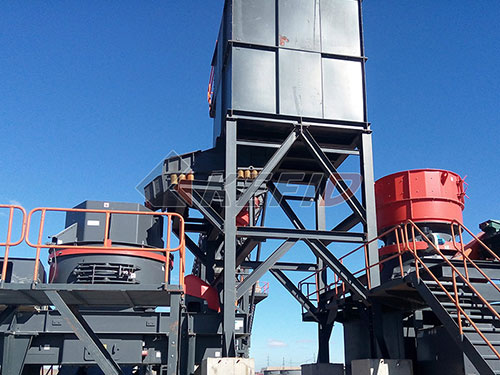
- IoT-enabled sensors on crusher motors, bearings, and conveyor belts, transmitting real-time data to a cloud dashboard.
- AI-based crusher setting optimization that automatically adjusts the CSS to maintain a constant TPH despite feed variability.
- Modular containerized plants that can be relocated within 2–3 days, ideal for temporary infrastructure projects.
- Electric and hybrid drives to reduce carbon footprint, with some plants achieving 30% lower energy consumption than conventional diesel-hydraulic systems.
For the 250–300 TPH segment, these innovations are increasingly becoming standard offerings rather than premium add-ons.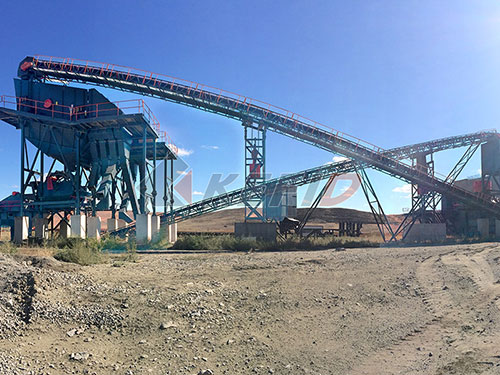
Conclusion
Engaging a contract manufacturer for a 250–300 TPH stone crushing plant is a complex but highly manageable endeavor, provided that the buyer adopts a rigorous, objective evaluation process. The key to success lies in defining clear performance specifications, verifying the manufacturer’s engineering and fabrication capabilities, and structuring a contract with enforceable guarantees and transparent pricing. A professional contract manufacturer does not merely sell machines; it delivers a proven, optimized system that converts raw rock into profitable aggregate. By focusing on quality assurance, lifecycle costs, and after-sales support, project owners can mitigate risks and achieve reliable, high-volume production for years to come. As the global demand for aggregates continues to rise, the role of specialized contract manufacturers will only grow in importance, making them indispensable partners in the construction and mining value chain.
