
Title: The Strategic Value of Customization in Impact Crusher Distribution: Enhancing Performance, Longevity, and Operational Efficiency
Introduction
In the global mining, quarrying, and construction industries, impact crushers have established themselves as indispensable machines for secondary and tertiary crushing applications. Their ability to produce high-quality cubical aggregates, handle a wide range of material hardness, and offer high reduction ratios makes them a preferred choice over cone or jaw crushers in many scenarios. However, the performance of an impact crusher is not solely determined by its original design; it is significantly influenced by the quality of its components, the precision of its assembly, and the specific adaptations made to suit unique operational conditions. This is where the role of an impact crusher distributor becomes critical—not merely as a reseller of equipment, but as a partner capable of offering deep customization. This article explores the concept of “Impact Crushers Distributor Customization,” examining why customization is necessary, what aspects can be customized, the technical and economic benefits, and how distributors can effectively implement such services to create a competitive advantage.
Section 1: Understanding the Need for Customization
Standard off-the-shelf impact crushers are designed to meet a broad spectrum of applications. However, no two crushing sites are identical. Variations in feed material characteristics (abrasiveness, moisture content, compressive strength), desired product specifications (particle size distribution, shape, fines content), and operational constraints (space limitations, power availability, environmental regulations) often render a one-size-fits-all solution suboptimal.
For example, a limestone quarry in a humid region may require a crusher with enhanced wear protection against sticky materials and moisture-induced corrosion. Conversely, a recycling plant processing reinforced concrete needs a machine with robust rotor designs and adjustable breaker plates to handle rebar and steel mesh without catastrophic damage. A distributor who can customize the crusher—by modifying the rotor configuration, adjusting the blow bar metallurgy, or adding specialized liners—directly addresses these site-specific challenges. This not only improves crushing efficiency but also reduces downtime and total cost of ownership.
Section 2: Key Areas of Customization by Distributors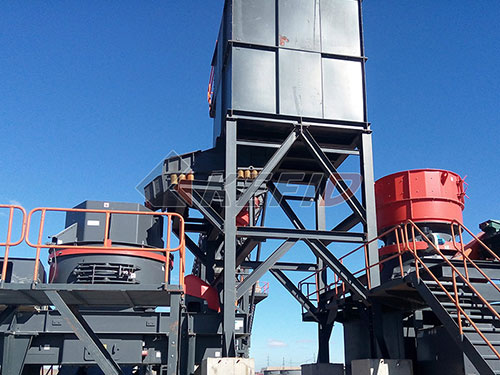
A competent impact crusher distributor can offer customization across several critical dimensions:
2.1 Rotor Design and Configuration
The rotor is the heart of an impact crusher. Customization options include:
2.2 Crushing Chamber Geometry
The shape and angle of the impact plates (breaker plates) and the curtain arrangement can be customized to control the path of material through the crusher. For instance:
2.3 Drive and Power Systems
Customization extends to the power transmission system:
2.4 Feed and Discharge Systems
Customization of the feed hopper, chute, and discharge conveyor can significantly improve material flow and reduce blockages:
2.5 Automation and Control Systems
Modern impact crushers benefit from advanced control systems. Distributors can customize:
Section 3: The Customization Process – From Inquiry to Implementation
A successful customization program requires a structured approach:
3.1 Needs Assessment
The distributor must conduct a thorough site visit or detailed questionnaire to understand:
3.2 Engineering and Design
Using CAD and simulation software (e.g., DEM – Discrete Element Method), the distributor’s engineering team can model the customized crusher. This step ensures that the proposed modifications will achieve the desired performance without compromising structural integrity or safety.
3.3 Component Sourcing and Fabrication
Custom components—such as blow bars, liners, or rotor assemblies—must be sourced from reliable foundries or fabricated in-house. Quality control is paramount; the distributor should maintain strict tolerances and material certifications.
3.4 Assembly and Testing
The customized crusher should be assembled and tested under simulated conditions. This may include a dry run to check rotor balance, bearing alignment, and clearance settings. For large units, partial assembly at the distributor’s facility followed by final assembly on-site is common.
3.5 Installation and Commissioning
The distributor’s service team should oversee installation, ensuring proper alignment, foundation preparation, and electrical connections. Commissioning includes start-up, load testing, and fine-tuning of parameters such as rotor speed and breaker plate gaps.
3.6 Training and Support
Operators and maintenance staff must be trained on the specific customization features. The distributor should provide manuals, spare parts lists, and ongoing technical support.
Section 4: Economic and Operational Benefits of Customization
4.1 Increased Throughput and Efficiency
A customized crusher can achieve higher throughput rates by optimizing the crushing chamber geometry and rotor speed for the specific feed material. This reduces the number of passes required and lowers energy consumption per ton.
4.2 Extended Wear Life
By selecting the appropriate blow bar material and liner design, the distributor can significantly extend the interval between wear part replacements. For example, switching from standard manganese steel to a ceramic composite blow bar can increase wear life by 2–3 times in highly abrasive applications.
4.3 Reduced Downtime
Customization often includes features that simplify maintenance, such as quick-change blow bar systems, hydraulic breaker plate adjustment, and easy-access inspection doors. This reduces the time required for routine maintenance and emergency repairs.
4.4 Improved Product Quality
The ability to precisely control the crushing process through customization leads to a more consistent product gradation and shape. This is particularly important for asphalt and concrete aggregate producers who must meet strict specifications.
4.5 Lower Total Cost of Ownership (TCO)
While customized crushers may have a higher initial purchase price, the long-term savings in wear parts, energy, and downtime often result in a lower TCO. Distributors can provide life-cycle cost analyses to justify the investment.
Section 5: Challenges and Considerations for Distributors
Implementing a customization strategy is not without risks:
5.1 Engineering Complexity
Customization requires skilled engineers who understand both the mechanical design of crushers and the specific demands of various applications. Small distributors may lack this expertise and must invest in training or partnerships.
5.2 Lead Times
Custom components often have longer lead times than standard parts. Distributors must manage inventory and supply chain relationships carefully to avoid delays.
5.3 Warranty and Liability
Customized machines may have different failure modes than standard models. Distributors must clearly define warranty terms and ensure that modifications do not void the original manufacturer’s warranty.
5.4 Cost Management
Customization can be expensive, especially for low-volume orders. Distributors must balance the cost of engineering, tooling, and special materials against the price the customer is willing to pay.
Section 6: The Future of Impact Crusher Customization
As technology advances, the scope of customization will expand:
Conclusion
Impact crusher distributor customization is not merely a value-added service; it is a strategic differentiator that can transform a commodity supplier into a trusted solution provider. By understanding the unique needs of each customer and applying engineering expertise to modify rotor designs, wear parts, drive systems, and automation, distributors can deliver machines that outperform standard models in efficiency, durability, and product quality. The process requires investment in engineering, quality control, and customer support, but the rewards—increased customer loyalty, higher margins, and a stronger market position—are substantial. As the crushing industry continues to demand higher performance and lower operating costs, the ability to offer tailored solutions will become an essential capability for any serious impact crusher distributor.
If you have any questions about our products, please feel free to contact us. We take all inquiries and suggestions very seriously.