
White Label Iron Ore Crushing Plant Quotation: A Comprehensive Guide to Costing, Scope, and Procurement Strategy
In the global mining and mineral processing industry, the term “white label” has transcended its traditional consumer-goods origins to become a strategic procurement model for capital equipment. A white label iron ore crushing plant refers to a complete, pre-engineered, and standardized crushing system manufactured by an original equipment manufacturer (OEM) but rebranded, customized, or sold under a third-party’s name—typically an engineering, procurement, and construction (EPC) contractor, a mining house, or a regional distributor. The quotation for such a plant is not a simple price list; it is a complex document that encapsulates technical specifications, commercial terms, delivery schedules, performance guarantees, and lifecycle support obligations. This article provides a professional, objective, and detailed examination of what constitutes a white label iron ore crushing plant quotation, the factors that drive its pricing, the typical structure of the document, and the strategic considerations for both buyers and sellers.
To understand the quotation, one must first understand the business model. In a conventional procurement, a mining company issues a tender for a crushing plant, and multiple OEMs bid with their proprietary designs. In a white label arrangement, the OEM (e.g., a Chinese, Indian, or European heavy equipment manufacturer) produces a range of standardized crushing modules—jaw crushers, cone crushers, screens, conveyors, and control systems—that are designed to handle specific ore types, feed sizes, and throughput capacities. These modules are then sold to a “labeling partner” (the white label buyer), who may apply their own brand, integrate additional engineering services, or bundle the plant with their own project management.
The quotation for a white label plant is therefore issued by the labeling partner to the end client (the mine owner), but the underlying technical data and pricing are derived from the OEM’s base quotation. This dual-layer structure introduces unique complexities: the quotation must reconcile the OEM’s factory-gate price with the labeling partner’s engineering, logistics, installation, and warranty margins.
A professional white label iron ore crushing plant quotation is not a one-page estimate. It is a multi-section document, typically exceeding 50 pages for a mid-sized plant (e.g., 2 million tonnes per annum). The following sections are non-negotiable in a credible quotation:
This section defines the plant’s purpose. For iron ore, the crushing circuit is usually a two- or three-stage process:
The quotation must specify the design basis: ore characteristics (Bond Work Index, abrasion index, moisture content, bulk density), target product size distribution, and hourly throughput (e.g., 500 t/h, 1,000 t/h). A white label quotation will include a process flow diagram (PFD) and a general arrangement (GA) drawing, but these are often marked as “preliminary” pending final site data.
This is the heart of the quotation. Each major equipment item is listed with:
For a white label plant, the BOQ must clearly state which items are OEM-supplied and which are sourced by the labeling partner (e.g., electrical switchgear, transformers, structural steel, or civil works). Ambiguity here is a common source of post-award disputes.
The pricing section is typically broken down into:
A critical feature of a white label quotation is the price validity period—typically 30 to 90 days—due to fluctuating steel prices, foreign exchange rates, and freight costs. A professional quotation will include a price adjustment clause (e.g., based on the London Metal Exchange index for steel or a published freight index).
This is where the white label model becomes legally sensitive. The OEM provides performance guarantees to the labeling partner (e.g., throughput, product size, power consumption). The labeling partner then passes these guarantees to the end client, but often with additional terms. The quotation must specify:
For a white label quotation, the labeling partner must ensure that the OEM’s guarantees are back-to-back with those offered to the end client. Otherwise, the labeling partner bears the risk of a performance shortfall without recourse to the OEM.
A realistic quotation includes a project timeline:
The quotation should clearly state which milestones trigger payment (e.g., 20% down payment, 30% on FAT, 40% on delivery, 10% on final acceptance). A white label quotation often includes a penalty clause for late delivery, but the labeling partner must negotiate parallel penalties with the OEM to avoid margin erosion.
The quoted price can vary by 30–50% between different suppliers for the same nominal capacity. Understanding the cost drivers is essential for objective evaluation.
Iron ore ranges from soft hematite (Bond Work Index ~10 kWh/t) to highly abrasive banded iron formation (BIF) with a Work Index of 15–20 kWh/t. A plant designed for soft ore cannot crush BIF without excessive wear and reduced throughput. The quotation must specify the design ore type; if the client’s ore is harder than specified, the quotation will include a “technical escalation” clause, increasing the price by 10–20%.
A single-line plant (one crusher per stage) is cheaper but has lower availability. A dual-line plant (two smaller crushers in parallel) increases capital cost by 25–35% but improves availability from 85% to 95%. White label quotations often offer both options, with the dual-line option priced as a “high-availability package.”
Basic plants use local push-button control. Modern plants include PLC-based automation, remote monitoring, and variable frequency drives (VFDs) on conveyors. Adding a full SCADA system can add 8–12% to the total plant cost. A white label quotation will list automation as a separate line item, allowing the buyer to opt out.
The equipment cost is often only 40–50% of the total installed cost. The quotation must include (or explicitly exclude):
A common pitfall in white label quotations is that the labeling partner quotes only the “mechanical equipment” and excludes civil and structural works, leading to a low initial price but a massive budget overrun during construction.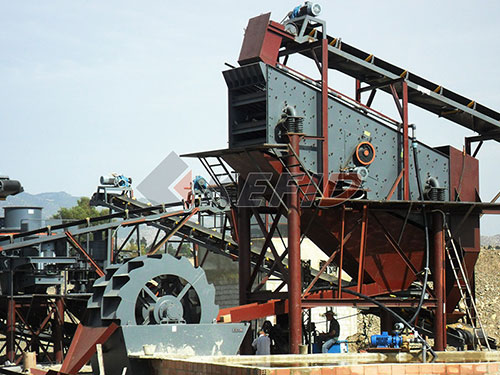
Iron ore crushing plants generate dust and noise. Quotations must include:
In jurisdictions with strict environmental regulations (e.g., Australia, Canada, Chile), compliance costs can add 5–10% to the quotation. A white label quotation should clearly state which environmental standards (e.g., EPA, EU, or local) the plant is designed to meet.
Buyers often receive multiple quotations from different labeling partners, all claiming to offer the same OEM equipment. Objective evaluation requires a structured scoring matrix:
The lowest capital cost is rarely the lowest total cost. The quotation should include:
A professional buyer will calculate the Net Present Value (NPV) of operating costs over 10 years. A white label quotation that offers a 5% higher capital cost but 15% lower wear cost is often the better investment.
A white label iron ore crushing plant quotation is far more than a price. It is a contractual instrument that allocates technical, commercial, and operational risks between the OEM, the labeling partner, and the end client. A professional quotation will be transparent about what is included and what is not, will offer realistic performance guarantees backed by test data, and will provide a clear path from order to commissioning.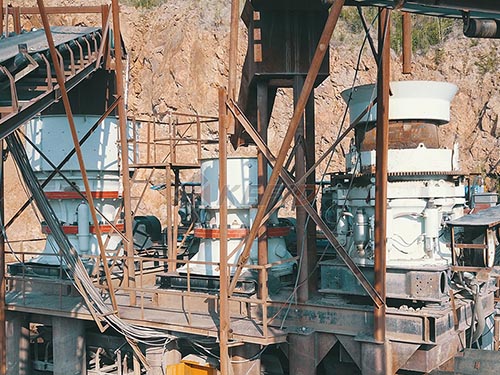
For the buyer, the objective is not to find the cheapest quotation but to find the one with the lowest total cost of ownership, the fewest ambiguities, and the strongest after-sales commitment. For the seller, the objective is to build a quotation that is competitive yet protects margins, and that establishes a long-term relationship rather than a one-off transaction.
In a market where iron ore prices are volatile and project financing is tight, the quality of the quotation often determines the success of the entire project. A well-structured white label quotation, backed by a reputable OEM and a competent labeling partner, can deliver a crushing plant that operates reliably for 20 years. A poorly structured quotation, even at a lower price, can lead to cost overruns, schedule delays, and operational failures. Therefore, both parties must treat the quotation as a strategic document—one that deserves the same rigor as the engineering design itself.
If you have any questions about our products, please feel free to contact us. We take all inquiries and suggestions very seriously.